Tanzania has announced the cancellation of its annual Independence Day celebrations scheduled for 9 December, redirecting the allocated funds toward repairing infrastructure damaged during recent post-election unrest.
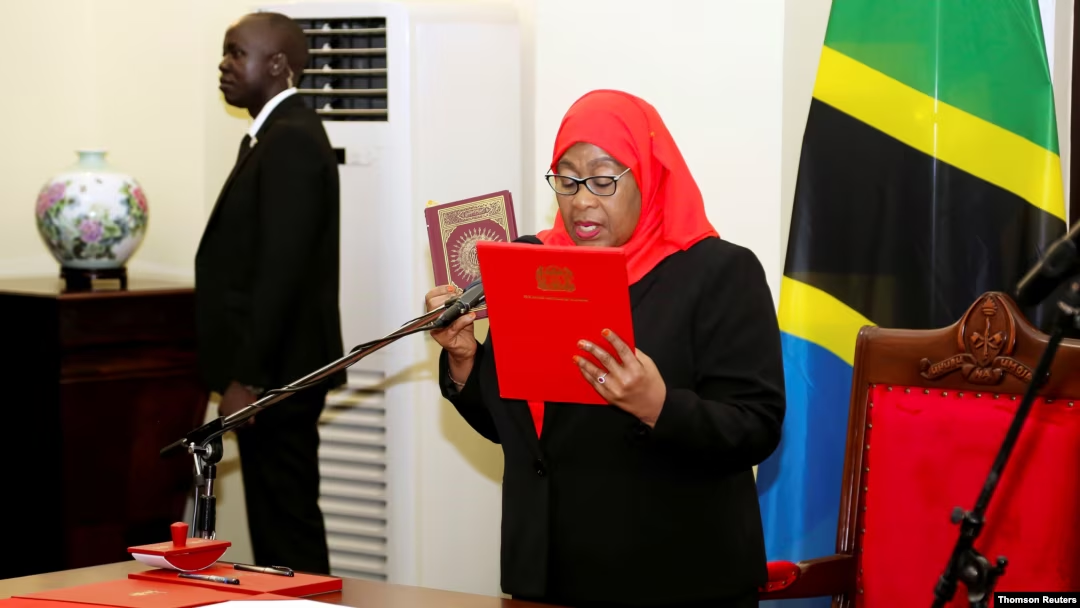
The decision, disclosed by Prime Minister Mwigulu Nchemba, comes at a time when political tensions remain high following a disputed national election that granted President Samia Suluhu Hassan a sweeping 98% victory.
Calls had intensified from opposition groups and civil society for nationwide demonstrations on Independence Day to protest alleged killings and rights violations connected to the election period. While the opposition claims the death toll may be significant, the government has not provided official figures.
Instead, it has established a commission of inquiry, though critics question the independence and credibility of the body assigned to investigate the events.
The election itself has drawn widespread criticism. Two major opposition contenders, Tundu Lissu and Luhaga Mpina, were unable to participate—Lissu due to detention on treason charges he denies, and Mpina after his candidacy was disqualified.
Election observers have since reported signs of manipulation, raising concerns that the process did not meet democratic standards.
During the turbulent period following the 29 October vote, the government imposed a five-day internet shutdown and warned citizens against sharing protest-related material online. Despite this, numerous images and videos documenting violence circulated widely.
International media and rights groups have verified portions of this material as genuine, though the government insists that some portrayals are exaggerated and aimed at damaging Tanzania’s image.
Authorities responded to the unrest by charging at least 240 individuals with treason, a move that deepened political unease.
ALSO READ: Tanzania ready to probe post-election violence
President Samia later urged prosecutors to exercise leniency, leading to the release of some detainees in a bid to ease tensions. Still, many analysts argue that the underlying political climate remains strained.
Announcing the cancellation of the independence festivities, Prime Minister Nchemba appealed for calm and encouraged Tanzanians to avoid further violence.
He stressed the need for national dialogue to address the grievances fueling public discontent.
“Let us come together and discuss the issues affecting us,” he said, warning that a return to recent turmoil would have severe consequences for the country.
President Samia, who assumed office in 2021 after the death of former President John Magufuli, initially drew praise for easing political restrictions.
However, observers note that the political environment has tightened again, with renewed concerns around civil liberties, transparency, and democratic participation.
As Tanzania approaches independence day, the cancellation of celebrations underscores the depth of the political crisis and the urgent need for dialogue to rebuild public trust and national stability.