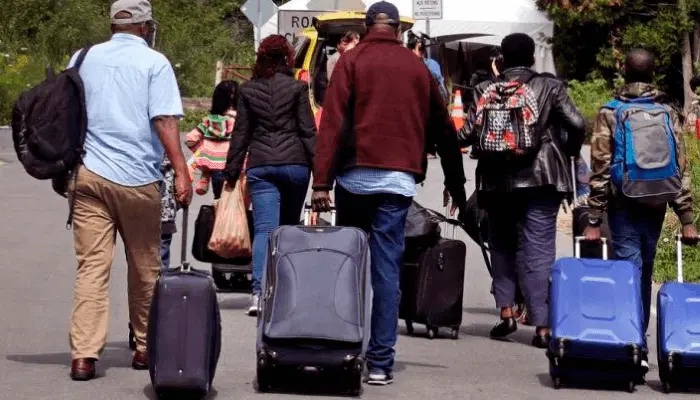
Ghanaian authorities have removed no fewer than 42 Nigerians from the Ashanti Region after courts found them liable in cases linked to prostitution, fraud and other criminal activities, marking one of the latest immigration enforcement actions in the country.
The deportations were confirmed on Thursday by the Ashanti Regional Minister, Frank Amoakohene, who announced the development in a Facebook post.
He said the affected individuals were removed after judicial processes that handled multiple cases within the region.
In total, 68 foreign nationals were deported. They include 42 Nigerians, 13 Cameroonians, three Ivorians, three Burkinabe nationals and seven citizens of Benin.
“A total of 42 Nigerians, 13 Cameroonians, three Ivorians, three Burkinabe nationals and seven Benin nationals have been deported from the Ashanti Region to their respective countries following various court rulings involving Q-Net, prostitution and other criminal activities,” Amoakohene wrote.
He commended the Ghana Immigration Service for what he described as professional and lawful enforcement of immigration and security regulations, noting that its coordination with the courts and other security agencies ensured that due process was followed while maintaining public safety.
“Their collaboration continues to strengthen law and order in the region,” the minister added.
Also Read: Ghana expels Israelis over deportation row
The deportations form part of a wider pattern of increased scrutiny on Nigerians living abroad, particularly in cases linked to organised crime, financial fraud and cross-border criminal networks.
In late November, Indian authorities arrested more than 50 Nigerians in what was described as one of the country’s largest coordinated crackdowns on a transnational narcotics network.
The suspects were said to be connected to a drug distribution and hawala money-laundering syndicate operating across several Indian cities.
Reports by Indian news outlet NDTV indicated that the operation followed months of intelligence gathering and involved simultaneous raids led by the Delhi Police in collaboration with the Telangana Police’s EAGLE unit.
The coordinated action targeted methamphetamine and cocaine trafficking routes spread across multiple locations.
The recent deportations and arrests have again drawn attention to the challenges facing host countries and Nigerian authorities in tackling transnational crime, as well as the reputational consequences for law-abiding Nigerians living and working overseas.
Century Post