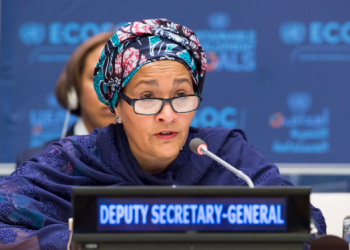
A Climatologist, Prof. Ibidun Adelekan has said that unpredictable weather patterns due to climate change poses serious risks to farmers in Nigeria.
Adelekan of the Department of Geography, University of Ibadan, told the News Agency of Nigeria on Monday in Ibadan, that climate change had resulted in unpredictable rainfall patterns and increased flooding.
“When rainfall becomes unpredictable, farmers can no longer rely on traditional planting calendars. Flooding can destroy crops, damage farmland and threaten food security,” she said.
The expert called for better urban planning, improved drainage infrastructure, environmental protection and increased public awareness to mitigate the impacts of climate change in Nigeria.
Also Read: Stakeholders move to tackle climate risks in agriculture
Adelekan said that climate change had significantly altered Nigeria’s weather patterns, leading to delayed harmattan, heavier rainfall, rising temperatures and increased flooding across the country.
She said long-established seasonal patterns were no longer reliable, posing growing risks to farmers, urban residents and coastal communities.
According to her, the Harmattan season, which used to begin as early as November in Southern Nigeria, is now setting in much later.
Adelekan recalled that in the early 1980s, Harmattan conditions started by mid-November, particularly during graduation periods at the University of Ibadan.
“We were almost at the end of January before the Harmattan was felt in Southern Nigeria.
“This late onset has been the experience over the last three years,” she said.
The don explained that Nigeria’s climate is largely influenced by the Inter-Tropical Discontinuity, ITD, the boundary between dry Northeasterly winds from the Sahara and moisture laden South-westerly winds from the Atlantic Ocean.
“The position and movement of the ITD determine whether an area experiences Harmattan or rainfall.
“What we are seeing now is a delayed southward movement of the ITD, which explains why Harmattan is coming later than it used to,” she said.
NAN