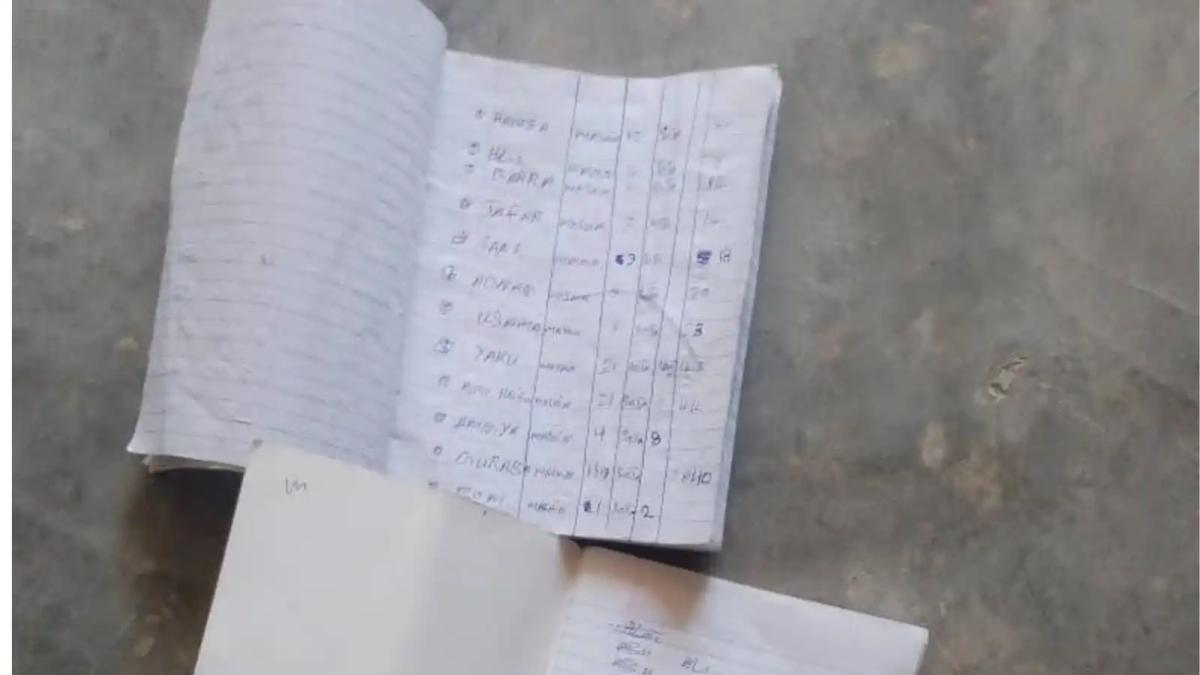
Nigerian troops have recovered notebooks from slain Islamic States of West African Province, ISWAP, fighters in Mallam Fatori, showing the group’s planning and organization.
The documents list fighters mobilized for attacks, their roles, assigned weapons, and allocated ammunition.
According to security analyst and researcher Brant Philip in a social media post on Wednesday, similar practices have been observed in other Islamic State provinces, including Puntland in IS-Somal, indicating a structured approach to operations.
“Notebooks captured by Nigerian troops from slain ISWAP fighters in Mallam Fatori show the list of ISWAP militants mobilized for the attack, their roles, their weapons and their allocated ammunition,” he wrote.
“This level of organization was also noted in Puntland in IS-Somal, the cardboard piece was discovered in an IS-Somal position, it shows the same thing and also includes the cameraman, who has allocated memory cards instead of ammunition.”
“Islamic State provinces manage themselves like actual states (it’s in the name), they have their own police, military police, ministries and more, they’re not only an armed group but they strive to become an alternate governing entity,” Philip further explained.
Also Read: Troops eliminate more ISWAP elements in Northeast
It is expected that the recovered documents are being examined to provide further information on the group’s personnel deployment, logistical arrangements, and communications.
The notebooks are part of evidence collected from areas where Islamic States of West African Provincehas carried out attacks in northeastern Nigeria.
Meanwhile, on Monday, March 16, 2026, a series of suspected suicide bombings struck in Maiduguri, including Monday Market, one of the largest trading hubs in northeastern Nigeria.
The blasts, which also affected nearby locations such as the University of Maiduguri Teaching Hospital and a central post office junction, killed at least 23 people and injured more than 100 others, according to local authorities and witnesses.
Intelregion News