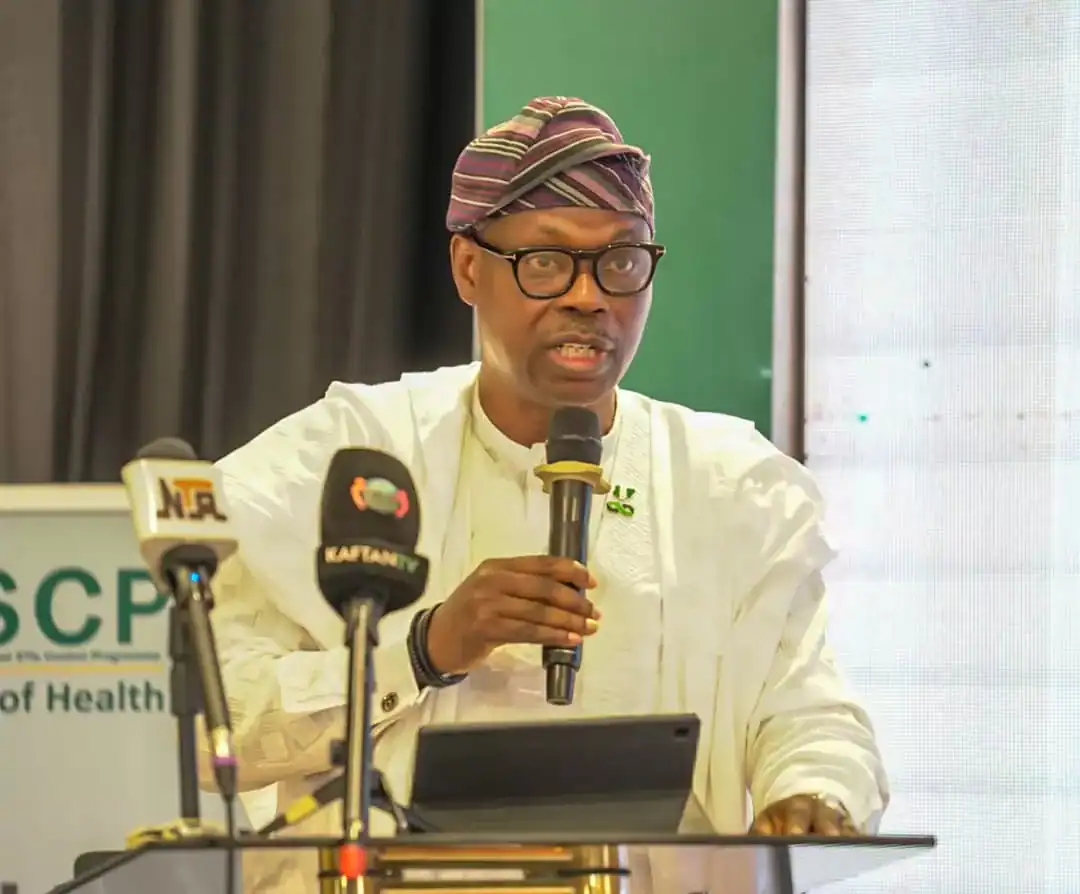
The Federal Government has taken several decisive steps to strengthen disease surveillance and outbreak preparedness.
Dr Iziaq Salako, Minister of State for Health and Social Welfare, made this known on Monday in Abuja, at a high-level health security dialogue with the People’s Republic of China on pandemic preparedness and response.
Salako stressed the importance of early detection, transparent data sharing, and resilient health systems.
“No country, regardless of its strength, can face global health threats alone.
“Strong surveillance, laboratory networks, and emergency coordination mechanisms are critical to saving lives,” he said.
Mrs Nanlop Ogbureke, Executive Director of Resolve to Save Lives highlighted Nigeria’s progress under the World Health Organization’s International Health Regulations Monitoring and Evaluation Framework.
According to Ogbureke, Preparedness scores improved from 39 per cent in 2017 to 54 per cent in 2023, reflecting leadership, learning, and institutional growth.
She said that about 35 per cent of Nigerian states now have context-specific health security action plans.
Also Read: WHO seeks end to tuberculosis in Africa by 2030
Dr Pavel Ursu, WHO Representative, emphasized global cooperation in pandemic response.
Ursu said the Pandemic Accord ensures that when countries share information about dangerous pathogens, the benefits, diagnostics, vaccines, treatments, and technologies, are shared fairly and rapidly.
He noted the importance of equity, trust, and science-driven strategies.
The News Agency of Nigeria reports that the Coordinating Minister of Health and Social Welfare visited China (Oct. 31–Nov. 6, 2025) to strengthen Nigeria–China collaboration in healthcare, focusing on boosting local production, improving health security, and advancing Nigeria’s healthcare value chain under President Bola Tinubu’s agenda.
Nigeria currently relies heavily on imports for pharmaceuticals, medical devices, and vaccines, spending about one billion dollars annually on medical tourism.
The visit aimed to address these gaps by promoting local manufacturing, attracting investment, creating jobs, and enhancing healthcare quality.
Key initiatives include a partnership with PlusLife Diagnostics to localize tuberculosis test kit production in Lagos, targeting early detection and expanded access, particularly in rural areas.
Production is expected to begin by 2028, with plans to scale across West Africa.
The visit signals a shift from aid dependency to mutual investment and local production, emphasizing “health sovereignty” in vaccines, pharmaceuticals, medical equipment, and knowledge exchange.
Collaborations with Chinese firms include manufacturing medical consumables, hospital modernization, technology transfer, and a potential “medical city” initiative.
Regulatory reforms, improved financing frameworks, technology transfer, and human capital development were also highlighted, alongside the proposed China–Nigeria Health Cooperation Committee and stronger public-private partnerships.
Partnerships with Chinese institutions aim to strengthen disease surveillance, laboratory systems, and vaccine development, including Lassa fever, with plans to establish a joint China–Nigeria laboratory for pathogen surveillance and biotechnology research.
Experts at the event said that the visit marks a strategic shift toward a self-reliant, industrialized healthcare system in Nigeria through international partnerships, local production, and strengthened health security.
NAN