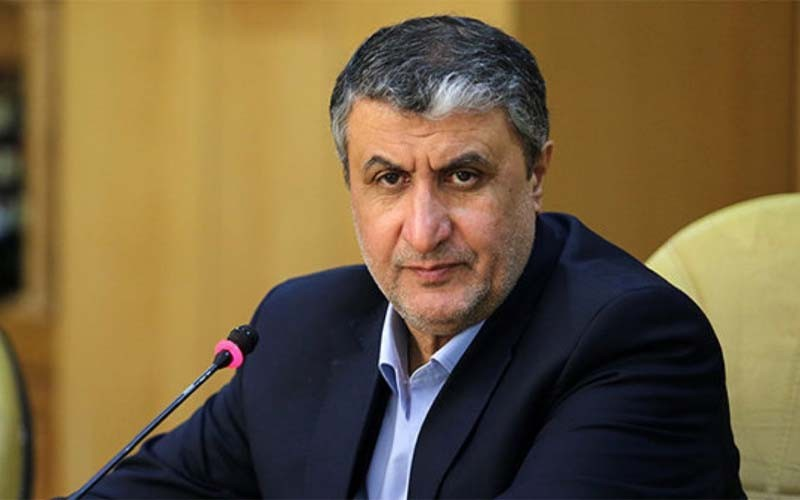
Iran’s nuclear chief has insisted on Tehran’s right to enrich uranium in any potential peace talks with the United States.
Speaking on the sidelines of a memorial service for the late supreme leader ayatollah Ali Khamenei on Thursday, nuclear chief Mohammed Eslami rejected the demand for Iran to drop uranium enrichment, the Iranian news agency ISNA reported.
“Those are their wishes, and those wishes will be buried,” he said, referring to the U.S.
Even before the war, representatives from Washington and Tehran were negotiating over Iran’s controversial nuclear programme.
U.S. President Donald Trump wants to prevent Iran from building a nuclear bomb.
Tehran has denied pursuing a nuclear weapons programme, even as it enriches uranium.
Also Read: Nuclear chief advice Iran to allow fresh inspections
Following the two-week ceasefire announced by Trump late on Tuesday, Iranian and U.S. officials are expected to meet in Islamabad on Friday to negotiate over a long-term peace agreement.
In another development, Iran’s Islamic Revolutionary Guard Corps, IRGC, has warned of potential sea mines in the Strait of Hormuz, advising vessels to avoid main shipping lanes as tensions continue even with a ceasefire with the U.S…
In a statement issued late Wednesday, the IRGC navy released a map marking a designated danger zone within the strategic waterway, raising fresh concerns over maritime safety in the Gulf.
Citing ongoing security risks, Iranian authorities urged ships to adopt an alternative route further north to prevent what they described as a “possible collision with sea mines.”
The recommended passage runs near Larak Island, off Iran’s southern coast.
The Strait of Hormuz is one of the world’s most critical maritime chokepoints, particularly for global energy supplies.
According to the International Energy Agency, nearly 30per cent of the world’s seaborne oil passed through the strait in 2023.
Shipping through the narrow, 55-kilometre-wide corridor has been severely disrupted since the outbreak of hostilities, with Iran’s naval forces accused of deterring traffic through threats and attacks on tankers and cargo vessels.
The disruptions have contributed to rising global energy prices.
The warning comes shortly after a ceasefire agreement between Tehran and Washington.
U.S. President Donald Trump had made the reopening of the strait a key condition of the two-week truce.
However, reports suggest that Iran is seeking to impose tolls on vessels using routes close to its coastline.
Since the ceasefire took effect on Wednesday night, shipping activity through the strait appears to remain limited, according to media reports and maritime tracking data.
dpa/NAN