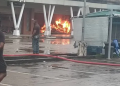
Iran Government has estimated the cost of the war launched by the United States and Israel since February at $270 billion.
The government spokeswoman, Fatemeh Mohajerani, told the Russian state news agency RIA Novosti that, the figure was a preliminary estimate and added that the first step in putting a more complete figure on the extent of the reparations will be to evaluate damage to buildings.
With this, the economic losses and lost tax revenues would be analysed.
She said that the Iranian government would seek compensation from U.S and Israel.
He added that the topic has been part of the negotiations with the U.S. during the landmark direct talks in Islamabad at the weekend.
She added that further analysis would include broader economic losses, such as reduced government revenue and disruption to economic activities
Also Read: US approves $16b arms sales to Gulf States amid Iran war
The Iranian government has indicated its intention to pursue reparations from both the United States and Israel over the destruction caused by the conflict.
Mohajerani also revealed that the issue of compensation has been raised in ongoing diplomatic engagements.
She noted that the matter featured in recent direct talks between Iran and the United States held in Islamabad signalling it importance in negotiation.
The development highlights the growing economic toll of the conflict and its potential implications for regional stability and international relations
The first 6 days of the the joint U.S.-Israeli operation against the Islamic Republic, beginning February 28, racked up costs of $11.3 billion, according to the Pentagon’s briefing to Congress.
From the capital of Tehran to cities across the country, the U.S. and Israeli airstrikes have bombarded the Islamic Republic — its leaders, military bases, weapons factories, soldiers and police, and state TV.
The totality of the damage is not clear. But it is “a more significant blow than anyone expected might happen in such a short time,” Armed Conflict Location and Event Data, an independent monitoring group, said in a statement. Still, even after the killing of Supreme Leader Ayatollah Ali Khamenei, the emergency leadership team still appears to have “the ability for domestic coercion,” said the group, which goes by the acronym ACLED.
The mounting death toll is also difficult to independently assess because of poor communications. An Iranian government agency says at least 1,230 people have been killed. More than 165 people were killed when a school in southeastern Iran was hit, most of them of children, according to Iranian state media.
Many top officials have been killed
U.S. and Israeli strikes hit Khamenei’s residential compound in central Tehran, killing him in the opening barrages on Feb. 28. Airstrikes also killed the defence minister, the head of the Republican Guard, Khamenei’s top security adviser and other senior figures.
A religious site connected to Khamenei’s predecessor was partially destroyed, and an airstrike smashed a hole through the dome of a building belonging to the Assembly of Experts, a council of senior Shiite clerics tasked with appointing the next supreme leader.
The Revolutionary Guard and Basij come under heavy fire
Many airstrikes have been directed at the Revolutionary Guard, Iran’s most powerful military force, and the Basij, a paramilitary force that brutally enforces Islamic law and crushes any public dissent.
In more than 280 strikes that ACLED documented as of Wednesday, over 20% targeted Revolutionary Guard or Basij positions, mostly in Tehran and in western and southern Iran. Garrisons, air bases, underground complexes, ammunition depots, weapons factories and command buildings have all been attacked.
At the Revolutionary Guard’s headquarters in northern Tehran, several buildings have been demolished, according to satellite photos from Vantor, a U.S. imaging company. Small, local branches of the Basij have also been targeted, according to ACLED.
On Thursday, two sports facilities in Tehran were struck, including the sprawling Azadi Sports Complex, where Iran once hoped to host the Olympics. There is now a giant hole in the roof of a 12,000-person arena, according to video verified by AP. The Guard and Basij have been known to use sports facilities as mobilizing points.
Not every bomb delivers meaningful impact. “A lot of empty buildings” are also being struck, ACLED said.
Destroying missile factories and storage sites is a priority
Eliminating Iran’s missile arsenal and launchers is a top priority, Israeli and U.S. officials say.
A suspected missile site deep in the barren mountains overlooking the central city of Isfahan was struck, as was another outside the western city of Kermanshah. There, roads leading into tunnels beneath a mountain are now pockmarked with craters, according to satellite photos provided by Planet Labs PBC.
On the outskirts of Tehran, several buildings at the Garmdarah missile site were also heavily damaged.
Before the war, Iran was believed to have several thousand short- and medium-range missiles. It is still firing missiles and drones at Israel, American bases in the Persian Gulf, and at energy facilities across the region. A senior Western official, speaking on condition of anonymity to discuss intelligence matters, said Iran has several days’ worth of ballistic missiles if it continues firing at current rates, but it may hold some back to wage a longer campaign.
The military and national police are key targets
Many buildings and assets belonging to Iran’s armed forces have been hit. Satellite photos from Vantor show a capsized ship in the waters of the Konarak Naval Base on Iran’s southern coast after strikes there. A U.S. submarine sank an Iranian warship off the coast of Sri Lanka, which on Wednesday recovered 87 bodies and rescued 32 Iranian sailors.
Manufacturers with ties to the military have also been attacked. In the central city of Isfahan, ACLED documented a strike on Isfahan Optics Industries, which is under international sanctions for its suspected connections to Iran’s nuclear program.