Credible News
  • Home
  • Conflict
  • Crime
  • Education
  • Economy
  • Entertainment
  • Foreign
  • Health
  • ICT
  • Legal
  • Politics
  • Security
  • Sports
No Result
View All Result
  • Home
  • Conflict
  • Crime
  • Education
  • Economy
  • Entertainment
  • Foreign
  • Health
  • ICT
  • Legal
  • Politics
  • Security
  • Sports
No Result
View All Result
Credible News
No Result
View All Result

China scraps tariffs for all but one African country

Except Eswatini which maintains ties with Taiwan

Priscilia Brown by Priscilia Brown
May 1, 2026
in Economy, Foreign, News, Security
0
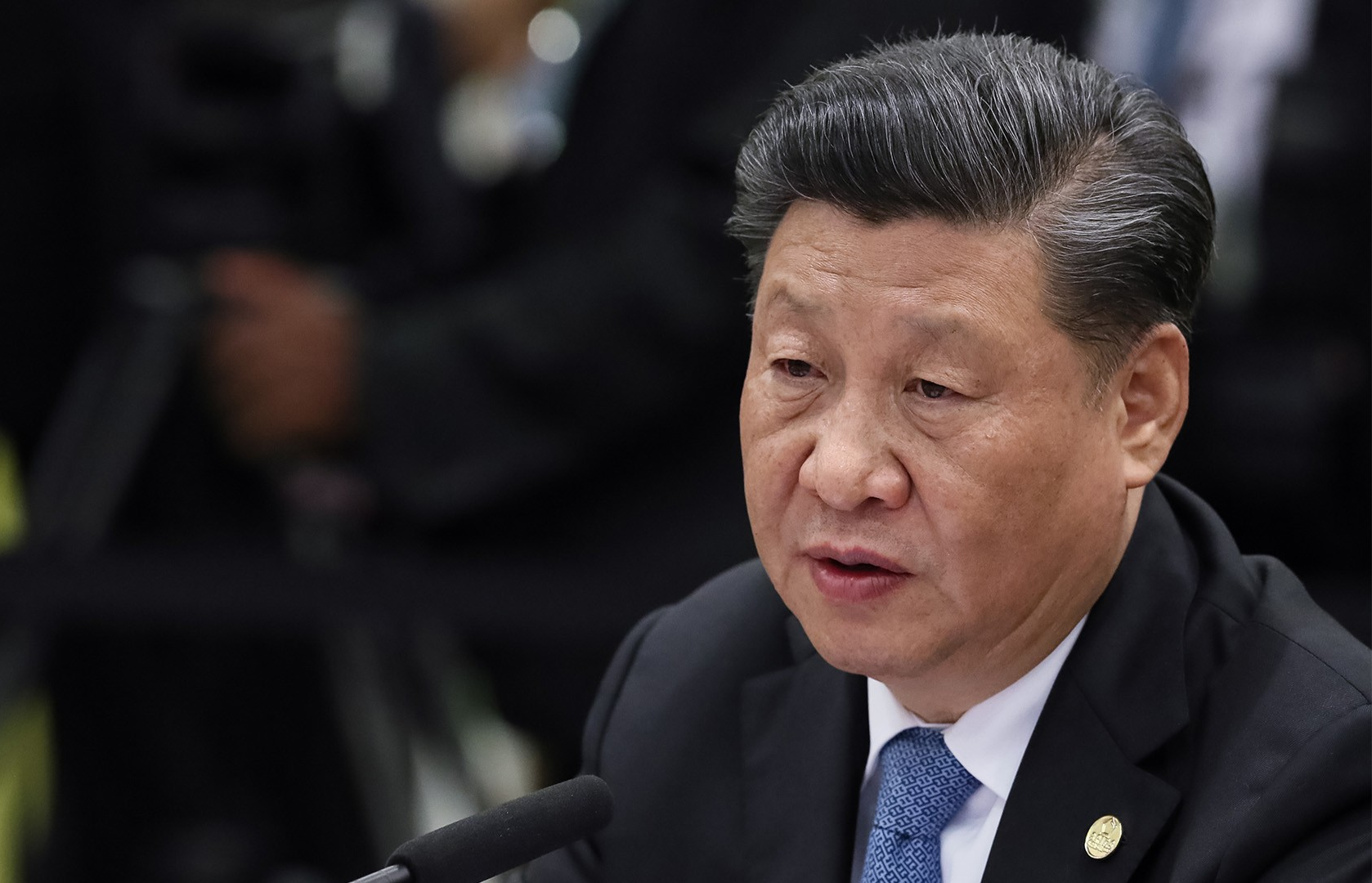
China President- Xi Jinping

China President- Xi Jinping

0
SHARES
17
VIEWS
Share on FacebookShare on TwitterShare on Whatsapp

China will scrap tariffs for all African countries from Friday – except Eswatini, which maintains ties with Taiwan.

As of December 2024, China had already implemented a duty-free policy for 33 least-developed African nations. The policy now covers 53 countries and will be in place until 30 April 2028. It is unclear what will happen after that.

Beijing has boasted that it is the first major economy to offer unilateral zero-tariff treatment to Africa.

But analysts say that while China is seizing the chance to enhance its soft power, they point out that tariffs are rarely the main obstacle for exporters in Africa which has a huge trade deficit with China.

“China is positioning itself as the trade liberalizer and Africa-friendly economic partner, in contrast to Donald Trump and the US,” says Lauren Johnston, a senior research fellow at the Aust China Institute.

The US had hit some African nations with tariffs of up to 30% in August, although most are now subject to a 10% tariff, after the US Supreme Court struck down many of the duties.

The expansion of China’s zero-tariff regime could increase African agricultural exports, which will “help to elevate rural incomes, improve rural productivity, and ultimately to reduce hunger and poverty”, Johnston says.

But Sino-African trade is marked by a growing imbalance in China’s favour, which means Chinese exports to Africa far exceed African exports to China, and that difference is widening.

Last year, Africa’s trade deficit with China rose by 65% to about $102bn.

Africa’s exports to China are dominated by minerals and raw materials, such as crude oil and metallic ores.

Currently, China’s main trading partners in the region include Angola, driven primarily by oil, the Democratic Republic of Congo, and South Africa.

However, a consistent duty-free regime across such a heterogenous continent could result in uneven gains, Johnston notes.

Also Read: ECOWAS declares China as West Africa top partner

More developed, industrialized economies like South Africa and Morocco will be better positioned to expand exports, she says.

On its own, the zero-tariff policy does not address continent-wide needs for economic restructuring and infrastructure upgrading, adds Jervin Naidoo, a political analyst at Oxford Economics Africa.

“Many African economies still face structural constraints, such as limited industrial capacity, weak logistics, and a reliance on raw commodity exports, which tariff reductions alone cannot address,” he says.


Alfred Schipke, director of the East Asian Institute in Singapore, agrees that short-term economic impact “will likely be modest and concentrated in African countries that already have export capacity”.

“Over the long term, however, the potential could be more meaningful, especially if African countries are able to expand production, diversify exports, and move up the value chain,” Schipke says.

Amit Jain, another Singapore-based expert in China-Africa relations, notes that changing consumer demand in China could open up new markets for African producers. For instance, Chinese consumers are buying far more coffee and nuts than they did 20 years ago.

“These new measures will improve access to Chinese markets, closing that trade deficit and expand opportunities for African companies to prosper,” he told the BBC.

“For Kenya, it will be a big boost to certain subsectors such as avocado. The agriculture sector will benefit the most – macadamia nuts, coffee, tea and leather.”

Africa fiscal policy economist Wangari Kebuchi said short-term support for foreign exchange earnings and “a modest boost to agriculture, mining and logistics sectors” were welcome – but medium and long-term fiscal gains would not materialize from market access alone.

“The structural problem has not changed. Africa continues to export raw materials and import manufactured goods. That asymmetry drives persistent trade deficits, constrains domestic revenue mobilization, and limits the jobs and tax base that governments need to fund public services.

“Zero tariffs on commodities that have already left our shores unprocessed do not solve that problem. They can entrench it. African governments must now ask the harder questions. How do we use improved market access as leverage for industrial policy?”

The analysts believe the exclusion of Eswatini is a political move with limited economic impact.

In fact, Jain believes that this “may even help Eswatini win even more economic concessions from Taiwan”.

The landlocked nation in southern Africa is among just 12 countries that have diplomatic relations with Taiwan, which Beijing sees as a breakaway province that will eventually be “reunited” with China.

Many in Taiwan, a self-governed island, consider themselves to already be part of a sovereign nation.

Last month, Taiwan’s leader Lai Ching-te had to cancel a trip to Eswatini after three other African countries – Seychelles, Mauritius and Madagascar – barred his aircraft from flying over their territories. Taiwan has accused them of doing so under “intense pressure” and economic coercion from China.

By sidelining Eswatini, China is “weaponising its ties with African countries and showing how relations with China comes up with strings attached”, Wen-Ti Sung, a political scientist with the Australian National University’s Taiwan Centre.

“China wants to show the world how it treats its friends, versus Taiwan’s friends,” he says.

 BBC NEWS
Tags: Alfred SchipkeChinaEswatiniLai Ching-te
Previous Post

Will PDP be on the ballot next year!

Next Post

Akpabio pledges living wage for workers

Priscilia Brown

Priscilia Brown

Next Post
Senator Godswill Akpabio

Akpabio pledges living wage for workers

ADVERTISEMENT
  • Trending
  • Comments
  • Latest
Kwara State university campus in Osi ready for first lectures

Kwara State university campus in Osi ready for first lectures

November 18, 2024
Police warn Lagosians against economic disturbance during NLC protest

Police in Kano urges caution as Muslims begin Ramadan

March 11, 2024
In the dark: UCH’s mounting power crisis

Is UCH in darkness: Need for responsible journalism!

February 9, 2025
Tiktok

Court remands Tik Toker for posting President Tinubu’s obituary

July 25, 2025
Corper recounts ordeal of Agunechemba attack, seeks prosecution

Corper recounts ordeal of Agunechemba attack, seeks prosecution

2

ADC begins online membership registration

2
Biden arrives Israel

Biden visits Israel amidst killing of more Palestinians

1
handcuffs

Police arrests 34-year-old man for raping 90-year-old woman

1
Founder and Chief Executive Officer of First Foundation Hospital, Dr. Tosin Ajayi

Helen Prest losses marital status battle

June 18, 2026
Sudan’s paramilitary chief meets Kenyan president amid ceasefire push

Kenya’s Ruto faces pushback over Trump ties

June 18, 2026
DSS DG, Mr Oluwatosin Adeola Ajayi

DSS kicks against foreign cash for Security Trust Fund

June 18, 2026
The Minister of Budget and Economic Planning, Atiku Bagudu

NEC approves N83.21bn to tackle flooding, climate issues

June 18, 2026

Recent News

Founder and Chief Executive Officer of First Foundation Hospital, Dr. Tosin Ajayi

Helen Prest losses marital status battle

June 18, 2026
Sudan’s paramilitary chief meets Kenyan president amid ceasefire push

Kenya’s Ruto faces pushback over Trump ties

June 18, 2026
DSS DG, Mr Oluwatosin Adeola Ajayi

DSS kicks against foreign cash for Security Trust Fund

June 18, 2026
The Minister of Budget and Economic Planning, Atiku Bagudu

NEC approves N83.21bn to tackle flooding, climate issues

June 18, 2026
Credible News

At Credible News we seek, process and serve news, opinions and analyses that are verifiable and reliable.
We also provide readers with authentic and credible facts and figures, news, opinions and analyses to make informed choices.

Follow Us

Browse by Category

  • Accident
  • Agriculture
  • Banking
  • Conflict
  • Crime
  • Development
  • Economy
  • Education
  • Entertainment
  • Fashion
  • Features
  • Foreign
  • Global Trade
  • Health
  • Human Interest
  • ICT
  • Interviews
  • Legal
  • Life Style
  • News
  • Oil & Gas
  • Opinion
  • Politics
  • Religion
  • Security
  • Sports
  • Travel
  • Trending
  • Women

Recent News

Founder and Chief Executive Officer of First Foundation Hospital, Dr. Tosin Ajayi

Helen Prest losses marital status battle

June 18, 2026
Sudan’s paramilitary chief meets Kenyan president amid ceasefire push

Kenya’s Ruto faces pushback over Trump ties

June 18, 2026
  • About
  • Advertise
  • Privacy & Policy
  • Contact

© 2024 Credible News - The place for all factual stories. Designed by VintoICT Solutions.

No Result
View All Result
  • Home
  • Conflict
  • Crime
  • Education
  • Economy
  • Entertainment
  • Foreign
  • Health
  • ICT
  • Legal
  • Politics
  • Security
  • Sports

© 2024 Credible News - The place for all factual stories. Designed by VintoICT Solutions.