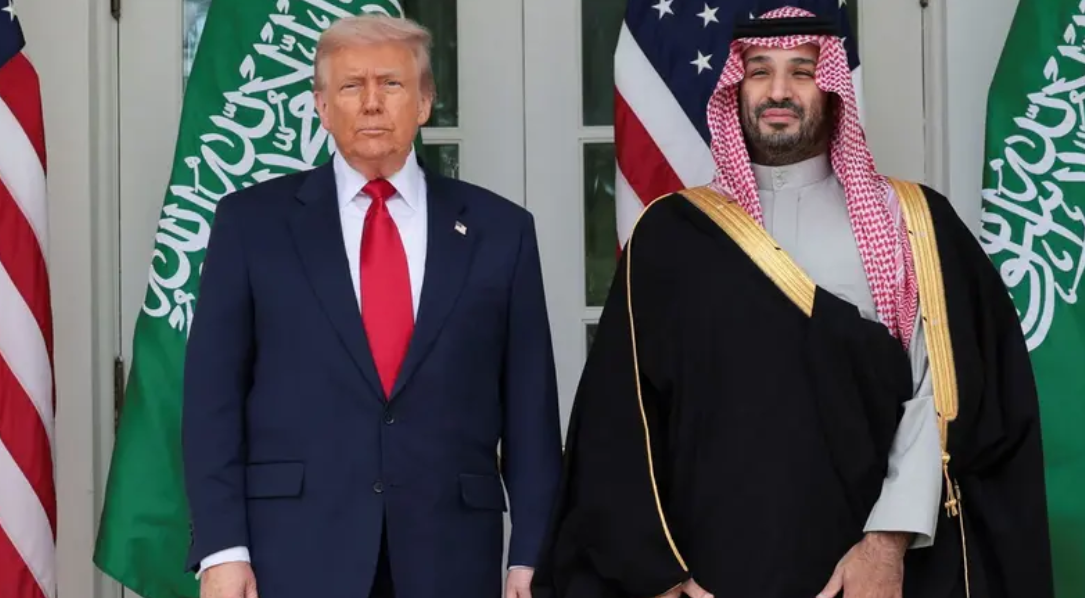
US President Donald Trump has formally approved an agreement with Saudi Arabia that will provide it with a civilian nuclear program and potentially open the door to uranium enrichment in the Kingdom, the Wall Street Journal reported on Wednesday.
The move comes as Washington fights a war with Iran that began in part over US concerns with Tehran’s own nuclear program an issue that remains a key point of contention during now-stalled talks between the two foes.
The New York Times, citing two unidentified US officials, reported on Tuesday that the Trump administration planned to formally sign and announce the deal with the Saudis on Wednesday.
President Donald Trump’s administration said the agreement would provide billions of dollars for the US nuclear industry.
A provision in the 30-year deal would potentially see US companies build a uranium enrichment facility in Saudi Arabia, the Wall Street Journal reported.
However, US lawmakers from both parties and Israeli officials have voiced opposition to a civilian nuclear project for Saudi Arabia over fears it could be converted to eventually develop nuclear weapons.
The deal is expected to be submitted to Congress in the coming days, but its approval is not required for it to go through. Saudi Arabia has long been adamant about its right to pursue a civilian nuclear program.
Washington has sought in recent years to include any deal concerning a nuclear agreement as part of a wider strategic play that would include seeing Saudi Arabia normalize ties with Israel, along with the signing of a US defense pact.
The United States signed a nuclear agreement with the kingdom’s neighbor, the United Arab Emirates, in 2009, although the country does not enrich its own uranium
Also Read: Oil prices surge as Trump strikes Iran
Washington has fiercely opposed another Gulf state, Iran from producing a nuclear weapon, launching a devastating attack to obliterate Tehran’s nuclear capability.
US Secretary of State Marco Rubio declined to confirm the Saudi Arabia deal in Manila on Wednesday, deferring to the White House, but dismissed fears it could lead to nuclear proliferation.
“Suffice it to say, the US is not going to reach any agreement with any country in the world that leads to the risk of proliferation,” he told reporters on the sidelines of a summit of Southeast Asian foreign ministers.
With renewed fighting between the United States and Iran, fears are growing that the war risks further destabilizing the region.
Tehran’s Yemeni allies, the Houthi rebels, threatened to expand the war this week, announcing they would blockade Saudi ports.
The declaration has spurred fears that such a blockade could threaten the supply of millions of barrels of crude to the international market.
Saudi Arabia and the Houthis traded fire last week, threatening a 2022 truce, although the rebels have largely remained on the sidelines since the Middle East war erupted on February 28.
PUNCH