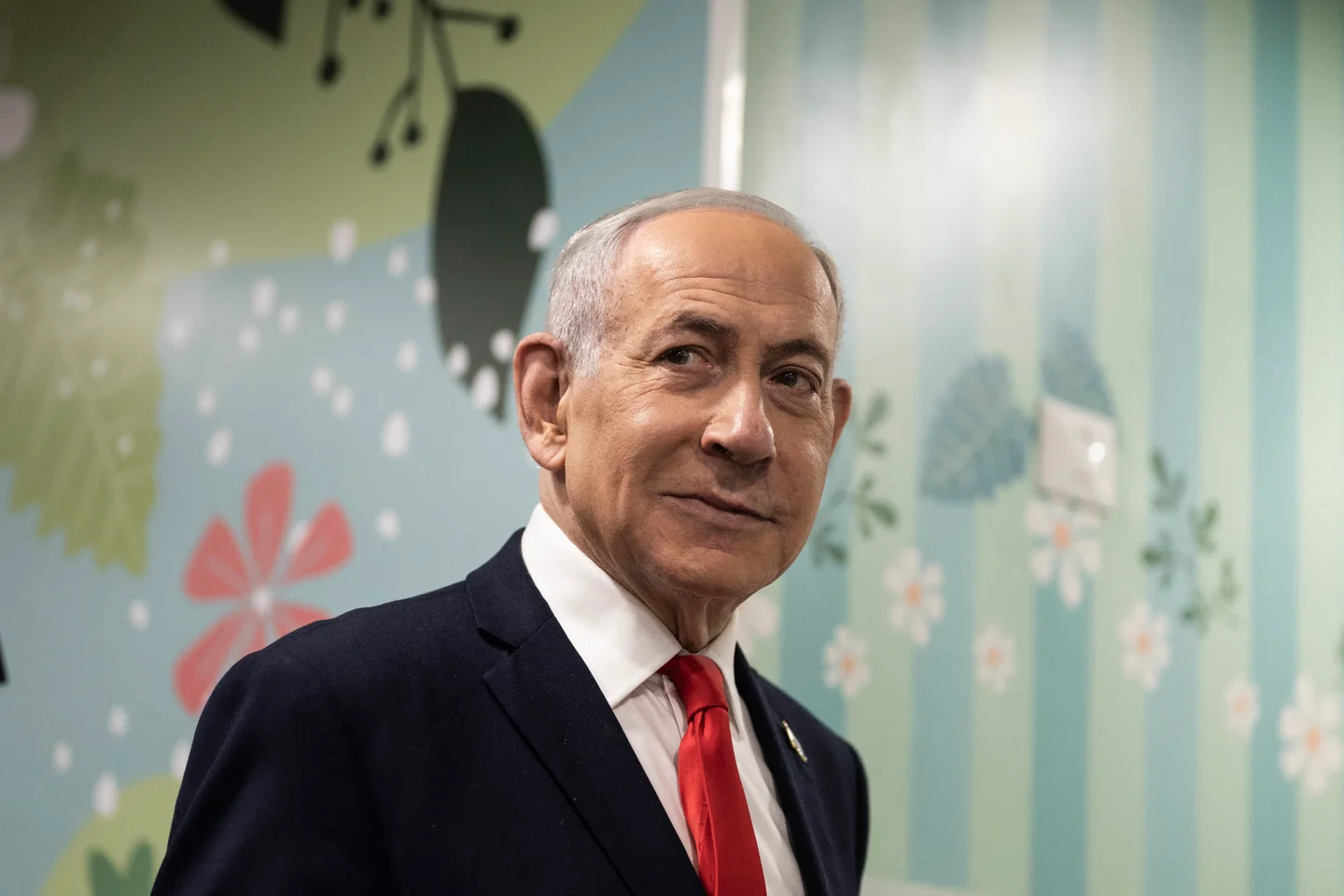
Israel faces a political deadlock as exit polls show Benjamin Netanyahu and the opposition falling short of a Knesset majority, raising the prospect of another election.
The polls released by Channels 11, 12 and 13 on Tuesday night project the opposition bloc to win between 50 and 52 seats in the Knesset, while Netanyahu’s bloc is expected to secure about 50 seats. Both sides fall short of the 61 seats required for a parliamentary majority.
The opposition bloc, which comprises Yashar, B’Yachad, Yisrael Beytenu and the Democrats, declared victory shortly after the projections were released, despite the absence of a clear path to forming a government.
The Joint List and Ra’am are projected to win a combined 17 to 18 seats, potentially giving Arab parties a significant role in coalition negotiations. However, most opposition leaders have ruled out forming a government with the Arab parties, with Democrats leader Yair Golan taking a more open position.
Netanyahu’s Likud party is projected to remain the largest individual party, with 24 to 25 seats, while Gadi Eisenkot’s Yashar is expected to secure between 21 and 23 seats.
Turnout reaches highest level in decades
Voter turnout reached 77.7 per cent when polling stations closed at 10 p.m., the Central Elections Committee reported. The figure represents a 7.1 percentage-point increase from the 2022 election.
Committee records indicate that turnout reached its highest level since at least 1973, when the body began tracking participation at designated intervals on election day.
The exit polls also project that two small right-wing parties, Ofer Winter’s People of Israel and Yoaz Hendel’s The Reservists-Economic party, may fail to cross the required 3.25 per cent electoral threshold.
Their failure to enter the Knesset could further complicate efforts by Netanyahu’s bloc to secure a parliamentary majority.
Coalition talks face major obstacles
A unity government involving Netanyahu and Eisenkot appears unlikely. Eisenkot has rejected serving under Netanyahu, including in a government that would allow the two politicians to rotate the premiership. Other opposition leaders have also ruled out joining a coalition led by the incumbent prime minister.
Eisenkot has proposed that the leader of the largest party within the opposition bloc should become its candidate for prime minister. However, the bloc has yet to announce an agreement on the arrangement.
The exit polls also raise the possibility of a minority government that could win a Knesset confidence vote without controlling an absolute majority of 61 seats. Such an arrangement could prove difficult if opposition parties refuse to rely on support from Arab lawmakers.
Failure to reach a coalition agreement could ultimately lead to another election, although negotiations may still produce a deal between the parties.
Exit polls project party seat distribution
Within the opposition bloc, Naftali Bennett’s B’Yachad is projected to win between 12 and 14 seats, potentially making it the third-largest party in the next Knesset.
Also Read: Israel election pits Netanyahu against former military chief
Avigdor Liberman’s Yisrael Beytenu is projected to secure seven to nine seats, while Golan’s Democrats are expected to win between nine and 10 seats.
On Netanyahu’s side, National Security Minister Itamar Ben-Gvir’s Otzma Yehudit is projected to receive six to seven seats. The Religious Zionist Party-Zehut, led by Finance Minister Bezalel Smotrich, is projected to win six seats.
The ultra-Orthodox parties Shas and United Torah Judaism are expected to secure a combined 12 to 13 seats. Shas is projected to win six seats, while United Torah Judaism is expected to receive between six and seven.
The projections remain preliminary and may change when the official results are released.
Opposition leaders declare victory
Eisenkot and other opposition figures described the exit-poll projections as a rejection of Netanyahu’s leadership.
Eisenkot said the initial figures indicated a lack of confidence in Netanyahu and his government, which was in power during the Hamas-led attacks of 7th October, 2023.
He said that, if confirmed, the projections would represent a victory for what he described as Israel’s Zionist majority.
Eisenkot pledged to work towards replacing the government and establishing an administration committed to military conscription.
Opposition leader Yair Lapid also declared Netanyahu’s bloc defeated, describing the projections as a major setback for the prime minister’s camp.
Golan said the figures presented an opportunity to establish a new government, adding that his party was ready to work with its partners to bridge differences and assume responsibility.
Official results await ballot count
The exit polls are not official election results, and previous Israeli elections have produced differences between initial projections and final results.
Coalition negotiations will determine whether the opposition can replace Netanyahu or whether the political deadlock leads to another election.
Netanyahu, Israel’s longest-serving prime minister, has held the office for more than 19 years in total.
Following the 7th October, 2023, attacks and the ensuing war, opposition figures have called for him to be held accountable, arguing that he should no longer serve as prime minister. They have also demanded the establishment of a state commission of inquiry into the circumstances surrounding the attacks.
The Jerusalem Post