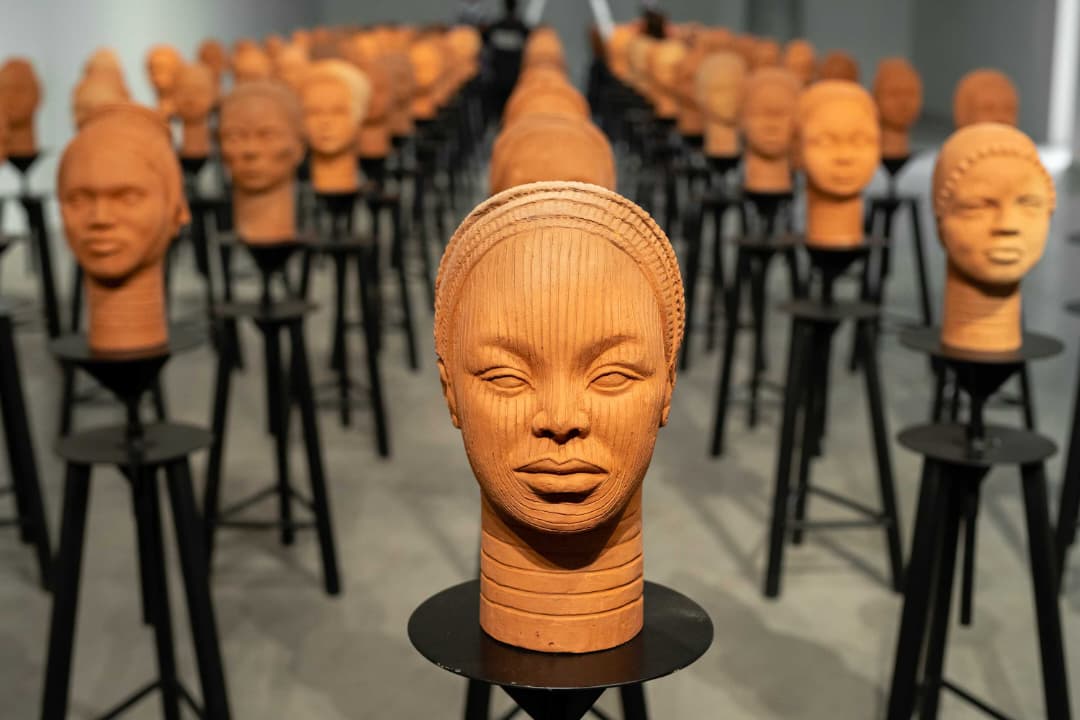
Hollywood actress Angelina Jolie has attended the opening of “Statues Also Breathe,” an exhibition in Marrakech, Morocco, dedicated to remembering the Chibok schoolgirls who have still missing more than a decade after their abduction.
Jolie joined other international figures, Chibok survivors, and families of the abducted girls at the Museum of African Contemporary Art Al Maaden, to support the exhibition’s message of remembrance and renewed calls for justice.
Photos shared by African Folder showed the actress at the event, where the plight of the missing girls was brought back into global focus.
Chibok survivors, including Rahab Ibrahim and Margaret Yama, alongside relatives of some of the missing girls, travelled to Marrakech to participate in the opening and share in the tribute to the victims.
The exhibition, which was first presented in Lagos, will remain on display in Marrakech until the end of the year before continuing its international tour. Organizers said the project is expected to eventually find a permanent home in an African museum.
Created by French artist Prune Nourry in collaboration with Nigerian musician and activist Ade Bantu, “Statues Also Breathe” features 108 clay sculptures inspired by the renowned Ife bronze heads, a symbol of Nigeria’s rich artistic heritage.
The project began after families of the Chibok girls provided photographs of their daughters to Nourry, who used them as references to create clay sculptures.
Also Read: Kachi Benson premieres ‘Mothers of Chibok’ documentary
The works were later cast by women potters using traditional clay from Ile-Ife, connecting the stories of the missing girls with Nigeria’s ancient artistic traditions.
According to the organizers, the exhibition aims to preserve the memories of the abducted girls, amplify the voices of their families, and sustain global conversations around justice, human rights, and the need for accountability.
Angelina Jolie’s appearance has further increased international attention on the project, with advocates describing the exhibition as a reminder that the search for the remaining Chibok girls and the demand for answers remain ongoing.
Beyond its humanitarian message, the exhibition highlights Nigeria’s cultural legacy by drawing inspiration from the distinctive style of ancient Ife sculptures, which are widely recognised as some of Africa’s most significant examples of classical art.
Cultural observers have described the collaboration as an example of how art can cross borders and address social issues, while showcasing the growing global influence of Nigerian creativity and heritage.
The Chibok schoolgirls were abducted by Boko Haram insurgents on April 14, 2014, from the Government Girls Secondary School in Chibok, Borno State. The incident triggered the global #BringBackOurGirls campaign and drew international condemnation.
While many of the girls have since been rescued or escaped captivity, several remain missing, leaving their families and supporters continuing to demand their safe return and keeping their stories alive through initiatives such as “Statues Also Breathe.”
NAN