The State House has disowned letters ascribed to it for the establishment and operation of the Presidential Foreign Intervention Promotion Council, PFIPC, describing the documents as fake.
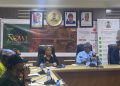
The disclosure was made by the State House Director of Administration, Abdulkadir Idris, during a public hearing of the House of Representatives Ad Hoc Committee investigating the establishment and operations of the controversial council in Abuja.
Idris told the committee that letters allegedly sent to the Office of the Accountant-General of the Federation and the Budget Office of the Federation requesting budget codes for the council were not genuine.
The letters were reportedly signed by a purported Director of Administration and Support Services, identified as Akanbi Adewale.
He said the State House had no department known as Administration and Support Services, adding that a review of records of directors of administration in the State House since 2003 showed that no person named Akanbi Adewale had held the position.
Idris’ testimony adds to earlier official statements distancing the Presidency from the PFIPC. On June 11, the Chief of Staff to the President, Femi Gbajabiamila, said the organization did not exist under the Tinubu administration and that his office had not appointed Prince Adeniyi Adeyemi, who had presented himself as the Director-General of the council.
The controversy subsequently prompted President Bola Tinubu to direct the Independent Corrupt Practices and Other Related Offences Commission, to investigate the activities of the purported council.
The Presidency said the PFIPC had no basis in law, presidential instrument, executive approval or any other lawful act of government.
The investigation has also raised questions about how the purported council interacted with government institutions despite not being an established federal entity.
Also Read: ICPC exposes Adeyemi’s tricks in probe report
At the hearing, the Corps Marshal of the Federal Road Safety Commission, Shehu Idris, told lawmakers that the commission issued seven government number plates to the council.
According to him, the council submitted documents required for the processing of the number plates, including an establishment Act, office address and other supporting documents.
He said FRSC officials subsequently conducted a physical inspection of the address supplied by the council and found it operating there before the number plates were issued.
The Corps Marshal, however, said the commission only discovered that the establishment Act submitted by the council was fake after reports about the controversy emerged in the media.
The development highlights concerns over the ability of purported entities to use official-looking documents and government procedures to gain recognition or access to public institutions.
The Budget Office has also previously clarified that an appropriation in the national budget does not, by itself, amount to the release or expenditure of public funds. It said government expenditure is subject to several controls and procedures before funds can be accessed.
Chairman of the House committee, Rep. Yusuf Gagdi, APC-Plateau, urged government agencies to exercise greater caution when dealing with individuals or organizations claiming to represent federal institutions.
Gagdi called on the agencies to remain vigilant and strengthen their verification processes to prevent fraudsters from exploiting the names and identities of government bodies.
He adjourned the hearing until Aug. 13, when agencies and individuals linked to the controversy are expected to appear before the committee for further questioning.
The committee is expected to use the next hearing to bring the parties involved together for direct questioning as lawmakers continue efforts to establish how the purported council operated, gained access to government processes and interacted with public institutions despite the Presidency’s position that it was not a recognised government body.