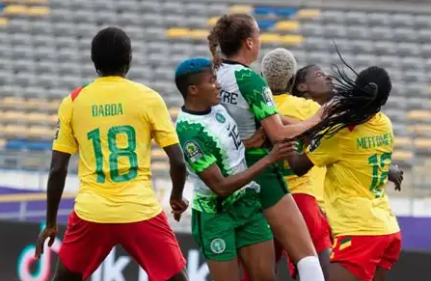
The Falcons face a familiar and formidable rival on Sunday as Nigeria take on Cameroon in a high-stakes 2026 Women’s Africa Cup of Nations, WAFCON, quarter-final in Casablanca.
The stakes are high as the opponents fight for a place in the semi-finals and automatic qualification for the 2027 FIFA Women’s World Cup in Brazil on the line.
The encounter at the Stade Larbi Zaouli represents another chapter in one of the most enduring rivalries in African women’s football. Kick-off is scheduled for 5:00pm GMT (6:00pm local time), with the winner advancing to the last four and securing a World Cup ticket.
Nigeria enters the knockout contest as the defending African champions and the most successful nation in the history of the women’s continental championship. The country has won the WAFCON title 10 times, including the 2024 edition, and is seeking an unprecedented 11th crown in Morocco.
However, the Falcons cannot afford to rely solely on their impressive pedigree. Their opening match in Morocco exposed defensive weaknesses when they suffered a 3-2 defeat to WAFCON debutants Malawi, putting the defending champions under immediate pressure in Group C.
That setback made the remainder of Nigeria’s group campaign particularly important. The team needed positive results against Zambia and Egypt to secure a place in the knockout stage and keep their title defence alive.
Cameroon, meanwhile, arrive in the quarter-final with confidence after emerging from Group D as group winners. The Indomitable Lionesses negotiated a group containing Ghana, Mali and Cape Verde and secured their place in the last eight without losing.
The contrast in tournament momentum adds another layer to Sunday’s contest. Nigeria have the greater historical record, but Cameroon have entered the knockout stage with considerable confidence and will be determined to exploit any weaknesses in the reigning champions.
The Nigeria-Cameroon rivalry stretches back more than three decades. Their first major meeting came during the qualifying campaign for the inaugural FIFA Women’s World Cup in 1991.
Nigeria won both legs of that encounter, securing a 6-0 aggregate victory and becoming the first African nation to qualify for the women’s World Cup. The result established the Falcons as a dominant force in African women’s football from the beginning.
Also Read: Super Falcons eye historic 11th WAFCON title defense
Their rivalry continued at the continental level when the teams met in the Women’s Africa Cup of Nations. Nigeria repeatedly came out on top, although Cameroon have occasionally produced results that demonstrated their ability to challenge the African powerhouse.
One of the most notable exceptions came in 2012, when Cameroon defeated Nigeria 1-0 in the third-place match. The result remains one of the rare competitive victories Cameroon have recorded over Nigeria in the rivalry.
The rivalry has also extended beyond WAFCON. In preparation for the 2026 tournament, Nigeria and Cameroon played two international friendlies in February and March.
Cameroon won the first encounter 1-0, but Nigeria responded strongly in the second match, securing a 3-1 victory. The results provided both teams with useful information ahead of the continental championship and demonstrated how closely contested meetings between the sides can be.
While Nigeria remain one of the tournament favourites, their performances in Morocco have raised questions about their defensive organization.
The 3-2 defeat against Malawi was particularly concerning because Nigeria surrendered three goals against a team making its WAFCON debut. Malawi’s attacking display exposed spaces in the Nigerian defence and gave coach Justine Madugu plenty to address.
The result also demonstrated that the defending champions cannot afford complacency against teams that approach them without the psychological pressure associated with facing a 10-time champion.
Madugu has acknowledged the shortcomings in his side and will be expected to make tactical adjustments for the Cameroon encounter.
The Nigerian squad nevertheless possesses considerable experience. Captain Rasheedat Ajibade remains one of the team’s most influential players, while the squad also contains established internationals including Chiamaka Nnadozie, Asisat Oshoala, Esther Okoronkwo, Michelle Alozie and Jennifer Echegini. CAF identifies Ajibade as a central figure in Nigeria’s title defence after she was named Player of the Tournament at the previous edition.
Cameroon will not be intimidated by Nigeria’s history. The Indomitable Lionesses returned to the WAFCON after missing the previous edition and have quickly demonstrated why they remain one of the continent’s strongest women’s teams.
Their unbeaten run in Group D gives them a strong platform heading into the quarter-final, while their familiarity with Nigeria means there will be little mystery between the two sides.
Cameroon also have experienced players capable of handling the pressure of a major knockout game. Their objective will be to frustrate Nigeria’s attacking players, remain compact defensively and take advantage of opportunities when they arise.
For Cameroon, victory would represent a major statement and could send the team into the semi-finals at the expense of the reigning champions.
The importance of Sunday’s match goes beyond the WAFCON trophy. The winner will automatically qualify for the 2027 FIFA Women’s World Cup in Brazil, making the quarter-final effectively a World Cup qualification match as well as a continental knockout fixture.
That raises the pressure on both teams, particularly because neither will want to see their World Cup hopes end before the semi-finals.
Nigeria’s experience at the global level gives them an advantage on paper. The Falcons have appeared at every Women’s World Cup since the inaugural 1991 tournament and have established themselves as Africa’s most consistent representative on the world stage.
But Cameroon will see Sunday’s match as an opportunity to rewrite part of the historical narrative between the two nations. For Nigeria, the key will be to avoid the defensive lapses that undermined their opening game against Malawi.
The team will need greater defensive discipline, better control in midfield and more efficiency in front of goal. Against a Cameroon side that has already shown resilience in the group stage, giving away early chances could prove costly.
The Falcons also have to manage the psychological burden that comes with being defending champions. Their opponents know that eliminating Nigeria would be one of the biggest statements of the tournament.
The experience within the Nigerian squad, however, could prove decisive. Players who have competed in major European leagues and previous WAFCON and World Cup tournaments are accustomed to high-pressure matches.
With a semi-final berth and a place at the 2027 Women’s World Cup awaiting the winner, Sunday’s clash promises to be one of the most significant fixtures of Nigeria’s title defence.
The Falcons will be hoping their superior continental pedigree, squad depth and experience can once again carry them past Cameroon. But with the Indomitable Lionesses arriving unbeaten and determined to challenge Nigeria’s dominance, the quarter-final is unlikely to be the walkover that some historical records might suggest.
For Nigeria, the mission is clear: survive Cameroon, secure the World Cup ticket and move one step closer to an 11th African title.
Crediblenewsng.com