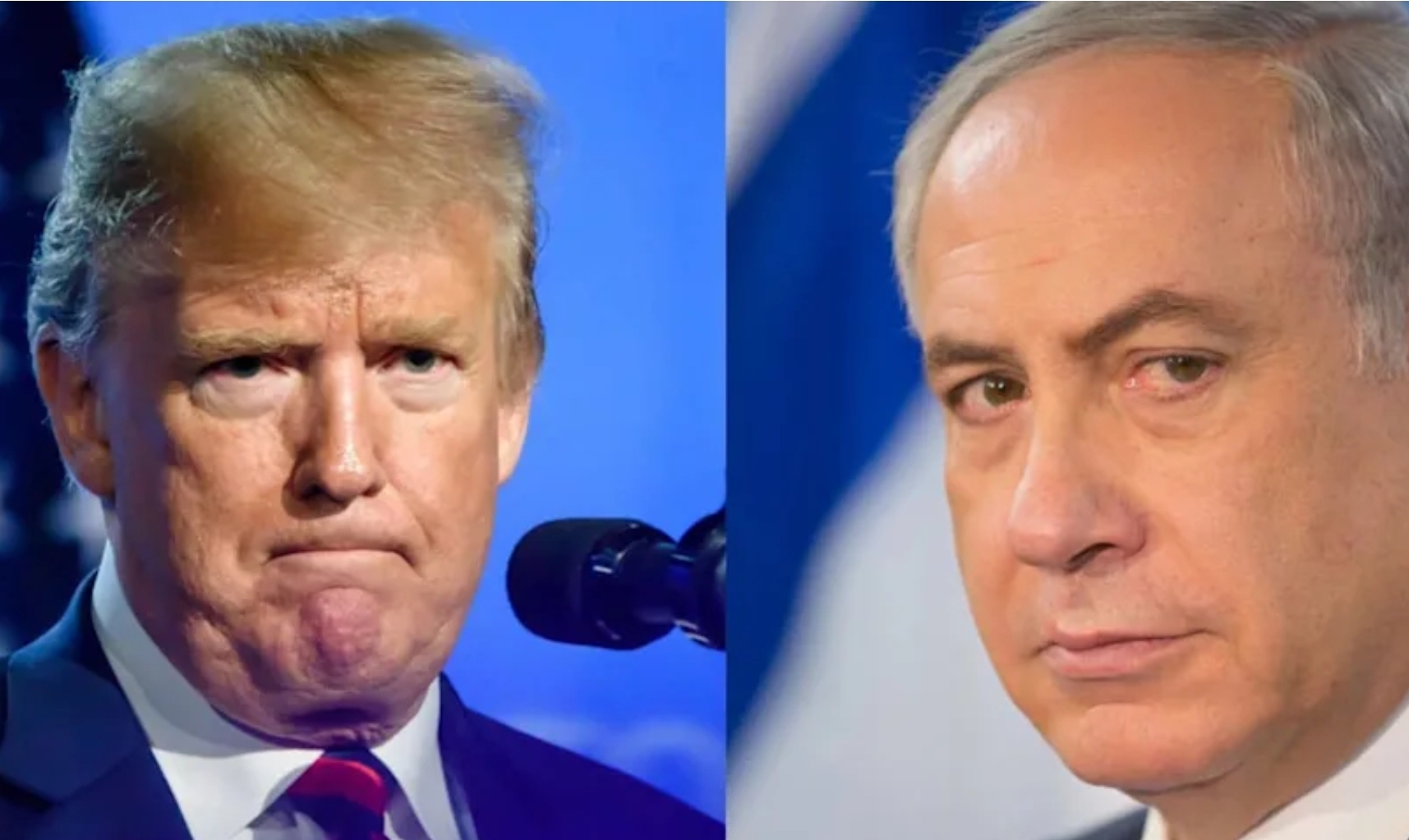
Israeli Prime Minister Benjamin Netanyahu has openly rejected a 15-point US-backed roadmap for advancing the Gaza ceasefire, taking a position that could further strain his relationship with President Donald Trump.
Speaking at Israel’s weekly Cabinet meeting, Netanyahu said Israel would not accept the document, repeating his position to make clear that there was no ambiguity over his government’s stance.
“I wish to be precise: Israel does not accept the 15-point document,” Netanyahu said. He later repeated the statement, saying he wanted to make sure there was no misunderstanding about Israel’s position.
The rejection could put Netanyahu in a difficult position with Trump, who has renewed efforts to secure progress on Gaza and recently announced what he described as a “historic agreement” with Hamas on the group’s complete disarmament.
Under the proposed framework, the disarmament of Hamas would be linked to a phased withdrawal of Israeli forces from Gaza. Trump’s senior envoy, Nickolay Mladenov, previously explained that the two processes would need to take place “in lockstep”, with Hamas surrendering its weapons as Israeli forces gradually pulled back.
Netanyahu, however, has rejected that sequence. He insisted that the Israel Defense Forces would not withdraw from Gaza until Hamas had been fully disarmed.
“The IDF will not carry out any withdrawal until Hamas is disarmed,” Netanyahu said, stressing that genuine disarmament would have to include both heavy and light weapons.
The Israeli prime minister also rejected what he described as the possibility of “fictitious disarmament”, indicating that his government would demand verifiable evidence that Hamas had surrendered its weapons before considering any major military withdrawal.
Mladenov later suggested that a phased process could still be possible. Speaking to Israel’s Channel 12, he said Israel would not be expected to take action before verified steps were made on the ground.
He explained that once Hamas weapons were removed from the factions, stored and ultimately rendered unusable, Israel could then begin withdrawing from Gaza.
The disagreement highlights one of the biggest challenges facing efforts to implement the proposed ceasefire framework: determining which side should move first and how compliance would be verified.
Hamas has said it remains committed to the roadmap and called on the Board of Peace to put pressure on Netanyahu to comply with the agreement.
Also Read: Why America should arrest Netanyahu, New York Mayor
However, doubts remain over whether Hamas would actually surrender all of its weapons. The group has historically regarded its military arsenal as central to its position within the Palestinian resistance and as an important guarantee of its survival.
At the same time, there are questions over whether Netanyahu would be willing to order a substantial withdrawal of Israeli forces even if Hamas agreed to surrender its weapons.
The dispute has also raised questions about why Netanyahu chose to reject the proposal so publicly, particularly given Trump’s strong interest in securing progress on Gaza.
A major factor is believed to be Israel’s approaching general election, which is less than three months away. Netanyahu faces political pressure and will need the backing of far-right parties if he hopes to remain prime minister and form another governing coalition.
His far-right allies have publicly criticised the Gaza roadmap and demanded that previous government decisions relating to the deployment of an International Stabilization Force in Gaza be reconsidered.
Reports that reconstruction work had been quietly approved in a limited pilot area of Gaza also risked being portrayed by Netanyahu’s political opponents as a sign of weakness or excessive compromise.
However, Netanyahu’s position cannot be attributed solely to pressure from his far-right coalition partners. Opposition to restrictions on Israel’s military freedom in Gaza remains significant among Israeli voters, many of whom continue to support a strong security posture despite backing for Trump.
Mladenov has attempted to frame the proposed roadmap as being in Israel’s own security interests. He warned that failure to implement the plan could allow Hamas to rearm and increase the possibility of another major attack similar to the October 7, 2023 assault on Israeli communities.
But such an argument may have limited political appeal in Israel, where security concerns remain deeply influential in determining public opinion.
Meanwhile, Trump has yet to publicly respond in detail to Netanyahu’s latest rejection, leaving uncertainty over how the US president will handle the disagreement.
The dispute comes at a sensitive moment for efforts to end the Gaza conflict. While diplomatic officials continue to explore ways to move the ceasefire framework forward, Israel and Hamas remain divided over the crucial questions of disarmament, military withdrawal and security guarantees.
For Gaza’s approximately two million residents, the continuing disagreement means their future remains largely dependent on decisions being made by political and military actors outside their direct control.
The latest developments therefore leave Trump facing the difficult task of reconciling his Gaza roadmap with Netanyahu’s demand for Hamas to be completely disarmed before Israel makes further military withdrawals, while Netanyahu must balance pressure from Washington with the political demands of Israeli voters and his coalition partners.
CNN