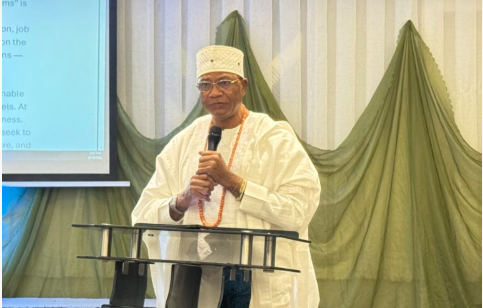
The Manufacturers Association of Nigeria, MAN, has called for consistent government policies, affordable electricity and improved infrastructure to strengthen production, attract investment and accelerate industrial growth.
The call was made on Tuesday at the 59th Annual General Meeting, AGM, of the association in Lagos, where stakeholders identified high operating costs and regulatory challenges as major obstacles to the growth of the manufacturing sector.
The President of MAN, Otunba Francis Meshioye, identified high energy costs, inadequate infrastructure, limited access to finance, regulatory bottlenecks and smuggling as some of the major challenges confronting manufacturers.
He urged the government to give greater preference to locally manufactured goods in public procurement to stimulate domestic production and create a stronger market for Nigerian-made products.
Meshioye also called for stronger border controls to curb smuggling, while urging government agencies to harmonise regulations and eliminate unnecessary duplication that increases the cost of doing business.
He said reducing these burdens would enable manufacturers to devote more resources to production, expansion, innovation and job creation.
Representing the Lagos State Commissioner for Commerce, Cooperatives, Trade and Investment, Mrs Folashade Bada Ambrose-Medebem, Mr Segun Alugba described manufacturing as a major driver of employment and economic development.
Alugba said the sector grew by 3.29 per cent in the first quarter of 2026, stressing that sustained reforms would be required to consolidate the growth.
He said the Lagos State Industrial Policy and the African Continental Free Trade Area (AfCFTA) provided opportunities for small and medium-sized enterprises to access finance, skills and technology while expanding into other African markets.
According to him, improving competitiveness would enable Nigerian businesses to take advantage of the large regional market created by AfCFTA.
Also speaking, the Chairman of the Ikeja Branch, Mr Thomas Osobu, called for consistent and predictable government policies to stimulate investment, productivity and sustainable industrial development.
Osobu said businesses continued to contend with foreign exchange volatility, rising energy costs, multiple taxation, logistics bottlenecks and an increasingly complex regulatory environment.
He argued that policies must not only be well designed but also implemented consistently to give investors confidence and encourage long-term planning.
According to him, effective reforms would attract investment, promote innovation, create employment, increase exports and strengthen Nigeria’s industrial base.
He urged manufacturers to remain united and participate actively in policy discussions and advocacy aimed at improving the ease of doing business.
Also Read: Industry stakeholders to discuss Nigeria’s Energy transition
Osobu said stronger engagement between the private sector and government would help address challenges affecting local production and create a more favourable environment for businesses.
Mrs Temitope George, Chief Executive Officer of the Lagos State Electricity Regulatory Commission, LASERC, said electricity remained one of the most important inputs in manufacturing.
She explained that the cost, reliability and quality of power directly affected operating expenses, equipment performance, product pricing, competitiveness and investment decisions.
George acknowledged concerns raised by manufacturers over electricity tariffs, billing, power quality and reliability.
She assured stakeholders that the commission would strengthen its monitoring of electricity licensees and promote greater transparency within the electricity market.
She said improved regulation and a more reliable power supply would help businesses plan their operations more effectively and reduce some of the pressures associated with production costs.
Participants at the meeting agreed that addressing the challenges confronting the sector would require stronger cooperation between government, regulators, businesses and other relevant stakeholders.
They emphasised the need for policies that encourage local production, reduce operating costs, improve infrastructure and create greater access to finance and technology.
They also stressed that a competitive manufacturing sector would be critical to Nigeria’s ability to benefit from AfCFTA and increase the export of locally produced goods.
The stakeholders congratulated the association on its 59th anniversary and pledged to strengthen collaboration with government in creating an enabling environment for sustainable industrialisation.
They expressed optimism that policy consistency, affordable electricity, improved infrastructure and effective regulatory coordination would help manufacturers increase production, create jobs and make a stronger contribution to Nigeria’s economic development.
NAN