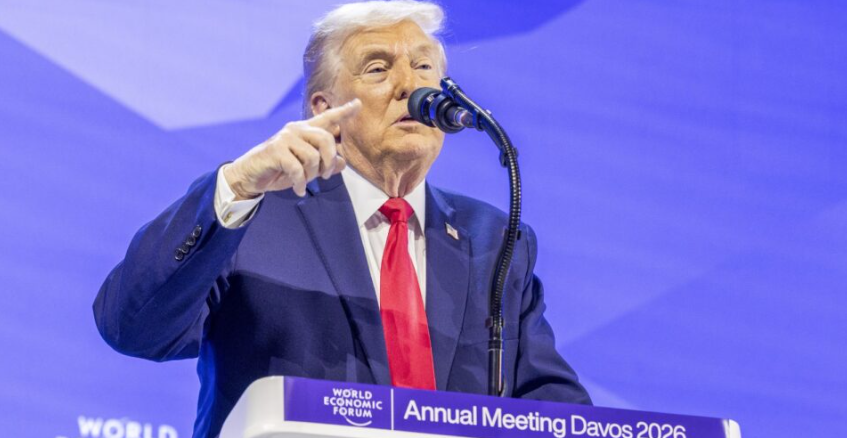
US President Donald Trump says his administration has reached what he describes as a major oil agreement with Venezuela that would give the United States majority control over 65 billion barrels of proven petroleum reserves.
Trump announced the agreement, describing it as “the biggest oil deal in world history” and saying it would attract nearly $100 billion in private investment to Venezuela.
US and Venezuelan officials also confirmed the agreement, although several details about the ownership structure, implementation and legal framework remain unclear.
Venezuela holds the world’s largest proven oil reserves, making the reported agreement strategically significant for both countries.
The deal comes after months of intense pressure from the Trump administration on Venezuela following the US removal and capture of longtime Venezuelan leader Nicolas Maduro in January.
Washington subsequently allowed Maduro’s vice president, Delcy Rodriguez, to remain in office as interim leader, provided she cooperates with US demands.
Trump has repeatedly expressed his interest in gaining greater access to Venezuela’s vast oil resources.
In a post on his Truth Social platform announcing the agreement, Trump said the deal would more than double US oil reserves.
Rodriguez also confirmed the agreement, describing it as a “historic agreement” that would have a significant impact on Venezuela’s economic recovery.
She said the deal could bring more than $100 billion in investment and generate more than $209 billion in tax revenue for the Venezuelan state.
Trump said Secretary of State Marco Rubio and Defense Secretary Pete Hegseth negotiated the agreement with Rodriguez through a partnership involving private businesses. He said the transaction would further strengthen relations between Venezuela and the United States.
Despite the announcement, energy experts say significant questions remain about how the agreement will work in practice.
Rubio said the deal demonstrates how Trump’s foreign policy is delivering what he described as “America First” benefits by securing stable oil reserves in the Western Hemisphere and potentially helping reduce energy prices in the United States.
He added that the agreement would bring almost $100 billion in private investment to Venezuela, support thousands of high-paying jobs and contribute to the reconstruction of the country’s economy.
However, Rubio did not provide detailed information about the specific ownership arrangements or how control of the oil reserves would be transferred.
Also Read: Trump renames Lake Ontario amid tensions with Canada
Jorge Pinon, a senior researcher at the Energy Institute at the University of Texas at Austin, described the reported arrangement as unconventional.
Pinon said it remains unclear how oil assets would effectively be transferred from Venezuela to the United States.
“We don’t know how the transfer would take place,” he said, raising questions about whether the arrangement would involve a sale, a transfer of title or control that would only apply once the reserves are produced.
The uncertainty comes as Venezuela’s oil industry continues to face significant infrastructure and investment challenges.
The reported agreement follows earlier reports that Washington and Caracas were negotiating over a number of Venezuela’s productive oil fields.
Axios reported that the discussions involved about a dozen fields containing as much as 90 billion barrels of proven reserves, representing roughly one-third of Venezuela’s estimated 300 billion barrels of proven oil reserves.
Under the reported arrangement, private companies, including US firms, would develop the oil fields while the United States obtains an ownership stake.
The companies would also increase oil production and return a greater share of oil revenues to Venezuela, according to the report.
The deal could potentially transform Venezuela’s oil sector if the proposed investments materialise and production infrastructure is significantly upgraded.
For Washington, increased access to Venezuelan crude could also provide an additional source of supply at a time when global energy markets remain under pressure.
Trump has made lower energy prices a major political priority, particularly as gasoline prices remain an important issue for American consumers.
The issue has gained additional significance ahead of the November midterm elections, with Trump’s approval ratings facing pressure following the US military campaign against Iran and the resulting disruption to global oil supplies.
Despite the potential scale of the deal, US energy companies have historically been cautious about investing heavily in Venezuela.
The country’s oil infrastructure has deteriorated significantly, while previous governments have nationalised or appropriated assets belonging to foreign investors.
These concerns have made the security of investments one of the major obstacles to attracting new international capital into the Venezuelan oil industry.
Chevron, the only major US oil company still operating in Venezuela when Maduro was removed, has continued to increase its production.
The company said in July that it had raised daily crude production in Venezuela to about 280,000 barrels. Chevron has also said it plans to increase production by another 50 percent by the end of 2028.
Energy expert John Kilduff of Again Capital said the major concern for companies seeking to operate in Venezuela remains the security of their investments.
He suggested that if the United States is effectively going to control or own oil fields, the objective could be to create a protected environment in which US companies can operate with reduced exposure to Venezuela’s political risks.
Such an arrangement, he said, could potentially encourage greater investment by providing companies with greater confidence that their assets and operations would be protected.
The reported oil agreement could represent a major shift in the economic relationship between Washington and Caracas.
For Venezuela, the potential investment could provide much-needed funding to rebuild its oil industry, improve infrastructure and generate additional government revenue.
For the United States, greater access to Venezuelan oil could strengthen domestic energy security while providing another source of crude amid global supply concerns.
However, the precise terms of the agreement, including ownership rights, legal protections, investment conditions and the role of private companies, remain to be fully disclosed.
The deal’s implementation is therefore likely to face scrutiny from energy experts, investors and policymakers in both countries.
If the agreement proceeds as announced, it could significantly reshape Venezuela’s oil industry and mark one of the most consequential economic developments in US-Venezuela relations in years.
PUNCH