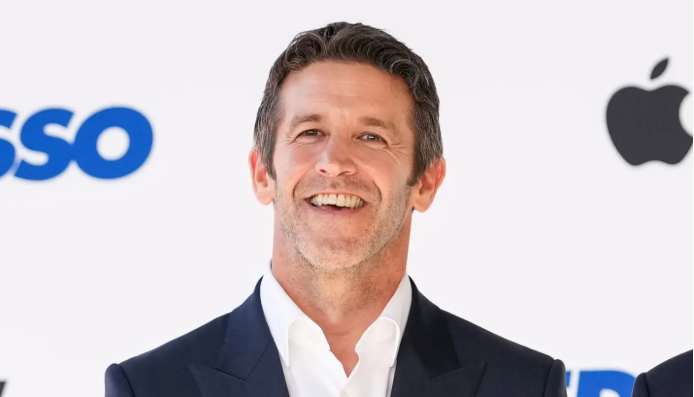
John Ternus has officially taken over as chief executive officer of Apple, succeeding Tim Cook after 15 years at the helm of the technology giant.
Ternus previously served as Apple’s senior vice president of hardware engineering, a position he held since 2021. Cook has moved into the role of executive chairman following the leadership transition announced by Apple in April.
Ternus is a longtime Apple executive who joined the company’s product design team in 2001 and steadily rose through the ranks. He became vice president of hardware engineering in 2013 before being promoted to senior vice president in 2021.
A graduate of the University of Pennsylvania, Ternus previously worked on virtual reality headsets at Virtual Research Systems.
During his time at Apple, Ternus has overseen the development and launch of several of the company’s best-known product lines, including the iPad and AirPods.
His background in hardware engineering has led analysts to view his appointment as a signal that Apple intends to place greater emphasis on hardware innovation across its device portfolio.
“The appointment of Ternus is Apple’s subtle way of doubling down on hardware innovation as a core strategy. It doesn’t refute the Tim Cook era; it marks a new stage in Apple’s history by intertwining AI with hardware, rather than treating AI as a standalone product,” Babak Hafezi, a professor of international business at American University, told Al Jazeera.
Ternus takes over at a critical moment for Apple, with the company expected to unveil its latest iPhone and a foldable device on September 9.
The foldable smartphone market remains relatively small but is expanding, with Samsung having established an early lead after entering the segment in 2019.
Apple is expected to gain significant ground in the market. According to research from technology intelligence firm IDC, the company could ship 17 million foldable iPhones and capture 40 percent of the market by the end of next year.
Apple is also preparing to launch an updated version of Siri, its virtual assistant, alongside the latest version of its iOS software this month.
Also Read: Meta agrees to $16.68bn settlement over child safety claims
The upgraded assistant is designed to be more conversational and provide users with more personalized information, including retrieving details from their emails and text messages.
In announcing the feature, Apple cited examples such as using Siri to find a restaurant recommendation shared by a friend in a message or retrieve a hotel confirmation number from an old email.
Ternus also inherits criticism of Apple’s relatively slow progress in generative artificial intelligence, with the company trailing competitors such as OpenAI, the maker of ChatGPT, and Anthropic, the maker of Claude.
However, Aleksandar Tomic, associate dean for strategy, innovation and technology at Boston College, said Apple’s focus on its core products could ultimately help it compete in the AI industry.
“To use a metaphor, there were people during the gold rush mining for gold, and then there were those selling the picks and shovels for the prospectors. Apple has really stayed in the picks-and-shovels lane,” Tomic said.
“They have not done any kind of data centre, industrial-grade chips, but they have developed their own chips that they put into the Macs and MacBook Pros that allow people to run local LLMs, large language models, and so on. The iPhone becomes kind of an AI access engine.”
In June, Morgan Stanley analysts raised concerns that Apple could face challenges with its AI-powered Siri rollout because older iPhone models may lack the processing capabilities required to support advanced AI features.
The company is also dealing with supply chain pressures. In June, Apple increased prices for some MacBook and iPad models as the cost of computer memory rose amid growing demand for chips and servers from AI companies.
Apple must also navigate the trade tensions between Washington and Beijing. China remains an important market for the company and a major part of its supply chain, although Apple has sought to diversify production to countries including India and Vietnam.
The company has announced plans to invest billions of dollars in the United States, while President Donald Trump has urged Apple to manufacture iPhones domestically.
For investors, Ternus faces the challenge of succeeding Cook, whose tenure was marked by a significant increase in Apple’s market value. The company’s stock rose 2,258 percent during Cook’s leadership.
Apple shares have also performed strongly over the past year, gaining more than 37 percent from the same period last year and more than 16 percent since the beginning of 2026. This week, Apple shares rose 2.2 percent in midday trading as Ternus assumed his new position.
Al Jazeera