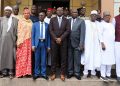
The Katsina State Government has launched a $1 million climate-resilience project aimed at helping vulnerable farming communities cope with recurring floods and droughts while improving food security.
The one-year initiative, titled “Protecting Food Security Against Recurring Floods and Drought,” was organized by the Katsina State Development Management Board, KTDMB, in collaboration with the Ministry of Budget and Economic Planning, with support from development partners and implementation by Mercy Corps Nigeria.
Speaking at the launch at Hillside Hotel, Katsina, Governor Dikko Radda described climate change as a growing reality that requires collective action and practical interventions to protect agricultural production, livelihoods and food security.
Radda said Katsina is an agrarian state whose people depend heavily on agriculture, making efforts to protect land and water resources and improve agricultural productivity particularly important.
He assured development partners of the state government’s continued cooperation and support, while urging the beneficiary local governments to work closely with project implementers to ensure that the initiative achieves its objectives.
The governor directed the Ministry of Budget and Economic Planning and KTDMB to ensure effective coordination among relevant ministries, departments and agencies involved in the project.
He also called for stronger collaboration between development partners and the three local governments selected to benefit from the initial phase.
Radda further directed the Ministry of Environment and the Department of Climate Change to study the intervention and assess the possibility of replicating similar climate-resilience projects in other parts of the state.
He said the long-term objective was for all local governments in Katsina to benefit from similar initiatives.
Also Read: Katsina State receives vaccines to stem diphtheria spread
Earlier, the Executive Secretary of KTDMB, Dr Mustapha Shehu, said the project was funded with $1 million and would run for one year.
Shehu said the first phase would be implemented in Bindawa, Bakori and Kafur Local Government Areas, which were selected based on available data and identified vulnerabilities.
He disclosed that baseline assessments were already underway across the three beneficiary LGAs to establish benchmarks and generate data that could guide the possible expansion of the intervention to other communities.
Shehu also recalled previous development interventions carried out in Katsina through partnerships with organizations including Mercy Corps, saying such collaborations had helped strengthen community resilience, peace and social cohesion.
In a project overview, Mercy Corps Nigeria Programme Manager, Philip Ikita, said the intervention was designed to address several challenges affecting vulnerable farming communities.
He listed recurring floods and droughts, soil erosion, inadequate storage facilities, post-harvest losses, poverty, limited drainage systems and poor water management among the challenges the project would target.
According to Ikita, the project would rehabilitate at least 12 solar-powered water systems to support livestock and farming communities, particularly during the dry season.
He added that water committees and technicians would receive training to help ensure the sustainability and proper management of the facilities.
The Commissioner for Budget and Economic Planning, Malik Anas, commended Mercy Corps Nigeria and KTDMB for the intervention, describing it as timely amid the growing impact of climate-related shocks on vulnerable communities.
Anas said the project would contribute to improved food security and livelihoods by strengthening communities’ capacity to withstand the effects of floods and droughts.
He stressed the importance of effective grassroots monitoring and urged project personnel and other stakeholders to maintain a strong presence in the beneficiary local governments.
The commissioner also called for proper documentation and reporting of project activities and outcomes to promote transparency, accountability and effective assessment of the project’s impact.
The Nation