After several delays, National Youth Confab promised by President Bola Tinubu has been slated for October.
Minister of Youth Development, Ayodele Olawande on Thursday said government was determined to ensure that the youth confab does not become another national conference whose recommendations are documented and forgotten.
Olawande said resolutions from the forum would be classified according to the arm of government responsible for implementing them, while a post-confab task force would track commitments, set timelines and monitor progress.
He said recommendations requiring executive action would be presented to the FEC, while those requiring legislation would be forwarded to the National Assembly for consideration.
Recommendations concerning the judiciary, he added, would be identified and referred to the appropriate judicial institutions.
“I’ve already said that we are not going back to documentation anymore. We are not going back to putting it and come and file it,” the minister said.
“We want to have a Federal Executive Council passing things that were brought out of the confab. We want the National Assembly to pass a bill on most of the resolutions, not all that concerns them.”
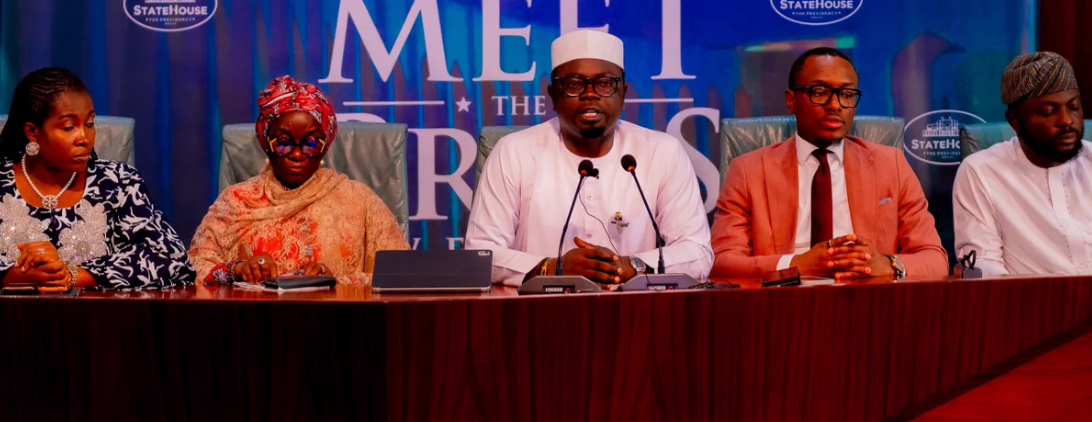
Olawande spoke at a press conference at the State House, Abuja, ahead of the National Youth Confab 2026, scheduled for October under the theme, “Next Gen Nigeria: Crafting Solutions, Owning the Future.”
According to him, the implementation framework was incorporated into the design of the conference after the government reviewed previous national conferences and identified weaknesses that affected the implementation of their recommendations.
He said the proposed Multi-Stakeholder Youth Confab Taskforce would classify recommendations according to the institutions responsible for acting on them and commence implementation from November.
The government, he added, would develop mechanisms to extend implementation to state governments, stressing that youth development could not be treated solely as a Federal Government responsibility. “There is nothing like federal youth. We have the national and we have the subnational,” he said.
Olawande said the government would also introduce a Youth Confab Impact Index, sustained youth policy dialogues and a youth-led monitoring and accountability framework to track the implementation of commitments made at the summit.
“We understand that young Nigerians do not need another document that will be produced and forgotten. They need action, opportunities, measurable commitments and institutions that listen and respond to their needs,” he said.
He said the confab would therefore focus on developing practical policy proposals rather than producing another report.
The October exercise will run for two weeks, beginning with nationwide virtual consultations involving Nigerians aged 18 to 35 in the country and the diaspora.
Also Read: FG shifts from palliatives to empowerment with $1bn programme
A dedicated online platform will receive memoranda, ideas and policy proposals, which will feed into discussions at the physical conference in Abuja.
The physical phase will feature one youth delegate from each of Nigeria’s 360 federal constituencies and six representatives of Nigerians in the diaspora, alongside other stakeholders and observers.
Olawande said the arrangement was designed to broaden participation beyond Abuja and ensure the deliberations reflect experiences from across the country.
He said young entrepreneurs, students, farmers, technology innovators, professionals and Nigerians living abroad would be encouraged to participate, particularly those who felt excluded from existing decision-making structures.
The minister said delegates would be selected based on transparency, merit, grassroots representation, gender balance and regional inclusion, with consideration for persons with disabilities and other marginalized groups.
He dismissed concerns about political interference, saying delegates for the physical conference would be selected through the registration platform. “Everybody from the 360 that is going to be physically in Abuja is going to be picked from that platform,” he said.
Olawande said neither he nor President Bola Tinubu would determine who attended the conference, insisting that the process was designed to allow young Nigerians to participate organically.
He added that the confab would remain non-partisan despite increased political activity ahead of the 2027 general elections.
The minister said zonal consultations would complement the virtual engagement and Abuja conference, enabling young Nigerians outside the Federal Capital Territory to contribute to the process.
The deliberations will focus on six areas: governance, leadership and political participation; economic transformation, entrepreneurship and job creation; education and skills for the future; technology, innovation and digital transformation; climate change and energy transition; and social harmony and security.
The programme will also feature expert panels, policy laboratories, innovation showcases, networking sessions and focused policy discussions.
Olawande said the focus areas were selected to address challenges facing young Nigerians while identifying opportunities for their contribution to national development.
He said young people should no longer be treated simply as “leaders of tomorrow”, given that more than 70 per cent of Nigeria’s population is below the age of 35. “The future of Nigeria cannot be discussed without the active participation of young people.
“Young Nigerians are not merely leaders of tomorrow; they are partners in nation-building today. Their ideas, experiences and participation are essential to the progress of our country,” he said.
He urged Nigerians aged 18 to 35 across the 36 states, the FCT and the diaspora to register on the platform, submit memoranda and policy proposals, nominate participants and join the consultations.
Special Assistant to the President on Social Media, Dada Olusegun, said the 18-month preparation for the confab enabled organizers to review previous national conferences and identify weaknesses that affected implementation.
He said the objective was to ensure that the deliberations translated into policies and programmes, adding that the administration would consider workable proposals emerging from the exercise.
Senior Special Assistant to the President on Digital and New Media, O’tega Ogra, said the preparation period also coincided with the implementation of various youth-focused government programmes.
He cited the revamping of the Nigeria Youth Investment Fund and participation in vocational and digital skills programmes as initiatives that had provided the government with additional insight into challenges facing young Nigerians.
The Federal Government says the confab is intended to move youth engagement beyond consultation by assigning recommendations to responsible institutions and establishing mechanisms to track their implementation.
The Sun