As Vice President Kashim Shettima takes his seat in New York at the head of Nigeria’s delegation to the 81st UN General Assembly, UNGA, a familiar quarrel has erupted at home: should President Bola Tinubu have gone himself, and does his absence amount to a quiet retreat from Washington? The noise is considerable. The evidence behind it is not.
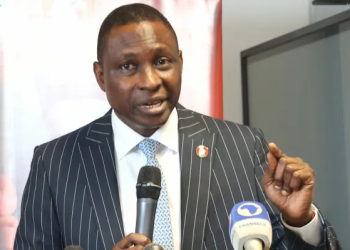
The controversy ignited after former diplomat Joe Keshi, on Arise Television’s Morning Show, dismissed as “innocuous” the commentary over whether Tinubu would personally attend. “All these debates that if the president is not there, it’s a big shame or whatever it is. For goodness’ sake, it’s irrelevant,” Keshi said, arguing that a Vice President-led delegation constitutes full and adequate representation.
His intervention landed amid a louder strand of criticism trailing the Tinubu presidency: that the President is avoiding the United States, has never visited as president, and skipped even his first UNGA. That narrative does not survive contact with the record.
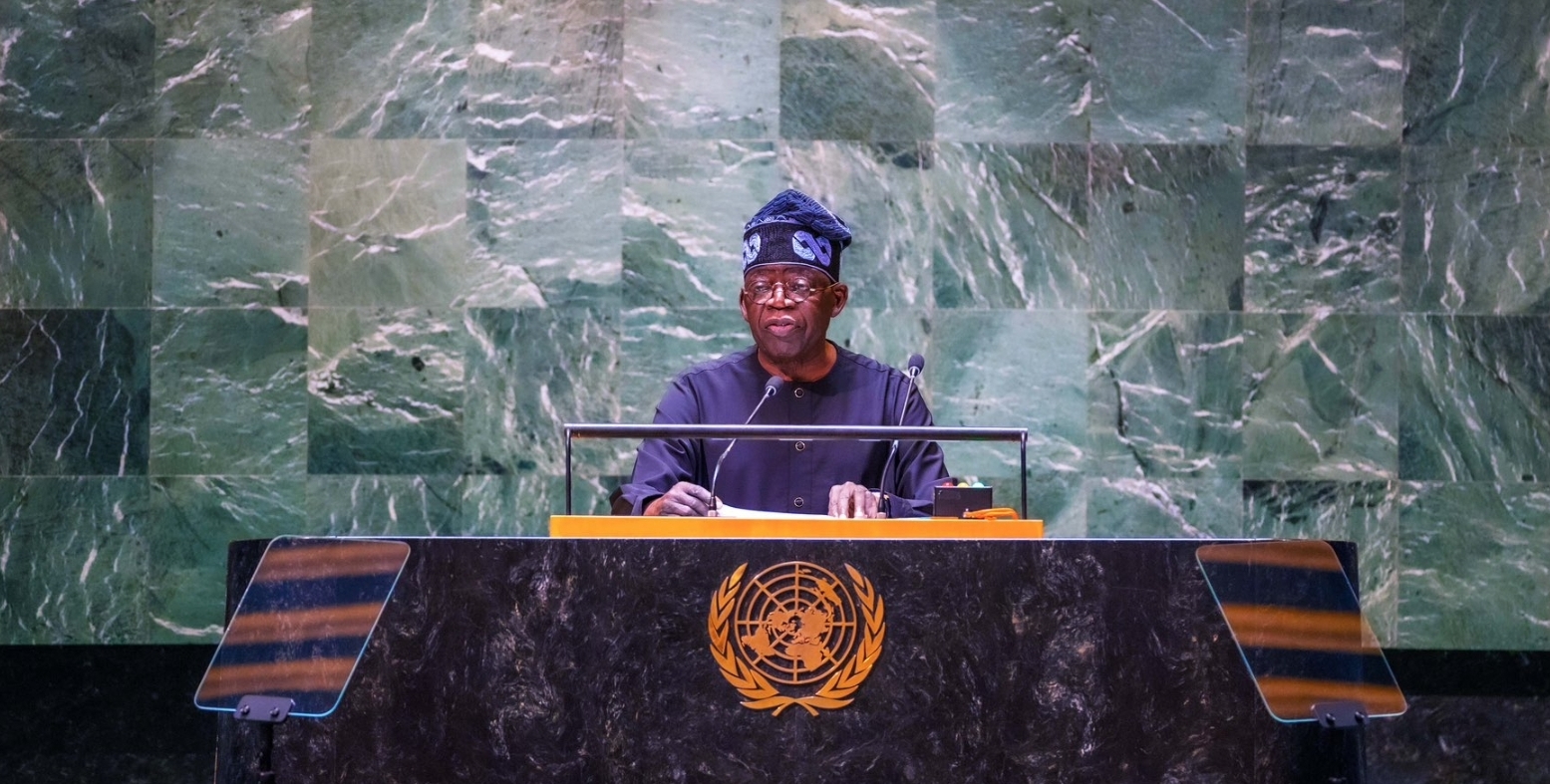
Tinubu travelled to New York in September 2023, barely four months after his inauguration, on a trip formally announced by the State House. On 19 September 2023 he delivered Nigeria’s National Statement at the General Debate of the 78th UNGA — an address preserved in the UN’s own archive — pressing resource exploitation, illicit financial flows and a permanent African Security Council seat. Days earlier he had engaged President Joe Biden directly at the G20 Summit in New Delhi. A man “running from America” does not typically begin his presidency by flying to it.
The legitimate kernel of the controversy lies not in 2023 but in what followed. Tinubu did not personally attend the 79th UNGA in 2024, the 80th in 2025, or the 81st now underway; Shettima led the delegation at all three, mandated to push Nigeria’s agenda on institutional reform, border security and the Security Council seat campaign.
Also Read: UNGA: Nigeria ‘ll be guided by national interest -Shettima
Three consecutive absences is a pattern, and patterns invite scrutiny. But scrutiny must be aimed at the right target. Constitutionally, nothing is amiss: a mandated Vice President speaks with the full authority of the Nigerian state, and the UN recognises the delegation, not the individual. Nor is the arrangement novel.
As Keshi noted, Nigerian leaders have missed UNGA sessions before “and the heavens didn’t fall” — while Buhari’s near-perfect attendance record, he pointedly asked, produced what dividend at the end of the day?
The honest debate available to critics is narrow and strategic: at a moment when Nigeria is campaigning for a Security Council seat and courting investment, does presidential presence unlock bilateral access and optics that even a capable Vice President cannot replicate? Plausibly, yes — UNGA’s real currency is often the corridor diplomacy around the General Debate. That is a fair argument about diplomatic optimisation.
But it is a world away from the charge actually being made. The “avoiding America” framing rests on two demonstrable falsehoods (that Tinubu never attended UNGA 2023 and has never visited the US as president), a procedurally empty grievance (that a VP-led delegation is improper), and at most one debatable scheduling preference.
Nor does the record support an imputation of fear: the administration has openly defied Washington where it saw fit — rejecting Nigeria’s re-designation as a “Country of Particular Concern” and defending its visa regime for US citizens — hardly the conduct of a presidency cowering from confrontation.
The absence of a formal White House bilateral, meanwhile, is a function of invitations extended by the host — and of a US–Nigeria relationship currently strained by visa restrictions, tariff friction and the CPC designation under the Trump administration. That is a bilateral temperature reading, not a measure of one man’s courage. To convert it into “he is running away” is to mistake diplomacy for melodrama.
Nigeria’s voice at UNGA 81 is institutionally intact, its agenda is being prosecuted, and its representation is lawful and sufficient. The residual question — whether Tinubu should personally have led at least one of the last three delegations given Nigeria’s global ambitions — deserves serious interrogation.
The louder claim, that the President is fleeing America, does not. It is baseless on the documented record, and Keshi’s essential instinct was right: the fixation on who occupies the seat has crowded out scrutiny of what Nigeria is actually saying from it.
Crediblenewsng.com