Iran says it can reopen the strategically vital Strait of Hormuz within seven days if the United States eases military pressure and lifts its blockade of Iranian ports, in a proposal Tehran says could provide a pathway back to diplomacy between the two countries.
A senior Iranian official told Reuters on Tuesday that Washington must first publicly commit to resolving the conflict through diplomacy before the two sides agree on a timetable for de-escalation.
The proposal comes as US President Donald Trump and Iranian President Masoud Pezeshkian are in New York for the United Nations General Assembly, creating an opportunity for indirect negotiations through mediators.
The official said Iran’s delegation to the UN General Assembly has full authority to revive negotiations with Washington. Tehran’s proposal for ending hostilities was reportedly delivered to the United States through mediators on September 16.
“The US needs to announce that it wants to resolve the issue diplomatically, make that official, and then agree on a timeline for how the process will move forward,” the official said.
According to the official, Pezeshkian, who left Tehran for New York on Tuesday, is not scheduled to meet Trump at the UN headquarters. However, the two countries could discuss an agreement to end hostilities through intermediaries in New York.
The Iranian official described the General Assembly as an opportunity for Washington to return to diplomacy, saying Tehran would welcome renewed negotiations if the US takes what Iran considers tangible steps towards de-escalation.
The diplomatic overture comes amid continuing military tensions between Iran and the United States. On Sunday, Iran’s military central command said it had been informed that Washington was preparing to resume military operations with support from regional countries.
Iran warned that any renewed US military action would trigger retaliation “without limitations and considerations”.
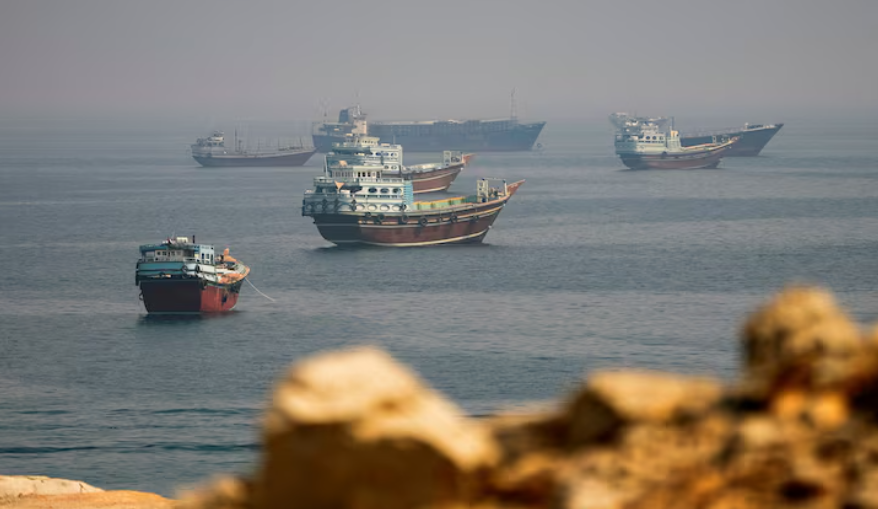
The warning follows months of conflict that have severely disrupted shipping and energy flows across the region. Reuters reported on Monday that only 17 commodity vessels crossed the Strait of Hormuz over the weekend, compared with 37 the previous week and a pre-conflict average of about 125 large commercial vessels a day.
The situation has also affected global energy markets. Brent crude fell below $100 a barrel on Tuesday after reports of Iran’s proposal to reopen the waterway, reflecting market expectations that a diplomatic breakthrough could improve oil supplies.
Also Read: Tehran prepares conditions to open Strait of Hormuz
The Strait of Hormuz is one of the world’s most important energy shipping routes, linking the Persian Gulf with the Gulf of Oman and the wider Arabian Sea.
The waterway is particularly important for oil and liquefied natural gas exports from Gulf producers. The US Energy Information Administration said about 20 per cent of global LNG trade passed through the strait in 2024, with Qatar accounting for the bulk of those shipments.
The disruption has forced energy producers and shipping companies to seek alternative routes and more costly methods of transporting crude.
Reuters reported that ship-to-ship transfers near Oman had risen to about 2.5 million barrels per day in September as producers sought to keep exports moving despite the disruption.
Tehran’s latest proposal makes reopening the waterway conditional on changes in Washington’s military posture and the lifting of the blockade on Iranian ports.
The senior official did not indicate that Iran would reopen the strait immediately or unconditionally. Instead, the official said the process could be completed within seven days once the United States takes the required steps and both sides agree on a diplomatic timetable.
The proposal also comes as the economic cost of the conflict continues to mount. The US Congressional Budget Office estimated earlier this month that the six-month US war against Iran had cost Washington about $38 billion through August 1, with costs projected to rise by roughly $3 billion a month.
For Iran, the conflict has also disrupted trade and energy exports while increasing pressure on an economy already affected by international sanctions.
The presence of both Trump and Pezeshkian in New York has created a potential opening for indirect diplomacy, although there is no planned direct meeting between the two presidents.
The Iranian official said Tehran’s negotiating team is authorized to engage with US representatives through mediators and that the September 16 proposal provides a basis for discussions.
For now, however, there is no announced agreement to end the hostilities. Iran continues to warn of retaliation against further US military action, while Washington has yet to publicly commit to the conditions Tehran has set for reopening the Strait of Hormuz.
The coming days at the UN General Assembly could therefore determine whether the latest diplomatic signals develop into formal negotiations or whether military tensions continue to restrict traffic through one of the world’s most important energy corridors.
REUTERS