Even when just 38 per cent of Nigerians, who, a survey cited suggested, still believe the country’s elections are credible, journalists are always at the front shaping opinions and seeking validation for all human endeavours.
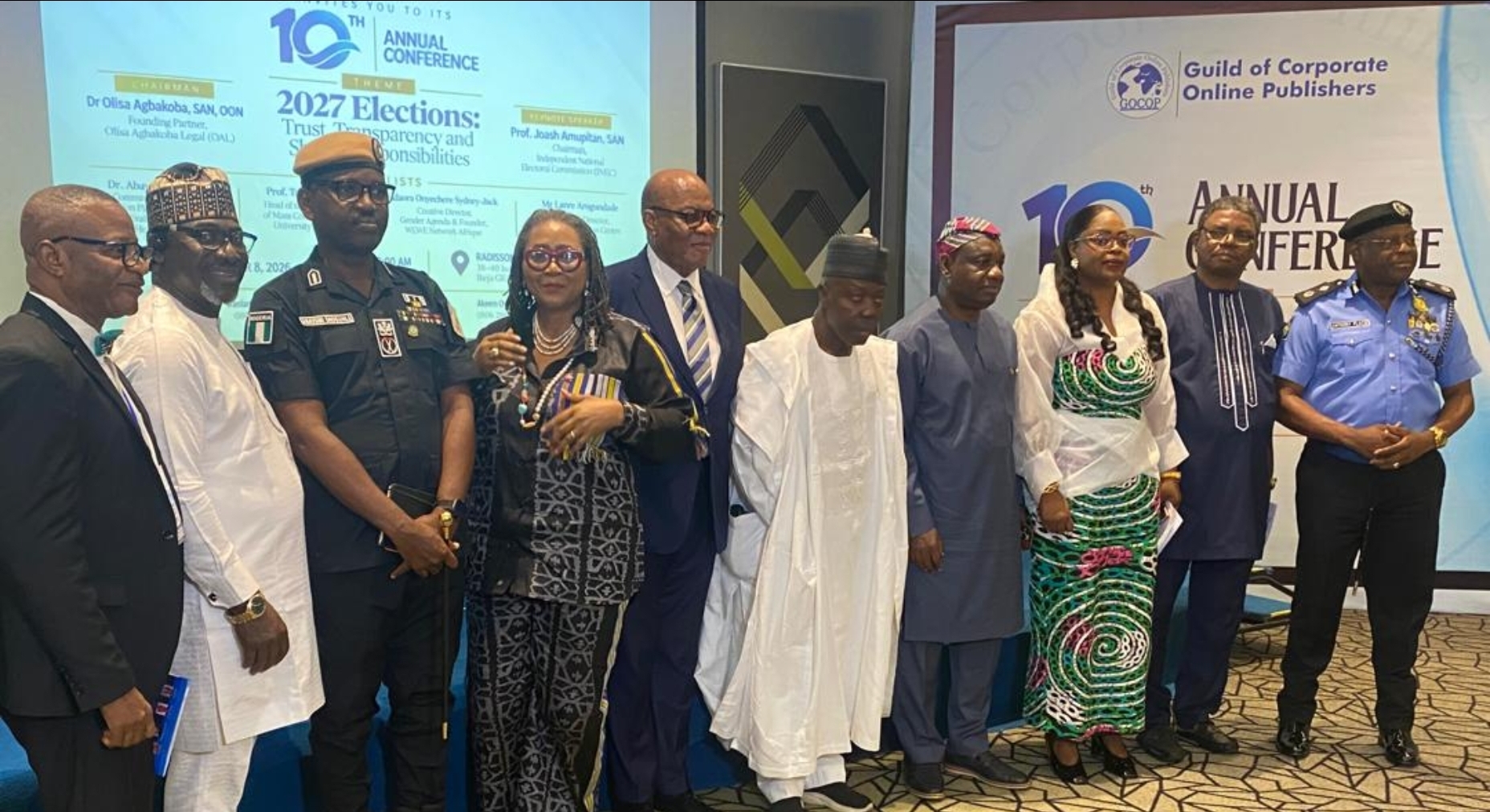
For a room full of the people who decide what Nigerians read, it was a mirror as much as a warning. And it framed everything the Guild of Corporate Online Publishers, GOCOP, did when it convened its 10th Annual Conference on October 7 and 8, 2026, at the Radisson Blu Hotel, Ikeja GRA, Lagos, under a theme that made the stakes plain: “2027 Elections: Trust, Transparency and Shared Responsibilities.”
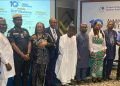
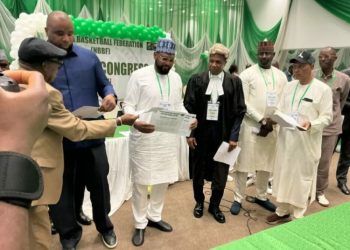
Day One belonged to the Guild itself — a capacity-building session for members on newsroom sustainability, artificial intelligence in online publishing and the monetisation of digital media, followed by the Annual General Meeting. Day Two opened the hall to publishers, media executives, policymakers, academics, security officials, civil society leaders and partners.
Dr. Olisa Agbakoba, SAN, a former President of the Nigerian Bar Association, chaired the conference. The keynote was delivered by the Chairman of the Independent National Electoral Commission, INEC, Prof. Joash Ojo Amupitan, SAN. The panel of discussants brought together CP Abayomi Shogunle, PhD, Commissioner of Police in charge of Election Planning, Monitoring and Evaluation at Force Headquarters, Abuja; Prof. Tayo Popoola, Head of the Department of Mass Communication at the University of Lagos; Dr. Adaora Onyechere Sydney-Jack, Creative Director of Gender Agenda and Founder of WEWE Network Afrique; and Mr. Lanre Arogundade, Executive Director of the International Press Centre.
In his welcome address, GOCOP President Danlami Nmodu put the charge to two audiences at once. Politicians, he said, must put the people first and design policies that measurably improve citizens’ welfare. Journalists, he insisted, must hold both government and opposition to account through reporting that is “accurate, fair, balanced and objective.” And the government, he urged, should sustain its partnership with GOCOP and the Nigerian Press Organisation — a partnership, he argued, that safeguards the media and protects the interests of publishers and journalists in the digital age.
Trust is the ballot
After two days of deliberation, the Guild’s verdict was unsparing: trust is the decisive issue of the 2027 elections — and it cannot be inherited or conceded. It must be earned “through consistent, verifiable and transparent execution.”
Also Read: GOCOP 2026: Four experts to headline conference
The conference acknowledged INEC’s preparations: structural, technological and logistical reforms, upgraded result-integrity systems, artificial-intelligence data-auditing tools and multi-layered cyber defences developed with partners including Google and Microsoft. It noted expanded voter education — outreach to women and youth, braille ballot guides, tactile posters, sign-language support for persons with disabilities, and local-language broadcasts and town halls for rural and riverine communities.
But it drew a line: technology cannot substitute for institutional credibility. With nationwide collection of Permanent Voter Cards (PVCs) beginning on October 9, 2026, the Guild said the countdown has begun — and that INEC’s assurances must now be matched by verifiable delivery, with clear, timely information on logistics, technology tests and result management at every stage.
The media’s own reckoning
The sharpest resolutions, though, were aimed inward. GOCOP welcomed a three-point pact proposed by INEC on fact-verification, editorial self-regulation and voter education, and said its Executive Council would engage the commission on implementation “without prejudice to editorial independence.”
More significantly, members bound themselves. They will publish only verified election information — and unverified polling-unit results, altered result sheets and inflammatory speculation, the Guild declared, “have no place on GOCOP platforms.” Breaches, it warned, will be sanctioned under its code. Members pledged to prioritise accuracy over speed, reject clickbait and insulate election coverage from proprietorial and partisan interests — a direct acknowledgement that commercial and ownership pressures, which reward speed over accuracy, have distorted coverage.
The conference rejected any suggestion that the media can be restrained. “The media cannot be gagged and will report what happens, including any malpractice,” it said — while insisting that no right is absolute: “Freedom to disseminate information carries a duty to verify first.” Where operational delays occur, it added, members must report them with context and official verification, not as proof of systemic collapse.
An unsettled law
One question the conference could not answer sat openly on the table. Section 60 of the Electoral Act 2026 governs INEC’s announcement of results, while Section 39 of the 1999 Constitution guarantees freedom to receive and impart information. How the two apply to exit polls, projections and independent tallies, the Guild noted, “is yet to be judicially determined.” It called on the Nigeria Union of Journalists, GOCOP and other media bodies to seek a judicial interpretation — a move that could define the boundaries of election coverage for years to come.
Who is being left out
The conference was equally frank about exclusion. Women’s inclusion, it said, remains “largely performative,” with opaque consensus arrangements in candidate selection systematically shutting them out — and current trends suggesting fewer women may be elected in 2027. It urged the National Assembly to enact legislation that deliberately increases women’s participation, and pressed political parties to conduct open, transparent selection.
Language is another gate. With roughly 250 ethnic groups, Nigeria still publishes its electoral laws and guidelines only in English — a barrier the Guild wants dismantled, with the Electoral Act, regulations and voter guidelines translated into major Nigerian languages and accessible formats sustained for persons with disabilities.
And accountability remains weak: electoral offenders are seldom prosecuted, emboldening impunity. The Guild wants INEC to work with prosecuting authorities to pursue offenders and make the outcomes public.
Information disorder — and the price of living
The conference named information disorder — fake news, unverified leaks, synthetic media and AI-generated deepfakes — as a direct threat to the polls: it inflames division, depresses turnout, and retractions “rarely repair the damage.”
On the ballot itself, the Guild said the cost of living is the leading issue. But conflicting narratives over the removal of the fuel subsidy have left voters unclear about where candidates stand. The conference flagged Executive Order 9 on NNPC Limited and the argument that Nigerian crude should cost Nigerians less than external buyers, urging the Federal Government and its agencies to provide “a clear, authoritative account” of fuel-subsidy policy and domestic crude pricing — so voters can decide from fact rather than rumour.
For the security agencies, the message was to sustain what has worked. The Nigeria Police Force reported relatively peaceful polls since February 2026, with no shootings, attributing this to intelligence-led operations; the Guild asked the police and sister agencies to keep that posture lawful, intelligence-led and non-partisan through 2027.
Voters as shareholders
Underpinning it all was a single idea: citizens are “shareholders in Nigeria.” Yet many abstain on election day and protest afterwards — a contradiction the Guild wants broken. It urged Nigerians to collect their PVCs, vote, define clearly what they want from their representatives, verify information before sharing, and hold institutions and officeholders to account across the entire electoral cycle.
It pointed to Botswana, where the Botswana Democratic Party handed over power in 2024 after 58 years, as evidence of what trusted institutions make possible on the continent.
In the end, the conference returned to the proposition its theme had set out: that credible elections in 2027 are a shared responsibility — of INEC, security agencies, political actors, the media and citizens alike. GOCOP committed its 127 member publications to verified, fair and responsible coverage before, during and after the polls, and thanked its keynote speaker, its conference chairman, the Governor of Imo State and its panellists, as well as its public- and private-sector partners and sponsors, for supporting a decade of the annual conference.
Crediblenewsng.com