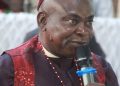
When Salihu Lukman announced this week that opposition leaders — Atiku Abubakar, Seyi Makinde, Peter Obi, Adewole Adebayo and Donald Duke — are consulting on a common front against President Tinubu in 2027, it read like routine pre-election choreography.
Six party chairmen meeting five presidential hopefuls, all “in furtherance of the resolutions of the G100 Opposition Summit,” with a promise that Nigerians will hear of substantive decisions in due course.
It is anything but routine. The man convening it is a former National Vice Chairman of the ruling party who resigned from APC in June 2024 over what he called bad governance under Tinubu. And just three months ago, he suspended his membership of the very coalition he helped build — citing “painful, hostile treatment” from Nasir El-Rufai’s camp in Kaduna. Nasir himself has faded from the political scene, battling legal hurdles at the state and federal levels.
These consultations are a reconciliation engineered against a deadline. Lukman himself said in July that within a week the opposition should “come out and say, this is how we are proceeding”. That has remained a mere wish, three months down the line, and barely three months to the 2027 presidential contest!
That tension — between Lukman’s principles and Lukman’s project — is the real story of the opposition’s 2027 bid.
Also Read: Power Without a Plan: Bolarinwa slams G100 opposition front
His authority comes not from office held but from positions surrendered. A development economist and former NANS president, he spent a decade as the APC’s internal dissident: Director-General of the Progressive Governors Forum from 2013, then the party’s North-West vice chairman. In both roles he fought the same war — against delayed meetings, unaccounted finances and party “overlords.”
He battled chairmen Oshiomhole, Buni and Adamu; he sued his own party for refusing to convene its NEC; he accused National Secretary Iyiola Omisore of mismanaging campaign funds. His campaign helped force Adamu and Omisore out in 2023 — then he resigned anyway, declaring the party “completely at variance with the founding vision”.
Each exit carried the same grammar: internal democracy weakened, authority concentrated, reforms abandoned. When he left the APC in 2024, he concluded it was impossible to reform from within. When he left the ADC in July, the complaint was eerily symmetrical — coalition leaders were “reproducing the old habits that destroyed our former parties,” reducing him “to the status of a bastard.”
Supporters read the pattern as uncommon consistency: a man who has twice walked away from a national vice-chairman’s perks rather than bend. Critics read a temperament: someone who cannot sustain an alliance past its first serious disagreement.
This week’s statement is more revealing for what it avoids. No common candidate. No merger, no timetable, no power-sharing formula. What Lukman proposes is deliberately procedural: a “framework for opposition cooperation,” areas of “common ground.” That ordering is distinctively his. His quarrel with the coalition has never been about who leads it but about how it decides.
“Nigeria is bigger than the ADC,” he protested — individual ambitions had swallowed the collective mission before the rules were written. Framework first, candidate second. Whether five ambitious men will accept any framework capable of ruling one of them out is the question the statement pointedly does not answer.
Three tensions will decide it. The Lukman paradox: the coalition’s coordinator is its most credible internal critic — its asset and its risk since neither side can afford another exit. The El-Rufai problem, papered over by the calendar, likely to resurface over Kaduna structures. And the sequencing gamble: framework-first consumes time the fragmented opposition may not have, while the candidate question — the only one that mobilises voters — festers. Will Atiku drop his three-decade long ambition? Will Peter Obi ‘wait for his turn’, as touted by some political pundits? Question, questions for the allied forces!
Lukman has supplied the standard by which his project should be judged: not whether leaders meet, but whether they publish a binding framework with objective criteria for choosing a common candidate — and whether the ADC finally unveils the policy document its own secretary completed. On past form, he will walk if they fail, and say so loudly. On past form, too, walking has never yet built anything.
The difference this time is the deadline. In 2027, the opposition doesn’t need Salihu Lukman to be right. It needs him to stay.
Crediblenewsng.com