JPMorgan Chase’s plan to establish its first merchant banking operation in Africa has advanced, with the Central Bank of Nigeria granting approval-in-principle for its proposed Nigerian subsidiary and clearing seven nominees to its board.
The development followed reports on October 20 that the American banking group had deposited N50 billion, equivalent to about $38 million, with the CBN to meet a key capital requirement for a nationally licensed merchant bank.
The proposed institution, JPMorgan Merchant Bank Nigeria Limited, would expand the bank’s longstanding Nigerian presence, which has largely operated through its Lagos representative office. A merchant banking licence would provide a broader platform for serving Nigerian corporations and institutional clients, subject to final regulatory approval.
The CBN approved Adedapo Adedayo Olagunju as managing director, alongside three non-executive directors and three independent non-executive directors.
Five of the seven nominees are Nigerians: Olagunju, Chinedum Nzelu Izunwanne, Sarah Omotunde Alade, Olukonyinsola Ajayi and Seni Adetu.
Their professional backgrounds span investment banking, electronic trading, central banking, commercial law and multinational business management. Their appointments come as Nigeria seeks to deepen its capital markets and attract international investment.
However, the approval-in-principle does not amount to a final banking licence. JPMorgan must meet the remaining regulatory and operational requirements before it can commence business.
Meet the five Nigerian nominees
1. Adedapo Adedayo Olagunju — Managing director
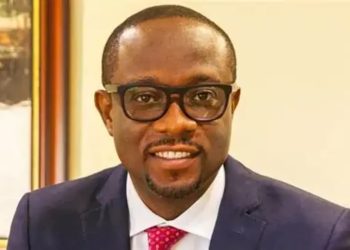
Adedapo Adedayo Olagunju, widely known as Dapo Olagunju, has been appointed managing director of JPMorgan Merchant Bank Nigeria Limited.
His appointment places an experienced Nigerian financial-markets executive at the centre of the bank’s planned transition from a representative presence to a locally licensed merchant banking operation.
Olagunju has led JPMorgan’s West African business since 2018, overseeing relationships with financial institutions, corporate clients and other market participants. Before joining the American banking group, he spent several years at Access Bank, where he served as group treasurer and later headed global markets.
His banking career began at Investment Banking & Trust Company, which later became part of Stanbic IBTC. He served as chief dealer from January 2000 to March 2003 before joining Access Bank as treasurer, a position he held until September 2005.
Between May and July 2006, he worked as a consultant with the United Nations, contributing to peacekeeping financing operations in New York.
Olagunju returned to Access Bank in September 2006 and served as group treasurer until January 2018. In January 2017, he also became head of global markets, overseeing a business group that combined treasury, financial institutions, and project and structured finance.
He joined JPMorgan in January 2018 as managing director responsible for its West African business.
Olagunju holds a bachelor’s degree in Banking and Finance from Ogun State University, now Olabisi Onabanjo University. He obtained an MBA from the University of Oxford in 2005 and completed Harvard Business School’s General Management Programme in 2014. He is also a Fellow of the Institute of Chartered Accountants of Nigeria.
His appointment follows his public disclosure of JPMorgan’s Nigerian merchant banking plans at the Nigeria–Asia Financial Connectivity Dialogue in Singapore earlier in October.
His immediate task will be to help establish the bank’s local operating structure, develop its client base and position the institution within Nigeria’s corporate and institutional financial markets, subject to final regulatory approval.
2. Chinedum Nzelu Izunwanne — Non-executive director
Chinedum Nzelu Izunwanne, known professionally as Chi Nzelu, is among the proposed non-executive directors approved by the CBN.
A senior JPMorgan executive, Izunwanne has built his career around financial markets, technology and electronic trading. He has served as the bank’s global head of macro electronic trading, overseeing the development and execution of electronic trading strategies across asset classes.
Born and raised in Lagos, he attended Federal Government College, Ijanikin, before moving to the United Kingdom for university education. He obtained a first degree in engineering in 2002 and a master’s degree in computer science in 2003.
Izunwanne joined JPMorgan in London in 2005 as a foreign-exchange electronic commerce analyst. He subsequently moved into managing automated trading strategies, including algorithmic execution and electronic markets, and was promoted to managing director in 2016.
His experience reflects the growing role of technology in global financial markets, where electronic execution, trading algorithms and advanced risk-management systems are central to institutional trading.
As a non-executive director of the proposed Nigerian bank, his international markets experience could contribute to board-level oversight of trading capabilities, technology and risk management.
The CBN has not publicly specified individual directors’ committee assignments or operational responsibilities.
3. Sarah Omotunde Alade — Independent non-executive director
Sarah Omotunde Alade brings decades of experience in monetary policy, banking regulation, public finance and financial-system development to the proposed bank’s board.
The economist and banker served as deputy governor of the CBN from 2007 to 2017, including a period as acting governor in 2014. In 2019, she was appointed special adviser to the president on finance and the economy.
Alade joined the CBN’s research department as an assistant director in 1993. She later headed the State Government Finance Office, the Federal Government Finance Office and the Fiscal Analysis Division before becoming director of banking operations in 2004.
She was appointed deputy governor in 2007 and worked on economic-policy and financial-system matters during a period of significant changes in Nigeria’s banking industry.
Alade studied economics at the University of Ife, now Obafemi Awolowo University, before obtaining a master’s degree in commerce from the University of Melbourne in Australia.
She later earned a PhD in Management Science, specialising in operations research, from the University of Ilorin.
Her professional affiliations and board experience have included roles connected to Nigeria’s payment systems, financial markets and development finance institutions.
Her appointment as an independent non-executive director brings experience of Nigeria’s regulatory environment to the board as JPMorgan works towards securing a full banking licence.
4. Olukonyinsola Ajayi — Independent non-executive director
Olukonyinsola Ajayi, commonly known as Konyin Ajayi, is a Nigerian lawyer whose experience spans banking, project finance, capital markets, mergers and acquisitions, energy and infrastructure.
Ajayi is a partner at Olaniwun Ajayi LP, where his practice includes complex corporate and financial transactions. His work covers areas central to financing large businesses, including debt and equity capital markets, project development and mergers and acquisitions.
His professional profile lists experience advising on major transactions involving Nigerian and international companies. These include Airtel Africa’s $750 million dual listing in the United Kingdom and Nigeria, as well as Seplat Petroleum Development Company’s acquisition of Eland Oil and Gas.
Transactions of this nature require expertise in corporate structuring, regulatory compliance, financing arrangements and the legal frameworks governing cross-border investment.
As an independent non-executive director of the proposed bank, Ajayi brings legal and transactional experience relevant to corporate finance and institutional banking.
5. Seni Adetu — Independent non-executive director
Seni Adetu brings more than three decades of private-sector leadership experience, including senior executive positions at multinational companies operating across Africa.
He previously served as managing director and chief executive officer of Guinness Nigeria and as chief executive of East African Breweries, the Diageo subsidiary based in Kenya. His career also includes senior roles at John Holt, Coca-Cola and Diageo across several markets.
At Guinness Nigeria, Adetu became the first Nigerian in nearly two decades to lead the company. Earlier in his career, his appointment at Guinness Ghana made him the first African managing director and executive vice-chairman of the business.
His leadership of East African Breweries placed him at the helm of one of the region’s major consumer-goods businesses. During his tenure, he was recognised among the leading business executives in East Africa.
Adetu holds a bachelor’s degree in Chemical Engineering and an MBA specialising in Marketing, both from the University of Lagos. He has also undertaken executive leadership training at Harvard Business School.
After his multinational executive career, he founded First Primus West Africa, where he serves as group chief executive officer. The group includes businesses in marketing communications and advertising.
He has also held board positions in Nigeria’s financial services sector, including at FBN Holdings and Fidelity Bank.
His appointment brings commercial leadership and board experience to the proposed institution. This background could be relevant as the bank seeks to serve large companies operating in Nigeria and across Africa.
Business Day