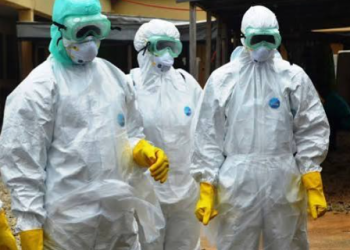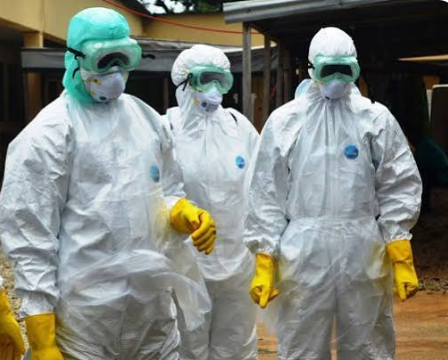
Two suspected cases of Ebola disease have been identified in Nigeria’s North-East region, with both individuals isolated as health authorities conduct laboratory investigations.
The Nigeria Centre for Disease Control and Prevention, NCDC, announced the development on Saturday, saying contact identification and listing were ongoing alongside laboratory testing.
The agency clarified that the classification of the individuals as suspected cases does not mean they have contracted the disease, stressing that confirmation would depend on laboratory results.
The public health agency advised Nigerians to maintain proper hand hygiene, practise enhanced sanitation and follow guidance from public health authorities.
It added that further updates would be provided as verified information became available.
The development comes days after Nigeria confirmed its first case of Ebola disease in the current outbreak, involving the Bundibugyo strain, in the Federal Capital Territory.
The World Health Organisation confirmed on October 20 that the infected patient was a woman who had recently travelled from Uganda to Nigeria.
The woman developed symptoms on October 7, four days after arriving in Nigeria, and sought medical attention at a private health facility in Abuja on October 11.
Also Read: Ebola case puts Nigeria’s health surveillance on alert
Laboratory tests confirmed the infection on October 20, after which she was isolated and placed under medical care.
The confirmation made Nigeria the fifth country to detect the virus since the outbreak was declared in the Democratic Republic of the Congo on 15th of May, 2026.
Following the confirmation, the Federal Government activated its national incident management system to coordinate surveillance, contact tracing, laboratory testing and infection prevention measures.
The NCDC also intensified efforts to identify and monitor people who might have been exposed to the confirmed patient.
In its October 24 situation report, the agency said 53 contacts linked to the confirmed case had been identified and placed under monitoring.
The agency explained that contacts would be monitored for 21 days after their last possible exposure, in line with the incubation period of the disease.
Ebola disease is a severe viral infection that spreads through direct contact with the blood, secretions and other bodily fluids of infected people, as well as contaminated materials.
Symptoms include fever, fatigue, muscle pain, headache and sore throat, which may progress to vomiting, diarrhoea and other serious complications.
The NCDC has continued to urge healthcare workers to maintain strict infection prevention and control measures and promptly report suspected infections.
Members of the public have also been advised to avoid direct contact with the bodily fluids of suspected or confirmed cases and seek medical attention if they develop symptoms after possible exposure.
Crediblenewsng.com