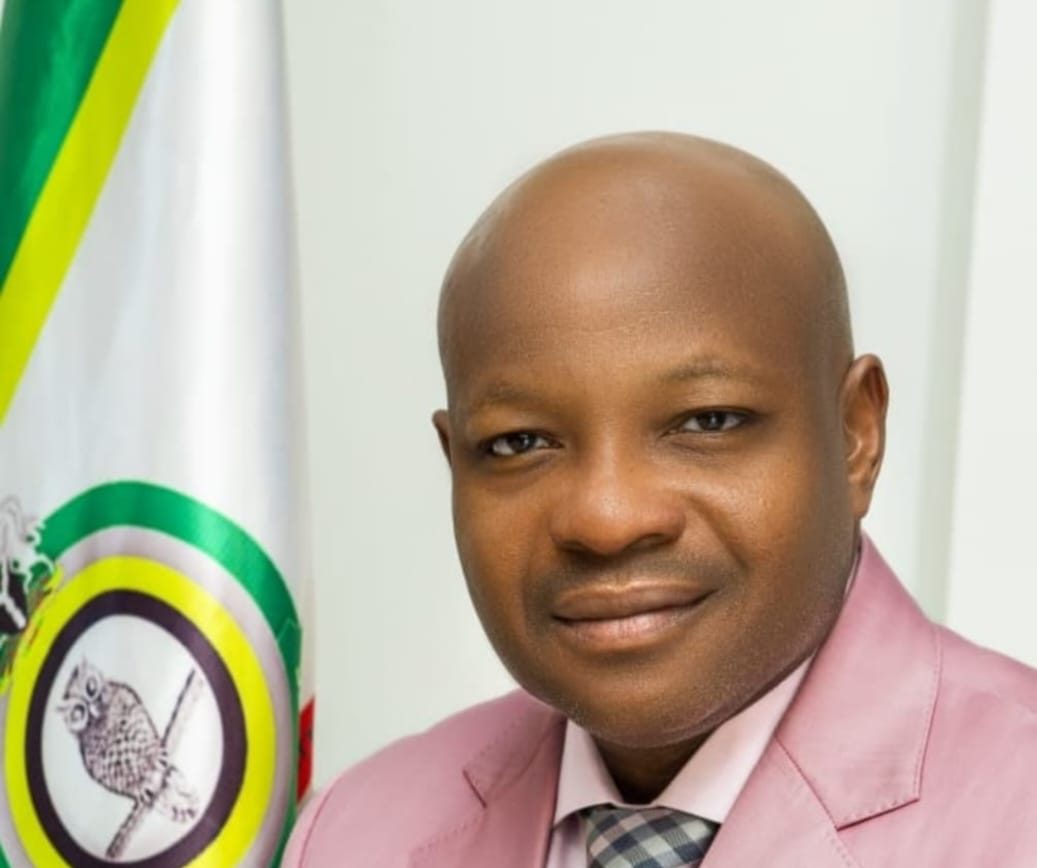
By Emmanuel Aziken
One of the most important responsibilities of a national security institution in a democracy is to demonstrate that its loyalty is to the Nigerian state and its citizens, not to the political interests of whoever happens to be in power. In this regard, the Department of State Services, DSS, under the leadership of its Director-General, Oluwatosin Adeola Ajayi, deserves commendation for some of its recent interventions in politically sensitive situations across the country.
The importance of these interventions is better appreciated against the background of the increasingly dangerous atmosphere surrounding political activities ahead of the 2027 general elections.
Former Deputy Senate President, Ovie Omo-Agege, provided a striking testimony to the professionalism of his DSS security details following the November 2026 attack on his campaign organisation in Delta State, which claimed four lives and left several others injured.
Speaking on Channels Television’s Politics Today on November 23, Omo-Agege disclosed that his attackers repeatedly shouted his name while shooting, suggesting that he was their intended target. He credited the professionalism of his DSS escorts with saving his life, declaring that, after God, he owed his survival to the operatives protecting him.
Also Read:New push for accountability, rule of law at DSS
That testimony is significant because Omo-Agege is a chieftain of the Nigeria Democratic Congress, NDC, an opposition political party.
Two days later, another testimony to the importance of professional security intervention had emerged from Edo State. Former President of the Nigerian Bar Association, Olumide Akpata, recounted how he and other African Democratic Congress, ADC, chieftains narrowly escaped a potentially deadly attack in Benin City.
Akpata acknowledged that the intervention of security personnel prevented what could have been a devastating incident. He described the situation as one in which those present were genuinely in harm’s way.
The DSS’s interventions have not been restricted to these high-profile politicians. In Sokoto State, the Service disclosed that its operatives rescued ADC governorship candidate, Mannir Daniya, during a mob attack on October 31. Two DSS personnel were reportedly injured while evacuating him to safety.
These incidents provide important evidence of security personnel putting themselves in harm’s way to protect political actors outside the ruling All Progressives Congress, APC.
Indeed, the DSS subsequently cited the Sokoto intervention while responding to allegations by former Vice-President Atiku Abubakar that the Service was organising protests against the ADC. Rather than dismissing the allegation without scrutiny, Director-General Ajayi ordered an investigation.
For an institution whose constitutional responsibilities include the protection of internal security, intelligence gathering and the prevention of threats to national stability, such interventions are commendable.
However, the bigger story may be the institutional direction under Ajayi.
The DSS has historically attracted criticism over allegations of arbitrary arrests, prolonged detention and disregard for human rights. Ajayi has publicly acknowledged the need to change that perception, emphasising accountability, respect for fundamental rights and restitution where operational mistakes occur.
In a September 2026 interview with THISDAY, he explained that his reforms were anchored on law enforcement, inter-agency cooperation, accountability and respect for human rights. He also outlined instances in which the Service compensated individuals affected by operational errors.
These are encouraging developments. The Nigeria Union of Journalists’ decision to honour him with its 2026 Man of the Year award further reflected growing recognition of efforts to improve relations between security institutions and the media.
But commendation must come with an equally important charge: stay the course.
The DSS must resist every attempt to drag it into partisan politics. Its officers must protect opposition politicians with the same commitment they demonstrate towards members of the ruling party. Equally, allegations of misconduct must receive impartial investigation, irrespective of the personalities involved.
The credibility of an intelligence institution is not established by protecting those in government alone. It is established by protecting the rights, safety and democratic freedoms of everyone.
As Nigeria approaches another consequential electoral season, Ajayi must ensure that the emerging culture of professionalism, accountability and political neutrality becomes an enduring institutional tradition rather than the achievement of one administration.
A DSS that protects Omo-Agege, Akpata, Daniya and every other Nigerian without asking which political party they belong to is a DSS worthy of public confidence.
That is the standard to sustain.
Aziken is the publisher/Editor in-chief of GWG.com