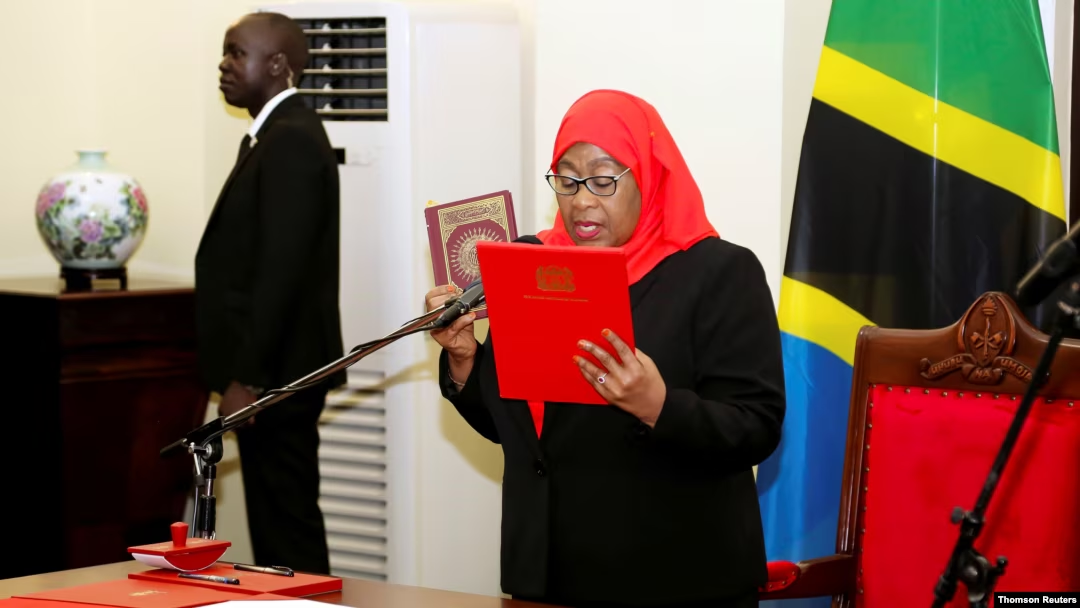
The President of Tanzania, Samia Suluhu Hassan has ordered the formation of an inquiry commission to investigate the violence that erupted following her re-election, which returned her to power amid allegations of electoral fraud and government repression.
The move comes as hundreds were reportedly killed during protests and many youths were arrested, some charged with treason, a crime that carries the death penalty.
Addressing parliament on Friday, Hassan expressed deep sorrow over the incidents, offering condolences to families who lost loved ones.
“I am deeply saddened by the incident. I offer my condolences to all the families who lost their loved ones,” she stated during her inaugural speech following the October 29 elections.
Hassan, who retained the presidency with 98 percent of the vote according to the electoral commission, acknowledged the grievances that led to violent demonstrations.
She also instructed police and security forces to exercise leniency toward young protesters who merely “followed the crowd” and may not have intended to commit any crime.
ALSO READ: UN decries post-election violence in Tanzania
“The government has taken the step of forming an inquiry commission to investigate what happened,” Hassan told parliament. “I realise that many youths who were arrested and charged with treason did not know what they were doing.
As the mother of this nation, I direct law enforcement agencies, and especially the office of the director of police, to look at the level of offences committed by our youths. For those who seem to have followed the crowd and did not intend to commit a crime, let them erase their mistakes,” she added.
The president’s directive aims to address the concerns of opposition parties and human rights groups, which have condemned the crackdown and highlighted the scale of the fatalities during protests, which coincided with a government-imposed internet blackout.
The inquiry commission will examine the circumstances surrounding the post-election unrest, review the actions of security forces, and propose measures to prevent future escalation of violence during political transitions.
Hassan’s statement reflects a commitment to both accountability and reconciliation, seeking to balance enforcement of law with compassion for youths caught in the unrest.
The announcement has been welcomed by some civil society actors as a step toward transparency and healing in the nation’s political landscape.