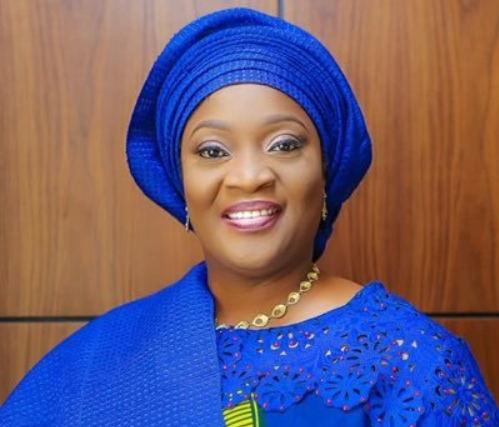
Liberia has charged former Vice-President Jewel Howard-Taylor with drug trafficking, money laundering and other offences in connection with an investigation into an alleged transnational narcotics network, authorities said.
Howard-Taylor, who served as vice-president under former President George Weah from January 2018 to January 2024, was stopped while attempting to leave Liberia through Roberts International Airport and taken to Liberia National Police headquarters, according to the Justice Ministry.
The charges represent a major escalation in Liberia’s investigation into large-scale cocaine trafficking and come weeks after authorities seized nearly four tonnes of cocaine in the country in what officials described as one of its biggest drug busts.
The shipment, valued by authorities at about $317 million, was intercepted in Duazon, near Monrovia, in July and was reportedly destined for Europe.
Howard-Taylor faces several charges, including the unlicensed importation, sale, distribution and transportation of controlled substances, drug trafficking, criminal solicitation, criminal facilitation, criminal conspiracy and money laundering. The allegations have not been proven in court, and she remains presumed innocent unless convicted.
The former vice-president is a prominent figure in Liberian politics and is also the former wife of Charles Taylor, Liberia’s former president who was convicted by the Special Court for Sierra Leone of aiding and abetting war crimes and crimes against humanity during Sierra Leone’s civil war.
The latest case follows another major cocaine seizure at Roberts International Airport in June. On June 8, authorities intercepted approximately 237.6 kilograms of cocaine at a warehouse at the airport.
The shipment was valued at more than $19 million and was presented as commercial cargo before the narcotics were discovered.
Liberia subsequently established a Joint National Security Investigation involving the Liberia Drug Enforcement Agency, police, intelligence, immigration, customs, airport security and other government agencies.
President Joseph Boakai described the June seizure as one of the largest narcotics interceptions in Liberia’s history and warned that the country would not become a safe haven, transit point, warehouse or financial centre for international drug networks.
Also Read: NDLEA intercepts N10bn illicit drugs at Lagos port
In July, authorities uncovered an even larger shipment. Nearly 4,000 kilograms of cocaine were seized in Duazon, with police initially estimating its value at about $317 million. Two foreign nationals were arrested in connection with that operation.
The scale of the seizures has intensified scrutiny of Liberia’s role in the international cocaine trade. West Africa has increasingly been identified as a transit corridor for cocaine produced in Latin America and destined for European markets, with trafficking groups exploiting the region’s strategic location and vulnerabilities in border and law-enforcement systems.
Liberian authorities have also charged three foreign nationals in absentia as part of the investigation involving Howard-Taylor.
The suspects are two Croatian nationals and one Ukrainian national. According to the government, efforts will be made to secure their arrests through both domestic and international legal channels.
The investigation has also led to scrutiny of government and security officials. Following the major cocaine seizures, President Boakai dismissed 12 government officials and recommended several others for investigation, including officials connected to airport operations and law enforcement.
Authorities have nevertheless maintained that the June airport seizure and the later multimillion-dollar cocaine haul are separate cases, despite both highlighting the growing challenge posed by international narcotics trafficking in Liberia.
The Liberian government has pledged that the investigation will not be influenced by the political status of those implicated.
“There will be no selective justice, political protection, sacred cows or compromise with organized criminality,” the Justice Ministry said.
It added that anyone against whom credible and admissible evidence is established would be investigated and prosecuted “without fear, favour or political consideration.”
Howard-Taylor’s detention marks one of the most politically significant developments in Liberia’s expanding narcotics investigation.
The case now moves into the judicial process, where prosecutors will be required to establish the allegations against the former vice-president and the other suspects through admissible evidence.
The Cable