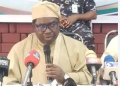
The Africa Finance Corporation, AFC, has appointed Central Bank of Nigeria Governor Olayemi Cardoso as chairman of its board of directors as the Federal Government seeks $78.5 billion in investments for 65 projects across key sectors of the economy.
Cardoso succeeded Ireti Samuel-Ogbu, who has completed her tenure as board chair but will remain a member of the board.
The appointment was announced as Nigeria’s finance and monetary authorities courted international investors at a forum in Bangkok, Thailand, held on the sidelines of the ongoing International Monetary Fund and World Bank Group Annual Meetings.
Finance Minister and Coordinating Minister of the Economy Taiwo Oyedele and Cardoso outlined the government’s commitment to sustaining economic reforms, improving the business environment and attracting long-term capital.
The government presented an investment pipeline of 65 projects requiring $78.5 billion, with energy and transport accounting for nearly four-fifths of the total funding requirement.
Oil, gas and power account for 25 projects valued at $36.4 billion, while eight transport and maritime projects require $25 billion.
Six agriculture and aground-processing projects require $9.8 billion, while 17 projects in industry, manufacturing and mining are valued at $6.6 billion.
The remaining nine projects cover technology, health and urban services, with a combined funding requirement of $700 million.
The projects range from $1 million to $15 billion in individual capital requirements, with a median of $153 million. While 48 projects require less than $500 million each, 17 projects valued at a combined $72.3 billion require at least $1 billion each.
To improve investor access, the government introduced a deal room designed to connect prospective investors with policymakers, explain available opportunities and address questions about investing in Nigeria.
The government also highlighted incentives and protections for foreign investors, including full foreign ownership in most sectors, repatriation of capital and profits subject to applicable requirements, double taxation agreements, bilateral investment treaties and Nigeria’s membership of the International Centre for Settlement of Investment Disputes.
It also cited a five per cent annual tax credit on qualifying capital expenditure for five years under the Economic Development Tax Incentive.
Government targets lower inflation, better business climate
Oyedele urged investors to consider long-term commitments, particularly as interest rates decline and equity investments become more attractive relative to fixed-income assets.
He said Nigeria wanted to attract more patient capital by encouraging investors to shift from short-term foreign portfolio investments to foreign direct investment.
The minister also stressed the need for closer coordination between fiscal and monetary authorities, saying lower inflation would reduce borrowing costs and ease pressure on public finances.
He said achieving single-digit inflation and creating conditions for single-digit interest rates could save the government more than $10 billion based on 2026 figures.
Oyedele identified agriculture, power, inflation management, regulatory efficiency and data transparency as five priority areas for reform.
On electricity, he said the government was examining market-reflective pricing, transmission constraints and efficiency challenges that affect businesses and investment decisions.
“You cannot power a $1 trillion economy in darkness. It’s impossible,” he said.
The minister also criticised excessive regulation and unclear administrative requirements, arguing that they imposed significant costs on businesses.
He said the government was developing a framework to prevent the arbitrary introduction of new rules, fees and licences.
On fiscal transparency, Oyedele said the Ministry of Finance was finalising arrangements to publish relevant economic and fiscal data on its website to improve access to credible and timely information.
Also Read: Macron woos Africa, seeks deeper investment cooperation
Cardoso says inflation remains a priority
Cardoso said the government’s reforms were beginning to provide greater stability for investment and economic growth but stressed that inflation must fall further to improve living conditions.
He said inflation had declined from about 34 to 35 per cent to approximately 15 per cent, describing the reduction as significant but insufficient.
“Our medium-term target is to bring it down to single digits,” he said, adding that the adoption of inflation targeting would improve transparency and help the public understand the direction of monetary policy.
Cardoso also cited the growth in Nigeria’s external reserves, which he said had reached their highest level in 18 years, describing the reserves as a buffer against external shocks.
He said the reforms had helped Nigeria withstand global economic pressures while supporting exchange-rate stability and appreciation.
Responding to concerns that Nigerians were yet to feel the benefits of the reforms, the CBN governor argued that the stability created by the policies had helped prevent a worse economic outcome.
AFC cites Cardoso’s financial sector experience
In announcing Cardoso’s appointment, the AFC highlighted his experience in international banking, investment management, economic policy and public service.
It said he had led monetary, financial-sector and institutional reforms since becoming CBN governor in September 2023, including changes to the foreign exchange market, efforts to address outstanding foreign exchange obligations and measures to strengthen monetary policy transmission and institutional governance.
The corporation also cited the completion of the banking sector recapitalisation programme under his leadership.
Before becoming CBN governor, Cardoso spent 12 years as chairman of Citibank Nigeria and served as Lagos State commissioner for economic planning and budget. He holds a degree from Aston University in the United Kingdom and a master’s degree in public administration from Harvard Kennedy School.
AFC President and Chief Executive Officer Samaila Zubairu said Cardoso’s experience would support the corporation’s efforts to mobilise investment for infrastructure and industrial development across Africa.
He also thanked Samuel-Ogbu for her contribution to the board.
Cardoso said he looked forward to working with the board, management and member states to advance the corporation’s infrastructure and industrial development agenda.
Dangote Group backs Nigeria’s reforms
The Dangote Group also endorsed the government’s economic reforms, with its Group Chief Economist, Hassan Mammud, saying changes to fiscal and monetary policies had helped improve investment projections and stabilise the group’s operations.
Mammud, who represented Dangote Group President Aliko Dangote at the forum, said greater policy transparency and credibility had supported the group’s investment in the Dangote Refinery.
He also cited policy consistency and incentives available to businesses operating in export processing zones as factors that strengthened investor confidence.
Mammud urged international investors to invest in Nigeria, describing the country’s reform experience as a model for other African economies.
Cardoso welcomed the endorsement, saying the reforms had helped address challenges faced by businesses that previously operated in an environment where foreign exchange rates differed for imports and exports.
He commended the Dangote Group for investing in domestic refining and moving further into the value-added production chain.
The government hopes the Bangkok forum and its new deal room will turn investor interest in the project pipeline into concrete financing commitments.
Thisdaylive