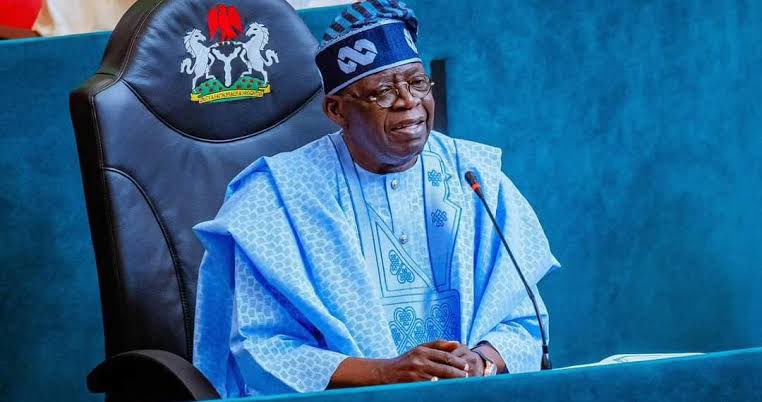
President Bola Tinubu, on Monday, said frivolous appeals, alleged intimidation of judges by lawyers, and judgments delivered on grounds of technicalities remain some of the major challenges impeding the war against corruption in Nigeria.
Tinubu argued that these factors will continue to hamper the speedy adjudication of corruption cases until they are curtailed.
He said this when he declared open the 6th Economic and Financial Crimes Commission/National Judicial Institute Capacity Building Workshop for Justices and Judges at the National Judicial Institute, Abuja.
Represented at the event by Vice President Kashim Shettima, the President, however, acknowledged that prosecution of corruption cases had improved remarkably, following the justice sector reforms in the past few years.
The Senior Special Assistant to the Vice President on Media and Communication, Mr. Stanley Nkwocha, revealed this in a statement he signed on Monday titled, ‘President Tinubu to judiciary: Anti-graft war won’t be won by technicalities, frivolous appeals.’
He described the capacity-building workshop as a platform to collectively speak out against Nigeria’s common enemy, corruption.
While delivering the President’s speech at the event, Shettima stated: “There is no gainsaying the fact that the judiciary is central to the success of the anticorruption efforts. The commitment, courage, and patriotism of judicial officers make the difference in the fight against corruption.
“Though I am aware that prosecution of corruption matters has improved in the light of the justice sector reforms in the last few years, we are not oblivious of some challenges that continue to impede the speedy adjudication of corruption cases.
“They include frivolous applications and appeals meant to delay trials, intimidation of judges by counsel, and judgment based not on the facts of cases but on technicalities.”
President Tinubu explained that “corruption is a cancer which continues to deny the nation the full benefits of her God-given resources,” even as he maintained that only the enlightened collective interest of all Nigerians “to close ranks and aggressively tackle this common enemy” can make the difference, instead of looking up “to only the anti-corruption agencies for solutions to this malaise.”
He observed that technological advancements had increased the complexity of financial crimes beyond the scope of current jurisprudence, citing the emergence of virtual assets, which he said “have occasioned an upsurge in cryptocurrency fraud.”
READ ALSO: Tinubu isssues ultimatum to insurgents: surrender or face military might
On the part of the executive arm of government, Tinubu said his administration had, through strategic investment of recovered proceeds of corruption in critical social programmes, moved to reduce the pressure on vulnerable Nigerians to resort to corrupt practices, just as he identified the Students Loan Fund and the Consumer Credit Scheme as part of these social interventions.
He commended the EFCC “for its commitment in fighting all economic and financial crimes, especially in tracing and recovering stolen assets.”
Tinubu also promised that the Federal Government “will continue to support the work of the Commission to ensure that it continues to deliver its statutory mandate without let or hindrance”.
The Chief Justice of Nigeria, Justice Kudirat Kekere-Ekun, commended the efforts of the current leadership of anti-graft agencies in the country for their commitment and collaboration with the judiciary in handling economic, financial crimes, and related cases.
She noted that law enforcement agencies must begin to see judicial officials as partners in the anti-graft campaign in Nigeria.
Kekere-Ekun pledged the judiciary’s support and commitment to the campaign through capacity-building initiatives for Justices, judges, and prosecuting officers.
The Senate President, Godswill Akpabio, who was represented by the Deputy Senate President, Jibrin Barau, praised the collaboration between anti-graft agencies and the judiciary.
“It is incumbent on us all as stakeholders to adopt and implement pragmatic solutions that will help address challenges confronting our country, including financial crimes,” he said.
Akpabio also advocated a periodic review of laws relating to economic crimes and creating a central database for law enforcement agencies, maintaining that the complexity of financial crimes requires constant tweaking of the laws.
EFCC Chairman, Ola Olukoyede said the workshop was key to addressing thorny issues in the agency’s efforts to rid the country of financial crimes.
Olukoyede acknowledged the challenges faced by stakeholders, saying they had affected investigations into many high-profile cases in the country.
He thanked the leadership of the judiciary in the country for its support, noting that regular interactions among stakeholders would go a long way in the realisation of the renewed vision and objectives of all anti-graft agencies under the current administration.
Credible News.ng