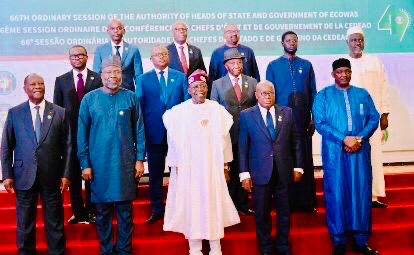
The Economic Community of West African States, ECOWAS, is set to commemorate its 50th anniversary in May, celebrating its transformation from an economic bloc into a political and economic powerhouse. Established on May, 1975, ECOWAS has played a crucial role in regional integration, peacekeeping, and economic development across West Africa.
The subregional body was founded to foster economic cooperation, stability, and shared growth among its 15 member states. Over the years, it has expanded its influence beyond trade, making significant strides in peacekeeping, infrastructure, and governance.
One of ECOWAS’ key successes is its 1976 Protocol on Free Movement, which allows citizens of member states to travel, reside, and work across borders without a visa. This has strengthened economic integration, creating a market of nearly 400 million people.
The bloc has also made notable progress in infrastructure, with projects like the Abidjan-Lagos Highway Corridor, a 1,028-kilometer transnational road set to enhance trade and connectivity among Côte d’Ivoire, Ghana, Togo, Benin, and Nigeria. Expected to commence in 2026 and be completed by 2030, the project aims to transform the corridor into a major economic hub.
Another milestone is the West African Power Pool established in 2006 to unify national electricity grids. With 14 of the 15 ECOWAS countries now interconnected, efforts are underway to extend power access to Cape Verde through a submarine cable. The West African Gas Pipeline Extension Project also seeks to deliver natural gas across the region, linking it to the Nigeria-Morocco Gas Pipeline.
ECOWAS has been instrumental in maintaining regional stability. It pioneered peacekeeping efforts through the Economic Community of West African States Ceasefire Monitoring Group which played a crucial role in resolving conflicts in Liberia, Sierra Leone, and Côte d’Ivoire.
The body has since shifted its focus to preventing instability by promoting good governance and responding to security threats. Despite ongoing challenges from violent extremism, political crises, and unconstitutional power changes, West Africa remains the only subregion in Africa without open, high-intensity conflict.
Despite its achievements, ECOWAS faces pressing issues, including terrorism, political instability, economic disparities, and governance concerns. The recent exit of Mali, Burkina Faso, and Niger from the bloc has sparked debates about the organization’s unity and effectiveness.
Former Nigerian Head of State and ECOWAS founding father, Gen. Yakubu Gowon, has urged member states to prioritize unity, warning that a fractured ECOWAS would betray the vision of its founders. Similarly, former ECOWAS Commission President Dr. Mohamed Chambas has called for renewed commitment to regional trade, agriculture, and economic cooperation to secure the bloc’s future.
With its golden jubilee approaching, ECOWAS stands at a critical juncture. As leaders reflect on its journey, the focus remains on strengthening integration, addressing security threats, and ensuring sustainable development.
The next chapter of ECOWAS will determine whether it can maintain its position as Africa’s leading subregional bloc while overcoming the challenges that lie ahead.
NAN