Top officials from the United States and China have resumed crucial trade negotiations in Stockholm. The talks aim to defuse mounting tensions between the world’s two largest economies and prevent a new round of tariff escalations that could rattle global markets.
Following months of economic strain caused by tit-for-tat tariffs and disrupted supply chains, U.S. and Chinese representatives are meeting in Stockholm for high-level trade discussions. The negotiations, taking place at Rosenbad the Swedish prime minister’s office began on Monday and continued into Tuesday. They involve key figures, including U.S. Treasury Secretary Scott Bessent and China’s Vice Premier He Lifeng.
This marks the third round of direct talks in as many months, after similar sessions in Geneva in May and London in June. Those earlier meetings led to preliminary agreements that helped halt a damaging spiral of retaliatory tariffs. One notable outcome was the resumption of rare earth mineral exports critical to sectors such as electronics and defense.
With the current 90-day tariff truce set to expire on August 12, the spotlight is now on the Stockholm talks to secure an extension possibly another 90 days. Failure to reach an agreement could trigger the return of punitive triple-digit U.S. tariffs on Chinese goods, which experts warn could effectively act as a bilateral trade embargo, risking severe disruptions to global supply chains.
Although no major breakthrough was announced after the first day, officials described the atmosphere as constructive. The extended duration of the talks and the involvement of senior officials point to serious intent. Secretary Bessent’s visit to Swedish Prime Minister Ulf Kristersson before the talks began further highlighted the global importance of the negotiations.
READ ALSO: China, United States escalate tariffs war
Speaking at a joint press conference in Scotland with British Prime Minister Keir Starmer, U.S. President Donald Trump acknowledged the ongoing talks. He expressed hope that China would “open up their country,” reflecting Washington’s broader goals of gaining improved economic access and reducing trade barriers.
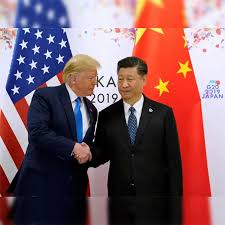
Beyond tariffs, the discussions are expected to pave the way for a potential summit later this year between President Trump and Chinese President Xi Jinping. However, Trump has downplayed efforts to schedule such a meeting for now.
While the current focus is on preventing a tariff snapback and ensuring the continued flow of goods and minerals, broader tensions remain unresolved. These include disputes over technology exports, human rights issues, and geopolitical concerns such as Taiwan challenges that will likely shape the next phase of U.S.-China relations.
For now, the Stockholm negotiations represent a critical opportunity to stabilize one of the most volatile trade relationships in recent history. Both sides appear committed to dialogue over confrontation, though the path to a lasting resolution remains uncertain.
The talks are expected to continue throughout the week, with pressure mounting to finalize a new agreement before the August 12 deadline.