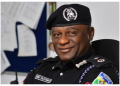
The Nigerian Army has announced that the soldiers who lost their lives in the Okuama community of Delta State will be laid to rest today (Wednesday) at the National Cemetery in Abuja.
The disclosure was made through a statement released via the Nigerian Army’s official communication channel on Tuesday, with the burial scheduled for 3 pm.
President Bola Tinubu is expected to attend the ceremony as the Special Guest of Honour.
Credible News reported that a total of 17 military personnel were tragically killed by enraged youths during a communal conflict sparked by a land dispute in Bomadi and Okuoma communities within the state. The soldiers, who were members of the 181 Amphibious Battalion, were ambushed and slain while responding to a distress call.
After the killing, there were reports that the military was planning a reprisal on the communities involved.
However, denying the allegation, the Defence headquarters slammed the community and stressed that no amount of propaganda would stop culprits from being nabbed.
While the Defence Headquarters vowed that there would be injurious consequences, it released the names of the Army personnel who were killed during a peace mission to Okuama.
Meanwhile, Tinubu and the Senate ordered the military to apprehend the killers of the military men.
In carrying out the order, it was gathered on Sunday that the military combed the warring communities and arrested a lot of persons, including three prime suspects, as the President declared that the Defence Headquarters and the Defence Chief had full authority to bring anybody responsible to justice.
Also, retired army generals and civil society organisations lambasted the killers of the soldiers and called for their apprehension and speedy prosecution in order to serve as a deterrent to other criminal elements.
On Tuesday in Abuja, the immediate-past Chief of Defence Staff, Gen. Lucky Irabor called for further analysis and conversations over the killings of the soldiers. He said this during the Chief of Defence Staff Joint Task Force Commanders Conference in Abuja on Tuesday, adding that there was no justification for the gruesome manner in which the military personnel were killed.
Irabor noted that to prevent a recurrence, there must be a conversation around limiting aid to civil authority.
He said, “the recent sad occurrence in Okuama where we lost our gallant and very committed officers and soldiers requires further analysis and conversation. Their death in such a bizarre and savagery condition cannot and will never be justified.
“The perpetrators of the heinous crime must be made to face the full wrath of the law. To forestall future occurrences, therefore, there must be further conversation on the limits of aid to civil authority.”
Irabor said the military must avoid the “see finish” syndrome while embarking on non-kinetic operations.
He noted that it portended danger for the nation should the integrity of the military be impugned.
He said, “as we encourage non-kinetic operations and community engagements, are there limits? Is it an omnibus mandate? Should the military be first responders in situations such as the Dkuama/Okoloba crisis? Are there red lines? The AFN must curtail the apparent descent to ‘see finish syndrome’.
“The integrity of the AFN, if at any time is impugned, will mean ominous signs for the nation. I, therefore, counsel that we remain on the path of professional excellence. This conference should examine the viable options in this regard.”
The Chief of Defence Staff, Gen. Christopher Musa, stated that the insecurity in the country was changing, adding that it could not be addressed in isolation.
He said, “the insecurity in our country is mutating, resilient, and cannot be treated in isolation of the prevailing challenges in the global security environment.
While pursuing our national security objectives, we must remain wary of the fluid nature of our security environment.”
Also speaking, the Minister of Interior, Olubunmi Tunji-Ojo, urged the security agencies to build strong relationships with residents of border communities to adequately protect the country’s borders.
Tunji-Ojo said, “You can only protect people to the extent to which they want to be protected. You need the support of the people and if the support isn’t there, there is a limit to what you can do. There must be Synergy with border communities and they must be incorporated into our security architecture.”