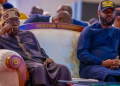
President Bola Ahmed Tinubu on Monday received a cheque from Speaker of the House of Representatives, Hon. Tajudeen Abbas, and Deputy Speaker, Hon. Benjamin Kalu at the Presidential Villa, Abuja. The cheque serves as a symbolic contribution to support the President’s philanthropic initiatives during the holy month of Ramadan.
The House of Representatives’ gesture aligns with efforts to assist vulnerable Nigerians, reinforcing the importance of unity and collective responsibility in addressing socio-economic challenges. Speaker Abbas emphasized the need for solidarity, especially during religious periods when many citizens struggle to meet their daily needs.
President Tinubu expressed gratitude for the donation and assured that the funds would be used to reach those in dire need. He stressed the significance of government collaboration in ensuring that support initiatives make a tangible impact on the lives of the less privileged. His administration remains committed to providing relief and empowerment programs that address immediate and long-term needs.
The President’s Ramadan aid initiative aims to provide food, financial assistance, and community-based support to the most vulnerable citizens. The initiative not only addresses hunger but also seeks to strengthen social welfare through strategic interventions designed to uplift communities.
Meanwhile, the PDP Northern Minority Consultative Forum has criticized the APC-led federal government over delays in Local Government allocations. The group described the situation as a major setback for grassroots development, stressing that local governments are struggling due to financial constraints.
READ ALSO: Tinubu appoints Kukah pro-chancellor at Kaduna varsity
The forum expressed concerns that political interference in fund disbursement is undermining the autonomy of local governments. It argued that withholding statutory allocations weakens governance at the grassroots level and deprives citizens of essential services, including healthcare, education, and infrastructure development.
Opposition governors have also voiced frustration over the delay in allocations, warning that it could hinder development efforts. Some have accused the federal government of using financial constraints as a tool for political control, making it difficult for state and local leaders to function effectively.
The federal government has defended its actions, citing financial prudence and budgetary constraints. However, analysts warn that continued delays in fund disbursement could erode public trust in governance. Many local government officials insist that without timely funding, they are unable to meet their obligations to the people they serve.
Calls for greater financial transparency and decentralization have intensified as stakeholders push for reforms in the allocation process. Advocates argue that granting local governments full autonomy over their finances would enhance service delivery and ensure that resources are used efficiently to meet community needs.
As Ramadan continues, the importance of compassion and unity remains at the forefront. While the House of Representatives’ support for Tinubu’s philanthropic efforts highlights cooperation at the federal level, concerns over local government funding raise pressing questions about governance and accountability. Resolving these financial challenges will be critical for ensuring stability and progress across Nigeria.
Crediblenewsng.com