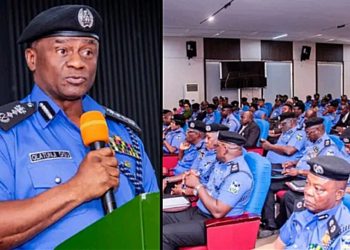
Former chairman of the Economic and Financial Crimes Commission, EFCC, Abdulrasheed Bawa has published a book detailing the intricate web of corruption behind Nigeria’s fuel subsidy scandal.
Titled The Shadow of Loot & Losses: Uncovering Nigeria’s Petroleum Subsidy Fraud, the book offers a comprehensive exposé of what Bawa describes as one of the most damaging economic crimes in the nation’s history.
The book was published by CableBooks, an imprint of Cable Media & Publishing Ltd., and is already being widely discussed in policy circles.
Bawa, who served as EFCC chairman between 2021 and 2023, played a central role in the 2012 investigation into the petroleum subsidy regime.
Drawing from his personal experience, he narrates how systemic fraud, collusion, and regulatory failure enabled private companies and government insiders to siphon trillions of naira under the guise of fuel importation.
According to the former anti-graft czar, common tactics included ghost importing, over-invoicing, double claims for the same shipment, and document forgery to manipulate shipping records. He also exposes how subsidized fuel was frequently smuggled across Nigeria’s borders and sold at inflated rates.
“These practices were not just isolated incidents,” Bawa writes. “They were part of an entrenched pattern of abuse that flourished due to weak oversight and political protection.”
READ ALSO: EFCC begins trial of Akindele in NCDMB scam
He identifies forged documents, collusion among public officials, and unchecked regulatory lapses as key enablers of the fraud. In some cases, entire fuel shipments existed only on paper, while claims for payment were honoured by the government.
The book goes beyond recounting past crimes. Bawa uses the platform to advocate for sweeping reforms in Nigeria’s public finance management and stronger transparency in the oil sector. He stresses that the fuel subsidy scandal is not just a historical tragedy, but a warning about the consequences of allowing opacity in government spending.
“The Shadow of Loot & Losses is not just a record of wrongdoing. It is a call to action for reform-minded citizens, lawmakers, and institutions,” Bawa said.
Medical experts, economists, and civil society organisations have long pointed to the fuel subsidy regime as a major drain on Nigeria’s economy. Bawa’s book provides new depth to this argument by offering a first-hand account of how the fraud operated and how it was exposed.
The book is currently being distributed nationwide by RovingHeights Bookstore.
Crediblenewsng.com