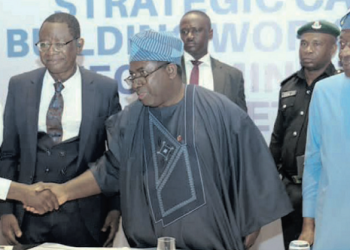
Media Rights Agenda, MRA, has taken a bold step to bridge the digital skills gap with the launch of a comprehensive new publication titled “Leveraging Digital Tools for Journalism Practice.”
Unveiled in Lagos on Thursday, the 164-page guide is designed to serve as a practical resource for journalists, media practitioners, and newsroom managers across Nigeria and beyond.
Authored by Ayomide Eweje, Programme Officer at MRA, the guide breaks down dozens of digital tools that enhance every stage of the journalistic process—from news gathering and verification to secure communication, storytelling, and audience engagement.
According to Eweje, the guide offers journalists an indispensable roadmap to operate effectively in an increasingly tech-driven media environment.
“This publication is a necessary response to the realities of journalism in a rapidly evolving digital age. It equips journalists not only with tools for investigative reporting and multimedia storytelling but also for protecting their digital footprints and sources,” she said.
The manual features tools for fact-checking, combating misinformation and disinformation, cybersecurity, social media engagement, online harassment mitigation, and safe mobile reporting.
It also addresses the growing concerns about online surveillance, platform algorithms, and the ethical use of artificial intelligence in journalism.
Highlighting the urgency of the initiative, MRA’s Executive Director, Edetaen Ojo, wrote in the Preface that the digital age presents both vast opportunities and serious risks for journalists.
READ ALSO: MRA lauds court verdict on application of FOI
“From real-time global reporting and deeper audience reach to navigating disinformation, surveillance, and cyber threats, the guide responds to the complexity of modern-day journalism,” he stated.
The publication is set to be distributed to media houses, journalism training institutions, and media development organizations across Nigeria and Africa. It will also be made freely accessible via the MRA website, ensuring broader reach and long-term impact.
Ojo noted that while traditional media methods are still relevant, the emergence of digital platforms, mobile reporting, and algorithm-driven content distribution requires a fundamental shift in how journalism is practiced. “Journalists must evolve—technically, intellectually, and ethically—to remain effective and safe,” he emphasized.
Beyond the launch, MRA is calling on media organizations to prioritize digital literacy training and provide journalists with the necessary tools to practice securely and innovatively. “Some tools are free, others are not, and that’s where institutional support becomes critical,” Eweje added.
This initiative comes at a time when the journalism profession globally is under pressure to adapt to digital trends, respond to increasing harassment of reporters, and counter the spread of misinformation.
MRA believes this guide will serve as both a shield and a compass for media workers navigating this complex terrain.
Crediblenewsng.com