The Federal Government has intensified efforts to dismantle the growing kidnapping economy in Nigeria through a nationwide expansion of the Multi-Agency Anti-Kidnap Fusion Cell.
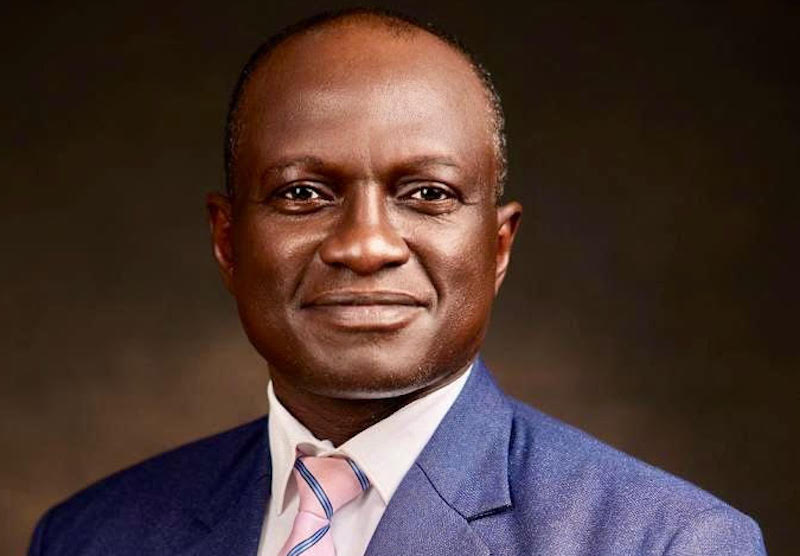
Major General Adamu Laka, National Coordinator of the National Counter Terrorism Centre, NCTC, under the Office of the National Security Adviser, ONSA, made this known on Tuesday while briefing journalists in Abuja.
Laka emphasised that kidnapping had morphed from isolated criminal activity into a well-organised industry dominated by armed criminal networks and terror-linked groups. “This isn’t random crime anymore,” he stated. “It is a calculated economy of violence, where ransom payments directly fuel weapons procurement, logistics, and territorial control.”
The NCTC boss revealed that the latest push involves the official launch of the State Expansion Programme for the fusion cell, with the aim of closing the gap between national security coordination and tactical field-level operations. “The objective is to connect national strategy with boots-on-ground action,” he said.
According to Laka, the Multi-Agency Anti-Kidnap Fusion Cell was established in partnership with the United Kingdom’s National Crime Agency. Since its inception, the cell has facilitated several high-profile rescue operations and disrupted kidnapping rings in various parts of the country.
“Kidnapping has become one of Nigeria’s most persistent and destabilising security challenges,” Laka said. “These criminal networks have evolved significantly in both coordination and capability. They often operate across state boundaries and maintain ties with terror groups, using ransom as a primary revenue stream.”
He stressed that dismantling this “kidnap-for-ransom economy” requires more than centralised efforts. Effective intelligence gathering, real-time coordination, and quick tactical response must also occur at the state level. This informed the new expansion strategy, which is designed to build direct operational linkages between the anti-kidnap cell and state security commands across Nigeria.
“Our experience has shown that real-time local intelligence and operational readiness largely reside with state commands,” he explained. “National coordination only works when it is aligned with ground realities.”
ALSO READ: Police mobilise special squad to free law students in kidnappers’ den
Laka further explained that the new expansion would empower local security agencies by integrating them into a unified national strategy. “We’re building a joint architecture that combines the intelligence and resources of federal institutions with the agility of state-level operations,” he said.
The anti-kidnapping programme, he added, also seeks to enhance interagency cooperation. Participating units include the Nigeria Police Force, Department of State Services, Nigerian Army, Nigeria Security and Civil Defence Corps, and various state governments.
According to Laka, the fusion cell has already made significant strides. “We’ve supported successful rescue missions and disrupted kidnapping syndicates by acting on credible intelligence gathered through collaborative frameworks,” he said.
He noted that in several cases, kidnappers were found to be part of larger networks involved in arms smuggling and terrorism financing. “So, tackling kidnapping goes beyond saving individual victims. It’s about breaking the economic backbone of organised crime and terror cells.”
The Coordinator reiterated the Federal Government’s commitment to providing necessary resources and political will to sustain the momentum. He also acknowledged the UK government for its continued technical support and collaboration in training, intelligence sharing, and joint operations.
Laka appealed to state governments to take ownership of the initiative by ensuring local agencies actively participate in the programme. “We must not allow fear to dictate our national life. This expansion is not just a programme; it is a necessity to restore security, especially in communities hardest hit by banditry and kidnapping.”
The Multi-Agency Anti-Kidnap Fusion Cell was first unveiled as part of a broader counter-terrorism and internal security strategy under the Office of the National Security Adviser. Its mandate includes intelligence coordination, rescue operations, disruption of criminal networks, and enhancing synergy among Nigeria’s numerous security stakeholders.
With the new state expansion strategy, authorities hope to increase rapid response capability and further choke off the ransom economy that has destabilised rural and peri-urban communities in the North West, North Central, and other high-risk regions.
As Laka concluded: “This is about protecting our people, restoring trust in governance, and crippling a parallel economy of fear that has no place in our future.”
NAN