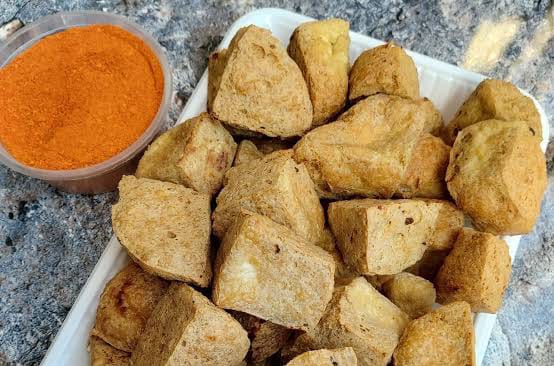
The sale of soybean cake, locally known as Awara, is providing a source of income and financial independence for many young girls in Kano, as they turn the popular snack into a thriving small-scale business.
Across the Kano metropolis, teenage vendors prepare and sell Awara from roadside stalls and in front of their homes, using modest start-up capital such as frying pans, cooking oil, charcoal stoves and soybeans. For many, the business has become a practical means of supporting their families, paying school-related expenses and saving for the future.
Aisha Musa, 18, from Hotoro, said she started the business with support from her mother. “I prepare it in front of our house every evening, and the business is helping me,” she said.
Seventeen-year-old Zainab Abdullahi from Dakata said the trade had enabled her to support her parents while meeting her personal and educational needs.
“Awara is simple to make, and people love it. I use the money to help at home and also pay for my school fees and other learning materials,” she said.
Maimuna Suleiman, 19, from Fagge, said she was saving part of her earnings to buy household items ahead of her wedding. “I keep some of the money I make to buy kitchen utensils and other things I will need in my home. It may be small, but it is helping me gradually,” she said.
Also Read: First lady defends petty trading initiative despite criticism
Rabi Isa, 20, from Unguwa Uku, said the business had helped her contribute to her family’s expenses. “Before, I was just staying at home without any work. Now, I make Awara and use the money to support my parents and take care of some personal needs,” she said.
However, the vendors said rising prices of soybeans and cooking oil had increased the cost of producing Awara, forcing the price per piece to rise from between N10 and N20 to about N50.
They noted that although the higher production costs had reduced their profit margins, demand for the snack remained strong.
Customers described Awara as an affordable, nutritious snack that remains popular despite the price increase. Bello Umar from Yankaba said the delicacy was tasty, readily available and still reasonably priced.
“Even at N50, people still buy it because it is cheaper than many other snacks,” he said. Mary Peters from Zoo Road said Awara had become part of daily life for many families.
“Children and adults enjoy it, and the young girls selling it are doing something useful instead of staying idle,” she said.
NAN