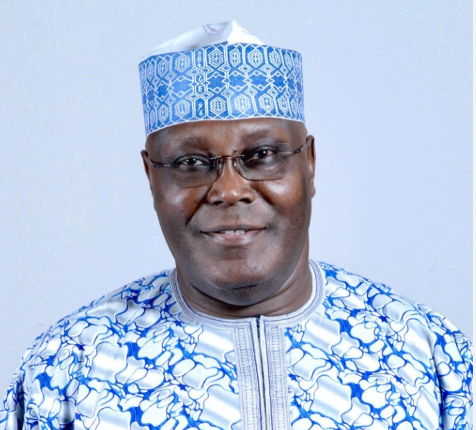
The Presidency has dismissed former Vice President Atiku Abubakar’s criticism of President Bola Tinubu’s economic policies, describing his assessment as outdated and disconnected from recent economic developments.
Presidential Spokesperson, Bayo Onanuga, made the clarification in a statement titled, “Facts, Not Fear: A Point-by-Point Response to Atiku Abubakar on Nigeria’s Reform Journey,” where he argued that Atiku’s analysis relied largely on 2024 economic data while overlooking what he described as gains recorded in 2025 and 2026 under the Tinubu administration’s reform programme.
“Atiku’s economic arguments remain anchored in 2024, even as Nigeria’s economy has rebounded sharply in both dollar and naira terms,” Onanuga said.
According to the presidential aide, Nigeria’s dollar-denominated Gross Domestic Product, GDP, increased from about $253 billion following the exchange-rate reforms to approximately $377 billion, representing a 49 per cent recovery.
He added that GDP measured in naira terms rose from N314 trillion to about N530 trillion, reflecting a 69 per cent increase since the commencement of the reforms.
Onanuga said Atiku’s evaluation failed to account for recent economic indicators, arguing that the former vice president relied on “frozen snapshots of history” rather than measurable outcomes from ongoing reforms.
He described the administration’s policies as structural adjustments aimed at addressing longstanding economic distortions inherited from previous governments.
“The reforms are necessary structural adjustments designed to correct long-standing distortions that persisted through earlier administrations, including the 1999–2007 Obasanjo-Atiku years,” he said.
On concerns over Nigeria’s rising debt profile, Onanuga maintained that the country’s debt remained sustainable when assessed against economic output and revenue performance.
He said Nigeria’s debt-to-GDP ratio stood at about 40 per cent, compared with higher levels recorded by South Africa at 85 per cent, Egypt at 80 per cent and Kenya at 75 per cent.
He added that Nigeria’s ratio was also lower than those of several advanced economies, including the United States and the United Kingdom.
“Debt must be assessed relative to economic capacity and revenue performance, not through alarmist rhetoric detached from fiscal realities,” Onanuga said.
The presidential spokesperson further stated that Nigeria’s debt-service-to-revenue ratio had declined from nearly 100 per cent in late 2022 to below 60 per cent.
He attributed the improvement to increased revenue generation, improved fiscal management and a more disciplined approach to borrowing.
Defending the removal of fuel subsidy, Onanuga said the policy ended years of fiscal leakages that weakened government finances and limited investment in critical sectors.
“The savings from subsidy removal have visibly boosted statutory allocations to states and local governments,” he said.
According to him, the increased allocations had supported spending on infrastructure, salaries, pensions and social intervention programmes across the country.
He cited World Bank assessments that indicated improvements in public revenues and increased capital expenditure at the subnational level following the reforms.
Onanuga said the changes had strengthened fiscal federalism by providing states and local governments with greater financial resources.
Also Read: FG denies off-budget spending, rebuts Atiku over IMF report
Addressing concerns over taxation, he said the administration’s tax reforms were designed to expand the tax base while protecting low-income earners and small businesses.
“Individuals earning up to N1 million annually and enterprises with turnover below N100 million are meant to bear lighter burdens,” he said.
He added that the government was strengthening compliance measures among higher-income earners and profitable companies to improve tax administration.
On healthcare, Onanuga said the administration had revitalized more than 3,000 primary healthcare centres nationwide and retrained 78,000 frontline health workers to improve service delivery.
In the education sector, he said more than 11,000 basic education projects had been completed under the administration.
He also stated that the Nigerian Education Loan Fund had disbursed over N303 billion to 1.64 million students from more than 300 tertiary institutions across the country.
The presidential aide also highlighted investments in roads, railways, ports, power infrastructure, airports, gas projects, housing and digital connectivity, describing them as part of efforts to drive long-term economic growth.
“These efforts have helped trigger the 49 per cent leap in dollar GDP and the 69 per cent rise in naira GDP since 2024,” he said.
Responding to Atiku’s claim of a N7.98 trillion oil windfall, Onanuga described the argument as flawed, saying it did not account for production shortfalls.
He explained that although Brent crude averaged about $90 per barrel during the first half of 2026, Nigeria’s crude oil output remained below projections.
“While oil prices exceeded projections, daily production averaged about 1.6 million barrels against a forecast of 1.84 million barrels,” he said.
According to him, the lower production levels limited potential revenue gains despite favourable international oil prices.
Onanuga also noted that part of Nigeria’s crude production had been committed to servicing loans obtained to support fuel subsidy payments.
He further highlighted measures taken by the government to address inflation and provide support for vulnerable households.
He said inflation declined to 14.4 per cent in November 2025 before rising to 15.91 per cent following disruptions linked to the Middle East conflict. He added that analysts projected that inflation could fall to about 12 per cent by the end of the year.
Onanuga said the government had implemented the NG-CARES, HOPE and SOLID programmes, valued at more than $3 billion, while cash transfer initiatives had reached 15 million households nationwide.
“The conversation about reform should be anchored on measurable outcomes, not slogans or selective interpretations of economic data,” he said.
The presidential aide urged political actors to adopt a more constructive approach to discussions on Nigeria’s economic direction.
He maintained that the Tinubu administration’s reform agenda represented a long-term strategy aimed at repositioning and strengthening the Nigerian economy.
“This reform programme is a reinvention of Nigeria’s economy. It demands short-term sacrifice, but it promises lasting gains for future generations,” Onanuga said.
NAN