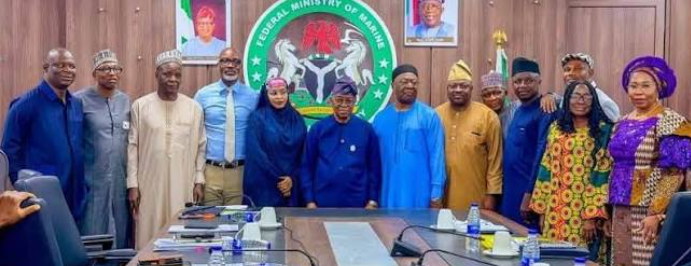
The Federal Government has given a technical committee eight weeks to develop an implementation roadmap for addressing Nigeria’s 2.2m tonne fish production deficit.
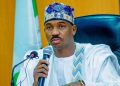
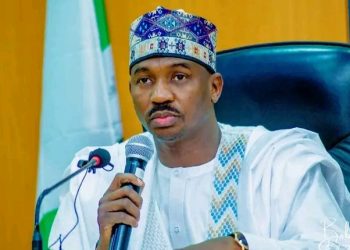
Minister of Marine and Blue Economy, Dr Adegboyega Oyetola, gave the deadline while inaugurating the Technical Committee on Accelerating Fish Production in Nigeria.
The committee is expected to develop practical measures to increase domestic fish production, strengthen the value chain and reduce the country’s dependence on imports.
The News Agency of Nigeria reports that Nigeria’s annual fish requirement is estimated at more than 3.6 million metric tonnes, while domestic production stood at 1.4 million metric tonnes in 2025, leaving a substantial supply gap.
Oyetola said the committee was expected to translate recommendations from a strategic round table held in October 2025 into practical actions capable of increasing domestic production and reducing dependence on fish imports.
“The committee has been given eight weeks to move from recommendations to a practical implementation roadmap that addresses the major constraints limiting fish production and supply across Nigeria.
“We must identify interventions that can deliver measurable improvements in production, processing, storage and marketing, while creating opportunities for investment, job creation and stronger participation across the value chain.
“Nigeria cannot continue to depend heavily on imported fish when we have the resources and human capacity to expand domestic production and strengthen food security,” he said.
The minister identified high feed costs, inadequate access to quality fish seed and broodstock, weak fish health systems, post-harvest losses and inadequate cold-chain infrastructure as major constraints to increased production.
He also cited limited access to affordable finance, gaps in research and innovation, weak data systems, inadequate standards, traceability challenges and insufficient market development as issues requiring urgent attention.
Oyetola said the transfer of fisheries and aquaculture functions to the Ministry of Marine and Blue Economy had provided a stronger institutional platform for addressing the challenges facing the sector.
He reaffirmed the ministry’s commitment to increasing sustainable domestic fish production, strengthening the fisheries value chain and progressively reducing Nigeria’s dependence on imported fish.
The minister said the ministry, in collaboration with the National Institute for Policy and Strategic Studies, held a strategic round table on Oct. 29, 2025, to examine ways of accelerating fish production.
Also Read: Farmers get free fertilizer, tractors in Kaduna State
He said the round table produced recommendations aimed at addressing production and value-chain constraints, adding that the new committee would rigorously assess the proposals and determine priorities.
Oyetola charged the committee to determine whether the recommendations should be adopted, refined, integrated into existing frameworks, subjected to further study or discarded where considered unviable.
He also directed members to map existing initiatives across the public, private and development sectors to strengthen proven strategies and avoid duplication of scarce resources.
According to him, the committee’s final report should contain priority interventions, responsible institutions, timelines, indicative costs, funding options, performance indicators and required approvals.
He said the report should also identify credible opportunities for private-sector investment, public-private partnerships, development finance and other sustainable funding arrangements to support implementation.
The minister urged members drawn from government, academia, professional bodies, research institutions and industry to approach the assignment with urgency, objectivity and a strong focus on results.
He said the recommendations must be realistic, evidence-based and financially responsible while delivering tangible improvements in fish production, employment generation and food security across the country.
Oyetola assured the committee of the ministry’s support and expressed confidence that its work would provide a practical pathway for accelerating growth in Nigeria’s fisheries and aquaculture sector.
Speaking earlier, the Permanent Secretary and Chairman of the committee, Mrs Fatima Mahmood, said members would thoroughly review the round table recommendations and develop practical interventions.
Mahmood said the committee would work with relevant government institutions, researchers, industry stakeholders and development partners to identify priority actions and address existing gaps.
She said the committee would also develop a realistic implementation roadmap capable of accelerating sustainable fish production, strengthening the fisheries value chain and contributing to food security.
Prof. Akintola Latunji, Professor of Fisheries at Lagos State University and a member of the committee, thanked the minister for inaugurating the committee and pledged members’ commitment to the assignment.
Latunji said the committee would collaborate with relevant stakeholders to deliver its mandate and catalyse fish production across the country.
NAN reports that members of the committee include Mahmood, Mr Omoragbon Wellington, Mr Garba Usman, Prof. Ayo Omotayo, Prof. Sule Abiodun, Latunji and Prof. Sadiku Omeiza.
Others are Dr Faith Zibs-Godwin, Dr Charles Okaga, Dr Ebinimi Ansa, Mr Onoja Sunday, Mr Mashi Sani, Mr Remi Ahmed and Dr Charles Iyangbe.
The committee is expected to submit its report within eight weeks, providing the government with an implementation framework for boosting domestic fish production and reducing the country’s supply deficit.
NAN