Israel’s Defence and Finance ministries are locked in a dispute over the rising cost of the country’s multiple military operations, with the army warning that unresolved funding disagreements could undermine national security.
The Israeli government has proposed an additional $5 billion for the military, raising the 2026 defence budget to $60.8 billion, according to Israeli news outlet YNet.
The proposed allocation would be the second-highest defence budget in the country’s history, behind the $62.2 billion allocated during the first year of the Gaza war.
Since the war in Gaza began in October 2023, Israel has remained engaged in sustained military operations across the region.
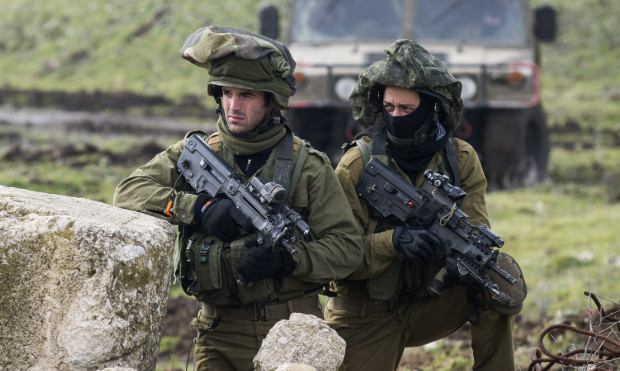
Israeli forces are deployed in Lebanon and Syria, while the military continues operations in Gaza and the occupied West Bank and prepares for the possibility of further conflict with Iran.
Israeli military Chief of Staff Eyal Zamir has warned that the country is undertaking these costly conflicts with what he described as “empty coffers.”
The dispute between the defence and finance ministries has been building for months, with the two sides divided over the scale and management of military spending.
In late August, YNet reported that the disagreement was expected to continue even after the additional funding was approved.
Senior Finance Ministry officials rejected the military’s claim that it was “on the edge of the abyss” and warned that meeting its demands could push defence spending to nearly one-third of the country’s entire state budget, the outlet reported.
“Everything costs money. Their only mode of operation is using military force, as we’ve seen in Lebanon, Syria, Gaza and Iran, but they never seem to want to talk about paying for it,” Yossi Mekelberg, a senior consulting fellow at Chatham House, told Al Jazeera.
“It costs. The hardware, the ammunition, the soldiers, and the benefits if they’re injured,” he said. “It all needs paying for, which is something they rarely seem to want to discuss.”
Mekelberg said Israel’s fragmented political landscape was complicating the dispute, with politicians competing for support among small and often uncompromising segments of the electorate.
He said this was particularly relevant to Finance Minister Bezalel Smotrich, whose far-right Religious Zionist Party could struggle to cross the electoral threshold required to secure seats in the next Knesset.
“Smotrich is in an uncomfortable position. On the one hand, he needs the support of these hardcore nationalists who demand more expenditure on the military and their occupation of the West Bank. On the other, as minister of finance, he has to pay for it,” Mekelberg said.
Also Read: Israel far-right makes political gain from Palestinian horror
Briefings from within the Israeli military have blamed delays by the Finance Ministry for a number of potential spending cuts.
These include a significant reduction in reserve forces in the Northern and Southern Commands, while the West Bank Division would be maintained at its current strength amid heightened tensions and security concerns.
The military has also warned that it could significantly reduce intelligence-gathering operations that rely on expensive technologies.
At the same time, it says it must prepare for a possible escalation with Iran and other threats, including the Houthis in Yemen and pro-Iranian Shia militias in Iraq. Such preparations would require continued training as well as adequate stocks of spare parts and munitions.
“Struggling departments often blame the Ministry of Finance for their own problems, much in the way that the governments of developing countries sometimes blame the International Monetary Fund, IMF,” said Michael Ben-Gad, a professor of economics at City St George’s, University of London.
“The Ministry of Finance will make sure the army’s funded. Most of the people in the ministry have family in the army and/or served themselves,” he said.
Ben-Gad said the political challenge, particularly ahead of an election, was for ministers to avoid being seen as opposing the military.
“Smotrich can either pay now and raise taxes after the election, or pay now and then criticize the next government for doing just that,” he said.
Despite the military’s warnings over funding pressures, few ministers appear willing to significantly scale back Israel’s military operations.
In the occupied West Bank, the Israeli army has announced plans for a large-scale deployment aimed at addressing escalating settler violence.
At the same time, Israel is preparing for a possible escalation with Iran, with billions of dollars being spent to replenish munitions used in recent fighting involving Iran and neighbouring countries.
“It’s like a rule of nature. Every year, the Israeli army asks for more money and every year the Ministry of Finance will impose a cut of around one to two percent across all other departments to pay for it,” Israeli political analyst Nimrod Flaschenberg told Al Jazeera.
Flaschenberg said Israel was also developing a military doctrine focused on establishing front lines in enemy territory, with what the military calls “dead zones” behind them. “Not one of the front-runners in October’s election was questioning the wisdom of that tactic,” he said.
“If this is the new doctrine, then it could be an expensive one, as those front-lines are going to need to be replenished with both manpower and equipment,” Flaschenberg said.
“There might be disagreements over how that capacity is eventually deployed, but not the doctrine of building it up.”
Al Jazeera