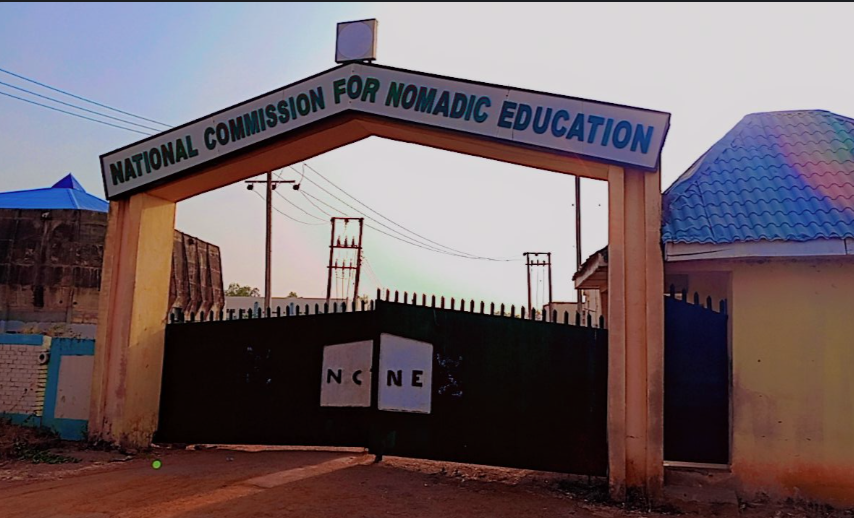
The National Commission for Nomadic Education, NCNE, has revealed that about 5.5 million children from nomadic pastoralist, migrant fishing and migrant farming communities remain out of school across Nigeria, despite the combined population of the three groups being estimated at 45.9 million.
The disclosure was made by the commission’s Acting Executive Secretary, Dr Umar Abdu, during an interview on the sidelines of a three-day international conference on education for nomadic pastoralists and other marginalised learners held in Kano.
“About 5.5 million children from nomadic pastoralist, migrant fishing and migrant farming communities are out of school across Nigeria,” Abdu said, noting that the figure relates to the three categories of communities covered under the Federal Government’s nomadic education programme.
The conference, themed “Strengthening Inclusive and Flexible Education Pathways for Nomadic Pastoralists and Marginalised Learners in Africa,” also witnessed the establishment of a continental education consortium spearheaded by the Maryam Abacha American University of Nigeria in collaboration with three African universities.
The initiative brings together the Catholic University of Eastern Africa in Kenya, Capital University in Somalia and the University of Namibia, with the objective of expanding educational opportunities for underserved and marginalised populations across the continent.
Abdu dismissed the notion that nomadic education is meant only for Fulani pastoralists, explaining that the programme caters to nomadic pastoralists, migrant fisher-folk and migrant farmers whose lifestyles often limit access to conventional schooling.
“The programme targets three major groups: nomadic pastoralists, migrant fisher-folk and migrant farmers. These groups have a combined estimated population of 45.9 million across the 36 states and the Federal Capital Territory,” he added.
Despite the challenges, Abdu said the commission currently has about 1.9 million learners enrolled in educational programmes spread across the federation.
To improve access to education for children affected by insecurity, geographical isolation and displacement, the commission has adopted alternative learning models, including mobile schools, makeshift learning centres and radio-based programmes tailored to the realities of nomadic communities.
The acting executive secretary also disclosed that the commission is establishing skills acquisition centres aimed at equipping young people with vocational competencies and alternative means of livelihood.
The initiative is intended not only to empower young people economically but also to improve the living conditions of their families and reduce vulnerability within nomadic settlements.
However, he identified inadequate funding, delayed release of budgetary allocations, teacher shortages and low transition rates from primary to junior secondary school as some of the major obstacles undermining the effectiveness of the programme.
Abdu lamented that funding available to the commission often falls short of the scale of its nationwide responsibilities, while delays in the release of approved funds further hamper implementation efforts.
Also Read: Kwara offers bursary to students in tertiary education
He also pointed to recurring challenges associated with teacher deployment and retention, noting that the commission does not exercise direct control over teachers assigned to nomadic schools because education remains a shared responsibility among the federal, state and local governments.
“We sometimes experience situations where teachers trained and deployed to nomadic schools are transferred to conventional schools. This results in teacher attrition and disrupts the continuity of learning in nomadic communities,” he said.
To address the problem, the commission has intensified engagement with state and local authorities while promoting the recruitment of qualified personnel from within nomadic communities who are familiar with the language, culture and lifestyle of the learners.
Abdu further expressed concern over girls’ education, saying enrolment is usually strong between Primary One and Primary Three but begins to decline from Primary Four as many girls are withdrawn for early marriage and household responsibilities.
Under the practice, parents reportedly withdraw older children from school to participate in cattle rearing, fishing or farming activities before enrolling younger siblings in their place.
Abdu explained that the practice disrupts academic progression, as newly enrolled children cannot continue from the level attained by their older siblings, while lack of nearby junior secondary schools in many nomadic settlements further hinders progression beyond primary education, particularly for girls.
To reverse the trend, the commission is seeking greater support from development partners, philanthropists, state governments and other stakeholders committed to expanding educational opportunities for hard-to-reach populations.
Abdu disclosed that efforts to institutionalize nomadic education are gaining traction, with Bauchi, Jigawa, Zamfara and Sokoto establishing dedicated agencies for the sector, while Niger State has created a ministry for nomadic education and pastoral affairs.
He added that the commission continues to collaborate with state agencies, State Universal Basic Education Boards and non-governmental organisations to improve both access to education and learner retention among pastoralist, fishing and farming communities across the country.
THE PUNCH