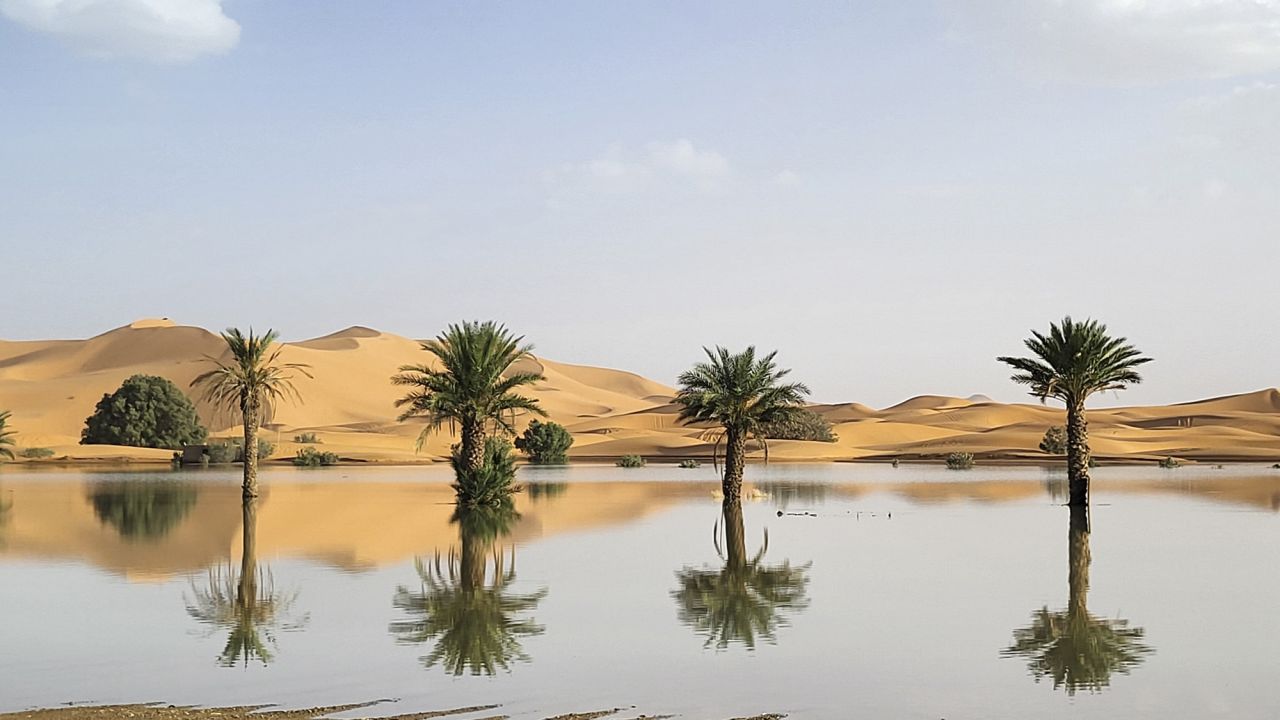
Unprecedented rainfall has transformed parts of the Sahara Desert, one of the driest places on Earth, into a landscape of unexpected lakes and wetlands. In September, intense rainstorms drenched the desert in southeast Morocco, marking the first major flood event in the region in decades.
Though the Sahara receives minimal rainfall annually—usually just a few inches—this deluge was extraordinary. Over the course of two days, nearly eight inches of rain fell in some areas, as disclosed by preliminary NASA satellite data. In the desert city of Errachidia, nearly three inches of rain was recorded, quadrupling the monthly average and amounting to over half a year’s typical precipitation.
Houssine Youabeb, a meteorologist with Morocco’s weather service, described the event as the heaviest rainfall in 30 to 50 years. The floods carved new lakes into the desert’s iconic sand dunes, particularly in the town of Merzouga, where the newly-formed lagoons now reflect palm trees and stark desert skies. These rare water bodies, etched into the sandy landscape, present a striking contrast to the usual arid surroundings.
READ ALSO :Desertification drives Yobe communities from ancestral lands as sand dunes advance
In Iriqui National Park, another dry lakebed came back to life, filled by the rains. NASA’s satellite imagery, enhanced with false-color techniques, vividly captures the vast swaths of water pooling across this remote section of the northwest Sahara. While the rains mostly hit sparsely populated areas, some towns and villages were also affected, with floods tragically claiming over a dozen lives.
Stretching over 3.6 million square miles, the Sahara is the world’s largest hot desert. In addition to the floods, satellite imagery from September disclosed sections of the desert turning green, the result of rainstorms pushing further north than usual. Some research suggests that these unusual weather patterns may be tied to climate change, which is predicted to intensify rainfall in the Sahara as the planet warms and disrupts the global water cycle.
As climate models predict more frequent and intense rainfall events, the Sahara’s stark transformation may not be a one-time event, but rather a glimpse into the future of this vast desert.
Reported by CNN