Mali, Niger, and Burkina Faso on Wednesday formally withdrawn from the Economic Community of West African States, ECOWAS.
As programmed, they completed their exit from the main political and trade group in West Africa following more than a year of diplomatic strain.
The departure has sent shockwaves through ECOWAS, which is widely regarded as the continent’s most significant regional organization, celebrating its 50th anniversary this year.
Although the organization’s leadership released a statement saying that they would “keep ECOWAS doors open” to the three nations, their exit has left the group’s future uncertain.
The split was triggered by the July 2023 coup in Niger, after military leaders in Mali and Burkina Faso also took power in 2020.
ECOWAS threatened to intervene militarily in Niger to reinstate the deposed president and imposed heavy economic sanctions on Niamey, since lifted.
The three countries, which were founding members of ECOWAS, declared in January 2024 that they intended to leave immediately, but ECOWAS regulations require a one-year notice for the withdrawal to take effect.
“ECOWAS remains open,” stated Omar Alieu Touray, the head of the ECOWAS group, during a press conference in Abuja, the Nigerian capital, where the group’s headquarters is located.
“He also extended an invitation to representatives of the three countries to attend a technical meeting “to initiate the withdrawal formalities.
“We look forward to those discussions,” he added.
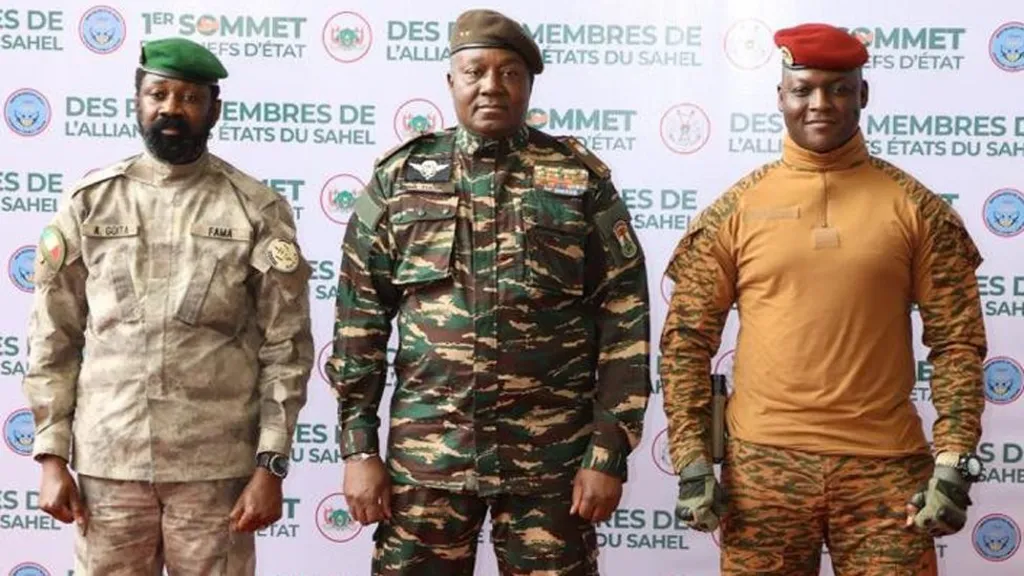
Burkina Faso, Mali and Niger have now established their own confederation, known as the Alliance of Sahel States.
In its statement, ECOWAS urged member states to recognize “until further notice” passports issued by the three countries that display the ECOWAS logo.
Citizens of these nations will “continue to enjoy the right of visa-free movement, residence and establishment in accordance with the ECOWAS protocols” until a new decision is made, the statement explained.
Additionally, goods and services from these countries will be treated in line with ECOWAS regulations until the organization determines its “future engagement” with them.
Touray also told reporters in Abuja: “Any state can decide to come back in the community at any time.”
The military leaders in the Sahel nations accuse ECOWAS of failing to support their efforts against jihadist insurgencies and of being too closely aligned with France, the former colonial power in the region.
All three countries have largely severed their security ties with France, turning instead to Russia, Iran, and Turkey for assistance.
As a sign of the growing skepticism within ECOWAS, Togo and Ghana have restored diplomatic relations with the three countries and Ghana’s new president, John Mahama, has appointed a special envoy to the Alliance of Sahel States.
Crediblenewsng.com