

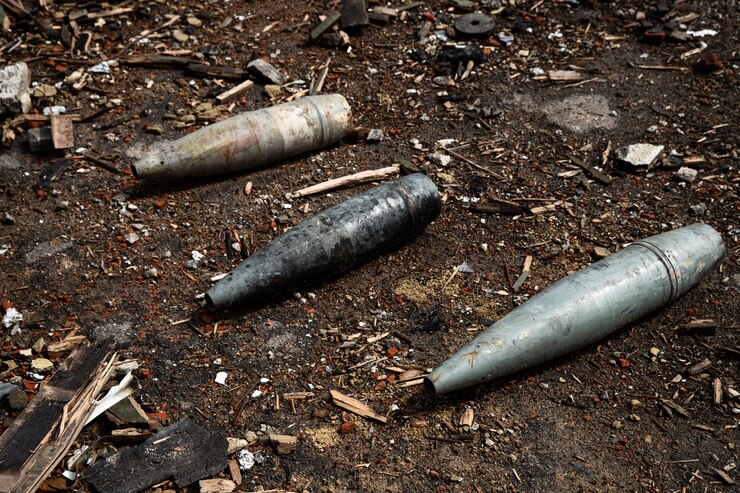
Russia launched a devastating hour-long assault on Kyiv Thursday, killing nine and injuring over 70 in its deadliest strike since July.
The Ukrainian capital was rocked by a massive barrage of missiles and drones, with residents gripped by fear for nearly 11 hours.
Ukrainian authorities described the offensive as one of the most intense in recent months, targeting Kyiv and four other regions.
President Volodymyr Zelenskyy called the attack “one of Russia’s most outrageous” and announced he would end his official visit to South Africa immediately to return home.
“This appears to be Russia’s largest strike on Kyiv in nine months,” he said.
The Ukrainian air force reported that Russia launched 66 ballistic and cruise missiles, four air-to-surface missiles, and 145 Shahed and decoy drones. Kyiv’s Mayor Vitalii Klitschko declared Friday a day of mourning.
Images from the capital showed rescue workers combing through charred debris with flashlights, as emergency lights illuminated the destruction.
READ ALSO: Zelensky makes landmark visit to South Africa
Several homes were partly collapsed, while others were burned beyond recognition.
The assault came just as peace negotiations between the two countries reached a critical point, though no resolution has been achieved.
In a rare response, U.S. President Donald Trump condemned Russian President Vladimir Putin, posting on Truth Social, “Not necessary, and terrible timing. Vladimir, STOP!” This marked an unusual criticism from Trump, who has typically refrained from directly challenging Putin.
However, senior American officials have hinted that the Trump administration could withdraw from mediation efforts if both sides remain unwilling to make concessions.
The timing of the attack has sparked further controversy, coming only hours after Trump accused Zelenskyy of prolonging the conflict.
He suggested the Ukrainian leader could end the bloodshed by relinquishing claims to Crimea, the Russia-occupied peninsula annexed in 2014.
As Kyiv mourns the dead and digs through the rubble, the future of diplomatic talks hangs in uncertainty, clouded by rising tensions and renewed violence.
NAN











