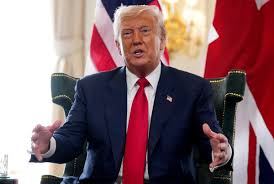
President Donald Trump announced on Monday that he is placing the Washington, D.C. Metropolitan Police Department under direct federal control and deploying 800 National Guard troops to the nation’s capital, citing a public safety emergency amid concerns over crime.
President Donald Trump’s decision to federalize Washington, D.C.’s police force marks the first time a U.S. president has invoked Section 740 of the 1973 District of Columbia Home Rule Act to take such control. The announcement came during a Monday press conference at the White House where Trump declared the move necessary to tackle what he described as an out-of-control crime situation in the capital.
Trump framed the takeover as a step to “take our capital back” from what he characterized as escalating violent crime, car thefts, homelessness, and lawlessness. He compared crime levels in D.C. unfavorably to some of the world’s most dangerous cities, including Bogota, Colombia and Mexico City. Trump’s action followed an incident on August 3rd involving a 19-year-old former government employee who was assaulted during a carjacking attempt, which he cited as emblematic of the city’s law enforcement struggles.
READ ALSO: Trump orders immediate removal of homeless from D.C.
Under the Home Rule Act, the president is permitted to assume control of the D.C. police for a maximum of 48 hours upon declaring an emergency, after which extension requires notification to Congress or legislative approval. Trump’s announcement also included the appointment of Terrance “Terry” Cole, administrator of the U.S. Drug Enforcement Administration, as interim commissioner of the Metropolitan Police Department , with Attorney General Pam Bondi overseeing the department’s operations during this period.
Mayor Muriel Bowser responded swiftly, describing Trump’s move as “unsettling and unprecedented,” highlighting that local officials and police were not informed prior to the federal takeover declaration. Bowser underscored that despite Trump’s portrayal, crime statistics show a decrease in violent crime over the past year, with 2024 and early 2025 recording significant drops after a spike in 2023. She lamented the decision while emphasizing the need to cooperate with federal authorities as allowable by law.
The deployment of National Guard troops aims to strengthen law enforcement’s presence, with approximately 200 guardsmen assigned to support policing efforts. Federal agencies including the FBI, DEA, ATF, U.S. Park Police, and U.S. Marshals have also been integrated into this initiative to bolster crime-fighting capabilities in the city.
This federal intervention has sparked significant political backlash. Local and national Democrats condemned Trump’s orders as a power grab undermining D.C.’s self-governance and called for legislative measures to challenge and reverse the federalization. Critics warn that the move could intensify tensions between federal and local authorities and destabilize policing strategies, particularly noting the lack of prior coordination or communication with D.C.’s mayor and police leadership.
The takeover highlights the unique governance structure of Washington, D.C., where Congress holds ultimate authority but residents exercise limited self-rule. The Home Rule Act has long been the framework balancing federal oversight and local autonomy, but Trump’s unprecedented use of Section 740 raises profound questions about the future of policing and governance in the capital.
As the city adjusts to this newly imposed federal control, the political, social, and practical ramifications of this controversial move continue to unfold. Trump hailed the initiative as a “liberation day” intended to restore safety and order, while critics characterize it as an authoritarian overreach that could further divide the city and undermine the principles of local democracy.
CNN