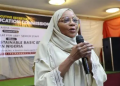
The Kaduna State Contributory Health Management Authority, KADCHMA, has enrolled 114,000 vulnerable persons through the Basic Health Care Provision Fund and the Vulnerable Population Programme.
The Director-General of the authority, Hassan Abubakar, at a one-day Media Engagement Meeting on Saturday in Kaduna, said the media engagement was to build a strong partnership with the media to enhance public awareness, increase coverage and promote the utilisation of health care services under the state contributory health scheme.
Abubakar said, “The authority has made remarkable progress towards this vision. and more than 39,000 beneficiaries had already accessed essential maternal, neonatal, and curative services.”
According to him, KADCHMA has received various forms of invaluable support from the Gov. Uba Sani-led administration in the last two and half years.
He listed such support to include rural access roads, provision of equipment at the primary healthcare centres and the distribution of drugs to the facilities.
Others were the revitalisation of the state’s General Hospitals and through grassroots sensitisation by 255 community volunteers and the authority’s weekly radio programmes.
Abubakar added that they have expanded public awareness and increased health insurance enrolment from 4.5 per cent in 2023 to 9.6 per cent in 2025.
He said, “These efforts are not just statistics, they represent families who no longer have to face catastrophic out-of-pocket health expenses, and mothers who can now give birth safely under skilled supervision.”
According to him, to enhance institutional efficiency, the authority established Zaria and Kafanchan Zonal Offices, bringing their services closer to clients and improving oversight.
Also Read: Kaduna, China partner on $450m poultry project
Abubakar said, “Our Vulnerable Population Programme continues to save lives – especially among women and children in Kauru, Giwa, and Chikun LGAs.
“This is by providing timely access to safe delivery, immunisation, and treatment at empanelled facilities.
“Similarly, the BHCPF had strengthened primary healthcare utilisation and complemented other state interventions like MAMII and HOPE, ensuring that enrolled beneficiaries receive care without paying out-of-pocket.”
He added that they have also implemented a series of innovative reforms meant to strengthen the system.
They included: Digital transformation via which the KADCHMA Digital Enrolment and Verification Platform (DEVP) now enables real-time enrolee tracking and claims management.”
Ok Public–Private Partnerships, Abubukar said the agency was collaborating with private Third-Party Administrators, ICT providers, and the media to expand coverage and awareness.
According to him, they have also prioritised continuous training for claims officers, facility managers, and community volunteers.
Abubakar added that the authority was integrating health insurance into agriculture-based interventions through the Produce for Health Initiative, ensuring that even farmers benefit from financial risk protection.
Abubakar urged the media to see KADCHMA not merely as a government agency, but as a social protection actor, one designed to ensure that everyone was carried along in accessing quality healthcare in Kaduna State.
“Let us remember that health insurance is a promise of protection, dignity, and hope for every citizen.
“The stories we tell, the headlines we craft, and the awareness we raise together can determine whether a mother in Sanga receives safe delivery care, or a child in Ikara gets life-saving treatment on time,” the director-general added.
In a presentation titled “Media Partnership for an Healthier Kaduna,’ Dr Murjanatu Abba of the Department of Mass Communications, Ahmadu Bello University, Zaria, said, “a healthy Kaduna begins with informed citizens.”
She said that the media play key roles in informing, educating and mobilising as well as the watchdog responsibility.
According to her, the health scheme is facing challenges of low public awareness, misconceptions and misinformation, limited health storytelling, low enrolment in informal and rural sectors.
She urged the media practitioners on consistent health coverage and public sensitisation.
The State Commissioner for Health, Umma Kaltum-Ahmed said the training was not just a capacity-building exercise but a partnership.
Represented by the Director of Medical Services, she said they recognised the vital role of journalists in shaping public opinion, countering misinformation, and amplifying the impact of social programmes.
“Your accurate and consistent reportage can and will inspire trust and encourage more citizens to enrol in the scheme,” Kultum-Ahmed said.
She said recently, the state launched the emergency ambulance service, which provides rapid response ambulance stations across the state, adding, “it includes a 24-hour emergency call and dispatch centre, and a team of skilled health professionals ready to act.”
According to her, the system was not only for cities but also tailored to meet the needs of the rural and remote communities.
The commissioner said, ‘You, our partners in the media, are the bridge between policy and the people.
“Through your words, you can help Kaduna State and Gov. Uba Sani to sustain this momentum and bring us closer to the vision of Universal Health Coverage – where access to care is a right, not a privilege.
“So, as we share knowledge today, let’s also share a commitment to use our platforms, our influence, and our voices, to build a healthier, more inclusive Kaduna State.
“Together, we can ensure that no one is left behind.”
The Commissioner for Information, Alhaji Ahmed Maiyaki said journalists should always track the activities of the authority in order to disseminate factual stories to the citizens.
He added that the Governor always has concern with the health sector by approving above 15 per cent of the state’s annual budget for the health sector.
Maiyaki added that additional 255 Primary Health Centres had been approved for upgrade by Sani.
NAN