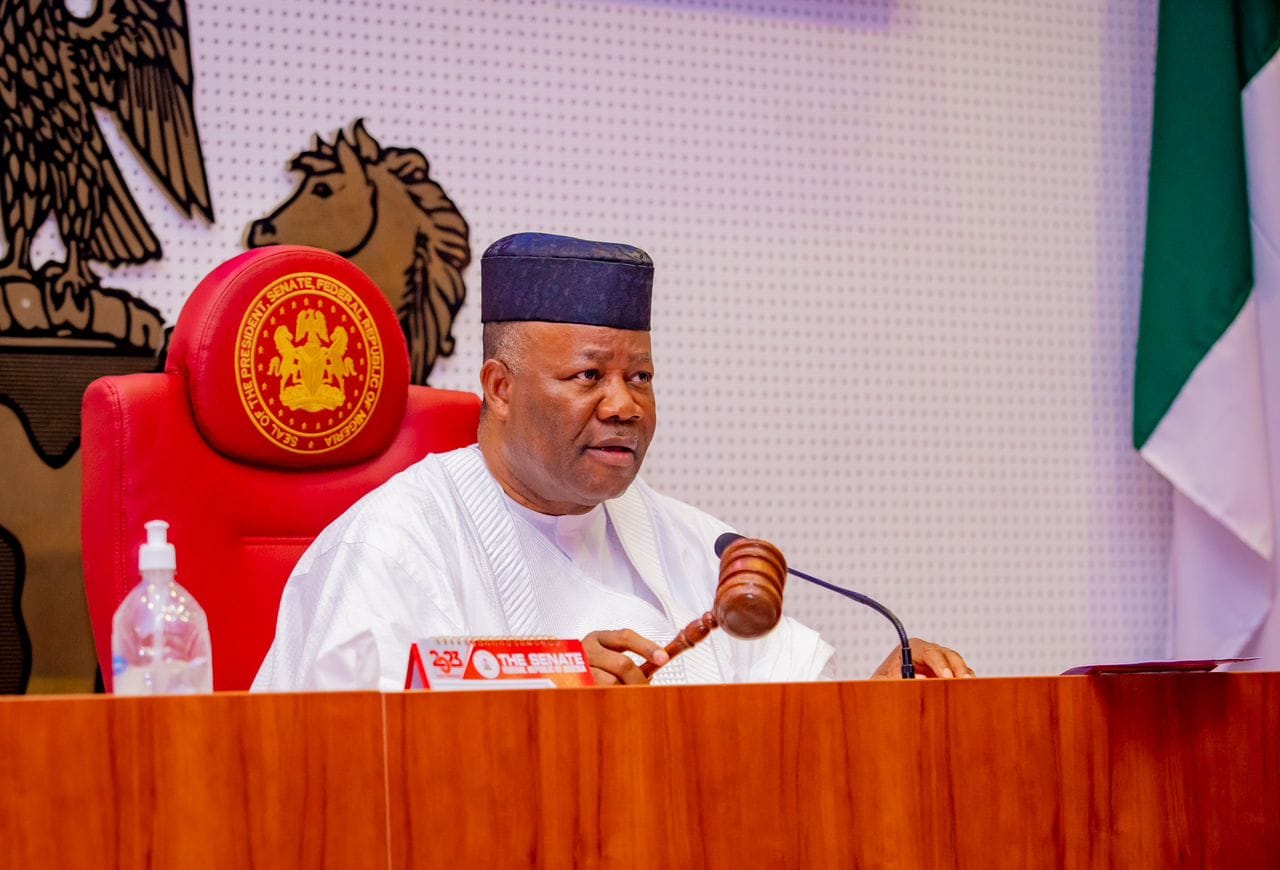
The Senate on Tuesday took a significant step toward overhauling Nigeria’s public investment management as it passed for second reading a bill seeking to repeal the Ministry of Finance Incorporated,MOFI, Act of 1959 and replace it with a modern 2025 version designed to strengthen governance, transparency and national wealth creation.
The progress on the bill followed its presentation at plenary, where lawmakers engaged extensively on its general principles. The legislation, sponsored by Senator Mohammed Sani (APC–Niger), seeks to reposition MOFI from a passive custodian of federal assets into a professionally run investment institution capable of driving economic diversification.
Leading the debate, Sani said the 65-year-old legislation was no longer adequate for Nigeria’s current financial landscape.
He explained that under the existing law, MOFI lacks the legal powers, governance structure and institutional strength required to maximise value from public assets, resulting in missed revenue opportunities.
Sani noted that the bill would introduce a modern, transparent and performance-driven framework aligned with global best practices.
It proposes the establishment of a competent board of directors with clear oversight functions, mandatory annual external audits and robust transparency measures aimed at improving accountability.
He added that the bill empowers MOFI to take on an active investment role by managing federal assets, investing in domestic and international markets, initiating public-private partnerships and utilising innovative tools such as securitisation, bond issuance and special purpose vehicles.
READ ALSO: Senate approves Kingsley Ude’s nomination as minister
The bill also mandates adherence to environmental, social and governance standards to ensure responsible and sustainable investment decisions.
The senator emphasised that the reforms are designed to direct investments into high-value sectors such as technology, agriculture, infrastructure and manufacturing—areas crucial for job creation, economic expansion and reducing dependence on oil revenue.
Drawing from international benchmarks, Sani highlighted Singapore’s Temasek Holdings and Norway’s Sovereign Wealth Fund as examples of how strong governance, transparency and diversified investment strategies can significantly enhance national economic outcomes.
Senator Abdulahi Yahaya (APC–Kebbi) backed the bill and proposed the consolidation of the MOFI Act and the Sovereign Wealth Fund Act into a single legislation to streamline oversight and eliminate duplication in the management of federal assets.
Senator Tokunbo Abiru (APC–Lagos) described the initiative as overdue and urged MOFI to develop a comprehensive and up-to-date database of all federal government investments within and outside the country.
Senator Abdul Ningi (PDP–Bauchi) commended the effort, describing it as a landmark reform given that the MOFI law had remained unchanged for more than six decades despite shifts in Nigeria’s economic realities.
After the bill scaled second reading, Senate President Godswill Akpabio referred it to the Committee on Finance for further legislative action, with a directive to report back to plenary within four weeks.
NAN