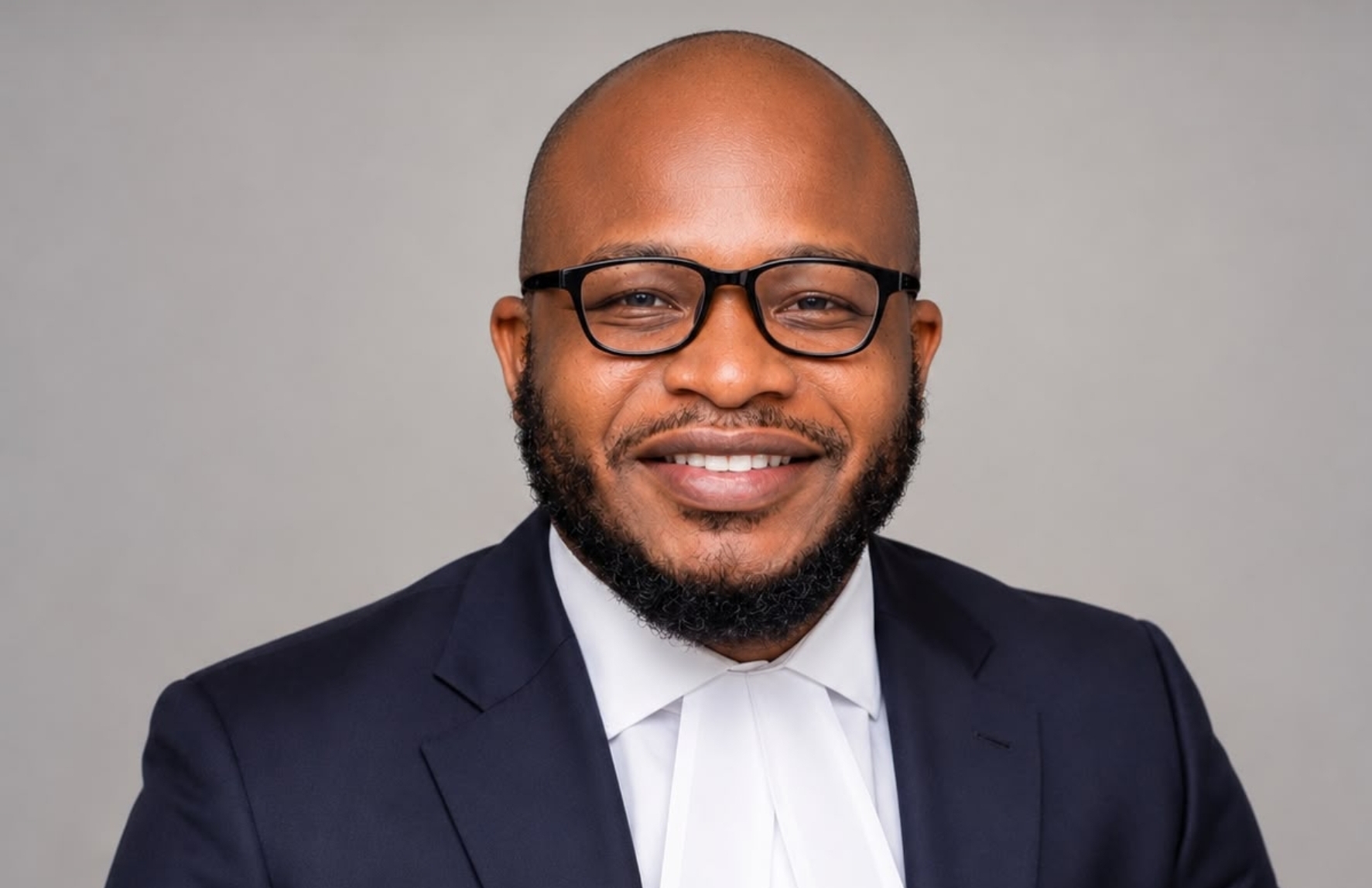
By Hamza D. Dantani, Esq.
For too long, the relationship between Nigeria’s security agencies and the citizens they are sworn to protect has been strained by a troubling paradox: the very institutions established to safeguard our lives and liberties have, in far too many instances, become the source of some of the gravest violations of those same rights.
Wrongful arrests, unlawful detentions, mistaken-identity operations, and the quiet suffering of innocent Nigerians caught in the crossfire of aggressive policing have become an uncomfortae feature of our national life.
That is why the recent decision by the Director-General of the Department of State Services (DSS), Mr. Adeola Oluwatosin Ajayi, to compensate innocent citizens who were wrongly arrested, unlawfully detained, or otherwise harmed during security operations is not merely commendable — it is historic. It marks a rare and courageous departure from the culture of institutional silence that has long shielded Nigeria’s security establishment from the consequences of its errors.
A Bold Break from Tradition
In a country where public institutions are often more inclined to deny wrongdoing than to acknowledge it, the DSS initiative represents a refreshing reaffirmation of a principle that ought to be self-evident: no institution, however powerful, is above the law.
Security agencies have a constitutional duty to defend the nation against terrorism, banditry, kidnapping, insurgency, and other forms of organised criminality. But that duty does not exist in isolation. It is bounded by, and must always yield to, the fundamental rights guaranteed under Chapter IV of the 1999 Constitution — the rights to personal liberty, dignity of the human person, freedom of movement, and fair hearing.
National security and human rights are not competing values. They are two sides of the same coin. A nation cannot claim to be secure while its citizens live in fear of the very agencies established to protect them. Conversely, no security architecture can succeed without the trust, cooperation, and confidence of the people it serves.
The Faces Behind the Policy
Behind every wrongful arrest is a human story — a life interrupted, a family destabilised, a reputation shattered. The publicly known beneficiaries of the DSS compensation initiative remind us of the human cost of institutional error:
– Nura Idris, a Kaduna-based farmer and herder wrongly linked to Boko Haram, who received ₦3 million.
– Umar Ibrahim, Alhaji Bello Rabiu, and Jaja Sarki Bamo, mistakenly arrested and detained over allegations of banditry and kidnapping, who later shared a compensation package.
– Chineze Ozoadibe, an Abuja-based businesswoman wrongly accused of oil bunkering, awarded ₦10 million.
– A Sokoto-based trader, mistakenly shot during a 2016 security operation in Jos, who received ₦20 million in court-awarded damages and goodwill payment, alongside lifetime free healthcare.
– Eleven artisans from Osun State, including Mohammed Adamu, Adamu Abubakar, Mohammed Bindi, and Baba Kura Mallam, cleared of terrorism-related allegations and duly compensated.
These are only the cases we know about. Across the country, from the North-East insurgency belt to the South-South oil creeks, countless other Nigerians have endured the trauma of wrongful detention without ever receiving an apology, let alone redress. Their silence is not evidence of contentment — it is a measure of how deeply distrustful they have become of a system that has repeatedly failed them.
The Hidden Cost of Wrongful Arrest
Those who have never experienced the terror of a wrongful arrest often underestimate its consequences. It is not merely the loss of liberty for days, weeks, or months. It is the loss of livelihood, of business, of dignity, of family stability, and — perhaps most damagingly — of one’s good name in a society where reputation, once tarnished, is rarely fully restored.
Children lose parents to prison cells. Businesses collapse for want of their owners. Marriages break under the weight of prolonged separation and public shame. Employment is lost. Health deteriorates. Trauma lingers long after the cell doors are opened.
No cheque, however generous, can fully compensate for such losses. But monetary redress is not meant to erase the injury — it is meant to acknowledge it. It is the State’s way of saying, in the clearest possible language: we were wrong, and we are prepared to bear the consequences of being wrong.
That acknowledgement is priceless.
A Challenge to Other Agencies
If the DSS — an agency whose operations are, by nature, cloaked in secrecy — can find the moral courage to admit error and offer redress, there is no justification for the continued silence of other security institutions.
I therefore call on the Nigeria Police Force, the Nigerian Army, the Nigeria Security and Civil Defence Corps, the Economic and Financial Crimes Commission, the National Drug Law Enforcement Agency and every other law enforcement body in the country to institutionalise similar frameworks. Compensation for the innocent should not be exceptional. It should be routine. It should be policy.
The years following the #EndSARS protests, the recurring public outrage over extra-judicial conduct, and the growing pressure from civil society and international human rights bodies have all made one truth undeniable: Nigeria’s security agencies cannot postpone reform indefinitely. The choice before them is not whether to change, but whether to change on their own terms or under the weight of public compulsion.
Prevention Before Remedy
Compensation, however welcome, is a remedy — and remedies address injuries that ought never to have occurred in the first place. The deeper reform lies in prevention. To that end, our security agencies must:
– Base arrests strictly on credible intelligence, verified evidence, and thorough investigation, not on rumour, anonymous tips, or the word of unreliable informants.
– Institute rigorous identity verification protocols, particularly in terrorism, kidnapping, and banditry cases where mistaken identity is dangerously common.
– Subject high-risk arrest decisions to supervisory review before execution.
– Invest in technology, forensic capability, and inter-agency intelligence sharing, rather than relying on coerced confessions.
– Provide continuous human rights and constitutional law training for personnel at every level.
– Enforce strict compliance with constitutional safeguards — informing suspects of the reasons for their arrest, granting access to counsel, and producing them before a court within the constitutionally prescribed timeframe.
– Establish independent internal review mechanisms to investigate complaints of abuse.
– Hold officers personally accountable for negligence, recklessness, or deliberate abuse of authority.
An arrest is not a punishment. Detention is not a substitute for investigation. These are not novel propositions — they are elementary principles of criminal justice, repeatedly affirmed by our courts, and yet, too often ignored in practice.
The Measure of a Nation
There will be those who argue that admitting error weakens the authority of security institutions. I disagree. Institutions that cannot admit error are not strong — they are brittle. Their authority rests on fear, not respect; on silence, not consent. True institutional strength lies in the capacity for self-correction. Transparency and accountability are not concessions to critics; they are the foundations of enduring legitimacy.
The DSS Director-General has demonstrated that it is possible for a security agency to be both effective and just, both firm and fair, both feared by criminals and trusted by citizens. That is the standard other agencies must now rise to meet.
A Final Word
Nigeria stands at a defining moment in its democratic evolution. The choices our security institutions make in this hour will shape the character of our republic for a generation. We can continue down the familiar path of impunity, denial, and public distrust — or we can embrace a new era of accountability, humility, and respect for the rule of law.
The DSS initiative offers us a glimpse of what that new era might look like. It now falls to every other security agency — and to those who lead them — to decide whether that glimpse becomes a national norm or fades into yet another missed opportunity.
The true measure of a nation’s justice system is not merely its capacity to punish the guilty. It is its willingness to protect the innocent, to acknowledge its errors, and to correct its mistakes whenever they occur.
By that measure, the DSS has set a standard. The rest of Nigeria’s security architecture must now find the courage to follow.
*Dantani, Esq., is a legal practitioner and human rights advocate.