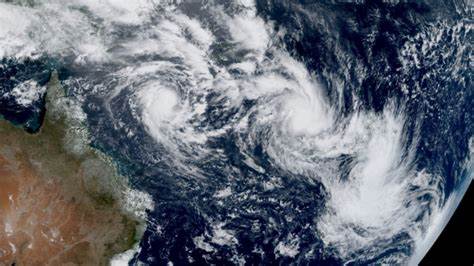
Australia is on high alert as Cyclone Alfred forces tens of thousands to evacuate and leaves 84,000 households without power. Expected to make landfall Saturday morning between the Sunshine Coast, Gold Coast, and Brisbane, the storm is set to hit as a category two cyclone with winds reaching 130km/h.
The slow-moving system has already triggered flooding, with fears that heavy rainfall—up to 800mm in some areas—could worsen the crisis. A man remains missing after his vehicle was swept into a river in New South Wales.
With four million people in Queensland and northern New South Wales in its path, authorities have shut nearly 1,000 schools, suspended public transport, and closed airports. Flights aren’t expected to resume until Sunday at the earliest, and elective surgeries have been canceled.
Residents are bracing for impact. Logan City local Stephen Valentine has stocked up on water, food, and secured his home, calling the experience unprecedented. “We would get the edge of a cyclone every so often, but not to this level,” he said.
While Queensland is no stranger to cyclones, they rarely reach this far south. The last storm of Alfred’s magnitude hit in 1974, with Cyclones Wanda and Zoe leaving a trail of destruction. More recently, devastating floods on 2022 damaged thousands of homes.
Prime Minister Anthony Albanese urged Australians to take the warnings seriously. “This isn’t a time for sightseeing,” he said. “Please stay safe. Be sensible.”
Despite the looming danger, some surfers are riding the powerful waves. “This is what we look forward to,” said Jeff Weatherall, who has spent five days straight surfing at Kirra Beach.
As Australians hunker down, uncertainty looms over how much damage Alfred will leave in its wake.
Reported by BBC News.